Get Full Government Meeting Transcripts, Videos, & Alerts Forever!
Get email alerts on the Legislative Engagement topic
No spam. Unsubscribe anytime.
PSD hosts state lawmakers to discuss special education, workforce, IEP platforms and funding pressures
Summary
Poudre School District leaders met with state legislators and education officials to discuss special education needs, educator recruitment, potential statewide IEP platforms, licensure reciprocity, and state funding constraints including TABOR'related revenue limits and adequacy study shortfalls.
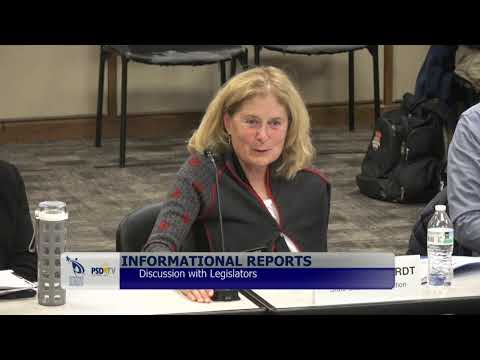
The Poudre School District R-1 Board of Education hosted state lawmakers and education officials Tuesday for a roundtable on special education, workforce development and statewide policy pressures.
Dr. Jody Rommel, director of integrated services, described district priorities including educator recruitment and retention, and a braided funding model that supports candidates in PSD's licensure cohort (18 current candidates; 12 are district paraprofessionals). Rommel asked legislators to consider easing out-of-state licensure barriers without lowering standards and to explore a statewide supported IEP platform to reduce paperwork, improve compliance and centralize data.
Legislators including State Senator Kathy Kipp, State Board member Kathy Gephardt and Representatives Laurie Garcia Sanders and Yara responded that they are sympathetic but constrained by state budget pressures. Senator Kipp described recent budget cuts and structural constraints linked to the Taxpayers Bill of Rights (TABOR), noting cutbacks in recent years and warning that significant new statewide investments would require new revenue or ballot measures. Several legislators suggested exploring low-cost statutory or rule changes first, and some highlighted interstate compact agreements and apprenticeship pathways that can ease licensure transitions.
The discussion also covered a proposed federal scholarship-granting organization (SGO) tax-credit mechanism that could funnel private scholarships to families. State board officials warned about risks associated with voucherization and urged careful rulemaking to protect inclusivity and accountability.
Board members and Superintendent Brian Kingsley emphasized the district's enrollment pressures, explained how declining student counts and local revenue compression complicate planning, and asked legislators for partnership on both short-term administrative relief (for example, potential bulk purchasing or shared platforms) and longer-term financing solutions. Legislators said they would take back the district's requests and explore possible options within the constraints of the state budget and TABOR rules.
The meeting closed with mutual offers to continue collaboration and invitations for state board members and legislators to visit PSD classrooms and events.