Get Full Government Meeting Transcripts, Videos, & Alerts Forever!
Get email alerts on the Booster Policy topic
No spam. Unsubscribe anytime.
Pulaski County schools propose stricter rules for boosters, require EINs and audits
Summary
The Pulaski County School Board reviewed a proposed policy to tighten oversight of PTAs, PTOs and booster clubs, requiring separate EINs/501(c)(3) status when applicable, annual financial reports, $1 million liability insurance, and limits on crowdfunding, with a grace period proposed for groups to comply.
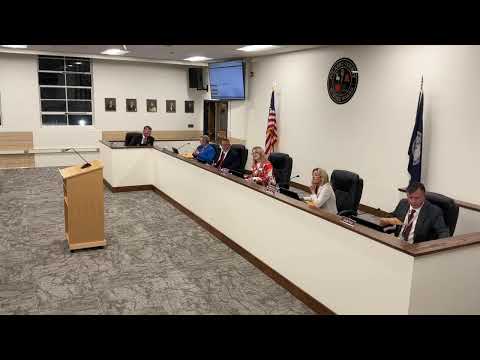
The Pulaski County School Board on Oct. 14 reviewed a draft policy designed to tighten oversight of parent and booster organizations that raise money on behalf of district schools. The draft, presented by the district’s budget analyst, would require any group that fundraises on behalf of students to adopt bylaws, secure a unique Employer Identification Number and, where applicable, 501(c)(3) status, and submit annual documentation to the district.
Under the draft, booster and parent groups would maintain separate bank accounts (no commingling with Pulaski County Public Schools funds), provide monthly reconciliations and an annual financial report to the school bookkeeper and the district office, and show proof of at least $1,000,000 in liability coverage listing Pulaski County Public Schools as an additional insured. The policy would also require two authorized signatures on accounts and would disallow certain “crowd funding” platforms such as GoFundMe and PayPal for school fundraising; approved methods would include cash, check and the district’s school‑cash online platform.
Board members and staff discussed implementation details, including a proposed grace period that would allow existing external organizations time to meet the new requirements. The policy’s presenter said the intent is to protect students and donors, increase transparency and provide the district the ability to audit booster finances; she described measures that could detect and address irregularities, including bank reconciliation reviews and, if warranted, referral to state authorities.
Board members asked for clearer definitions of “external” versus “internal” organizations and asked staff to consider how longstanding partners such as the local Education Foundation would be treated. The presenter said the Education Foundation already operates as a 501(c)(3) with oversight and is unlikely to be affected in the same way as smaller external booster clubs that do not meet governance standards.
No formal vote on the booster policy was recorded at the meeting; staff said the policy will be refined and come back to the board as an action item once details are tightened.
The board’s discussion included concerns about past booster audits and the need to prevent future misuses of funds. One board member asked how uniform purchases and donations to athletic programs would be handled; staff replied that purchases made through the school system would not be treated as direct gifts to employees, but purchases made outside the system would be subject to closer review and documentation.
Next steps: staff will revise the draft to clarify definitions, timelines and enforcement mechanisms and return the policy as a formal action item for board consideration.