Get Full Government Meeting Transcripts, Videos, & Alerts Forever!
Get email alerts on the Opioid Settlement topic
No spam. Unsubscribe anytime.
Edgecombe County reviews opioid-settlement spending; board approves amended MOA to continue 'option A' strategies
Summary
Community paramedic Dalton Barrett told commissioners the county has used opioid-settlement funds for naloxone distribution, post-overdose outreach, syringe services and treatment partnerships; the board approved an amended MOA to expand and fund option-A strategies.
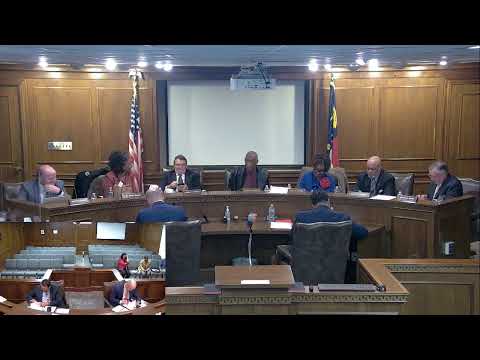
Edgecombe County's community paramedic, Dalton Barrett, delivered a roughly 12-month update Dec. 1 on how the county has used opioid-settlement funds and asked the Board of Commissioners to approve changes to the memorandum of agreement (MOA) governing use of the money.
Barrett said the county is scheduled to receive $5.1 million over 18 years and is three years into the distribution stream. He told the board the county is pursuing "option A" strategies that can be put into action quickly, including collaborative strategic planning, evidence-based addiction treatment, naloxone distribution, the post-overdose response (community paramedic) team, and a syringe-services harm-reduction program.
He reported that Rocky Mount Treatment Center received funds and treated about 225 people; Freedom Hill Community Health Center served about 140 patients in office-based opioid treatment. Barrett said the county distributed nearly 900 boxes of Narcan, trained more than 530 people, and that the post-overdose response team referred almost 50 people into treatment for the first time. The syringe-services program conducted blood-borne pathogen testing and diagnosed five previously unknown hepatitis C infections, Barrett said.
County staff told commissioners they had a memorandum outlining numerical reordering of strategies, increased allocations for existing strategies and the introduction of additional option-A strategies. The packet reported roughly $1.9 million currently received and available to allocate.
After brief questions from commissioners about safety, youth access to Narcan stations and program sustainability, a commissioner moved and the board voted to approve the amended MOA as presented.
The board's approval authorizes staff to implement the amended option-A strategies; Barrett said long-term planning (option B) remains available for later, and staff emphasized choices are being made to prioritize sustainable, evidence-based services.
Next steps: staff will execute the amended MOA and continue outreach, naloxone distribution and partnerships with treatment providers, with periodic updates to the board.