Get Full Government Meeting Transcripts, Videos, & Alerts Forever!
Get email alerts on the Data Center Proposal topic
No spam. Unsubscribe anytime.
Residents and environmental groups press Edgecombe County commissioners to halt proposed Kingsborough data/energy project
Summary
Dozens of residents, community leaders and state advocates urged the Edgecombe County Board of Commissioners to reject or pause sale of county-owned land in Kingsborough for a proposed data/energy project, citing health, water, noise and environmental-justice concerns and disputing the developer's economic claims.
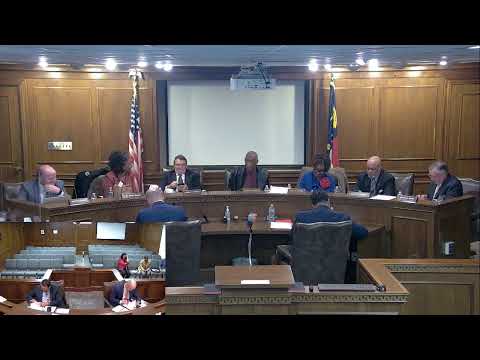
Dozens of residents and regional advocates urged the Edgecombe County Board of Commissioners on Dec. 1 to reject or pause the sale of roughly 122 acres in Kingsborough that the county has discussed for a proposed data- or energy-storage project.
At a public-petition period that ran for more than two hours, speakers from Kingsborough and surrounding communities described fears about noise, air pollution from diesel and natural-gas generators, large water withdrawals, and limited local employment. Janice Bullock, who said she represents a neighborhood group, delivered a petition of more than 200 names and said the proposal "is disturbing for me and those of us that live in the Kingsborough Bullock community area." She urged commissioners to "listen to the people."
Other commenters pressed county officials for precise technical and safety information. Rania Mosseri, co-director of the North Carolina Environmental Justice Network, said the project's documents show the facility "may drill and burn natural gas, may require a gas pipeline, and may operate large diesel generators," and she urged commissioners to decline the land sale until the public receives answers to basic questions about generator counts, emission types, fire safety plans and local emergency response capacity.
Multiple speakers questioned the project's job and tax projections. David Bass, identifying himself as from the Kingsborough community, said the public was told the site would create 500 jobs but that publicly shared numbers put permanent positions far lower: "Some of the information...is not very clear," he said, adding concerns that most construction and lower-paid positions would go to nonlocal workers. Rania Mosseri told the board the company's documents show about 69 permanent positions and warned that data centers commonly receive tax and sales exemptions that can reduce net local revenue over time.
Water use and drought risk were recurring themes. Several speakers said Edgecombe County is in severe drought and questioned whether local water systems could support a data facility. "This company claims it will only use 500,000 gallons of water a day, and yet a data center of that size would actually require 3 to 5,000,000 gallons a day," Mosseri said. Commissioners and staff acknowledged the difference in estimates and said they have received developer-provided numbers; they also said county water meters provide a regulatory lever.
Speakers repeatedly linked the proposal to environmental-justice concerns. James Wren told commissioners Edgecombe is "the most populous Black-majority county in North Carolina" and asked why the county would be chosen as a "sacrifice zone," adding historical examples of rejected industrial proposals in the region.
County staff and commissioners responded that the public's submissions will be taken into consideration and that some elements of economic-development work—including negotiating terms—can occur in closed session. County staff said rezoning has occurred and noted the land is county-owned. Commissioners asked staff to pursue environmental studies, meet with residents living near the proposed site, and consider restrictions that could be imposed if any sale proceeds.
The board did not take a final vote on the land sale at the Dec. 1 meeting. Commissioners said they would continue to gather information about generator counts, water demand and emissions, host public outreach, and that any formal agenda item would be noticed publicly before a decision.
What happens next: commissioners asked staff to collect technical details (water, emissions, generator counts), to consult state and federal regulators as needed, and to schedule public meetings in affected districts. The board also said staff should be prepared to provide environmental analyses and to respond to citizen questions if the matter returns to a public agenda.
Quotes used in this article come from remarks recorded in the Dec. 1 public meeting of the Edgecombe County Board of Commissioners.