Get Full Government Meeting Transcripts, Videos, & Alerts Forever!
Get email alerts on the Environment Biosolids topic
No spam. Unsubscribe anytime.
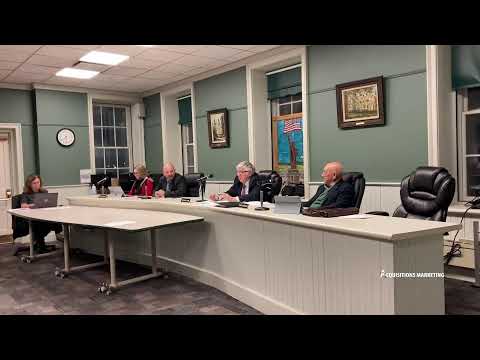
Goshen board opens hearing on ban for land application of biosolids; adoption motion recorded
Summary
The Town of Goshen opened a public hearing on a proposed local law to prohibit land application of biosolids and heard public testimony urging action. The town attorney read clarifying language intended to exempt conventional agricultural fertilizers; a motion to adopt was made but a recorded vote does not appear in the transcript.
The Town of Goshen opened a public hearing on Nov. 13 on a proposed local law to prohibit the land application of biosolids within town boundaries and to protect groundwater and farmland.
The town attorney read amendment language clarifying that the law "should not be interpreted to regulate or limit the use of traditional conventional fertilizer, soil amendments, animal manures, compost, lime applications, or any other nutrient management practices" and provided a transcript definition of "biosolids" as "sewage sludge, sewage-sludge-derived materials or any residual solid material generated from municipal, partial, industrial, wastewater treatment facilities, whether treated or untreated, including composted . . . forms intended for land application." The clarification was described as intended to ensure routine agricultural uses are not inhibited and to satisfy the county's February review.
Chris Healy, who identified himself as a Goshen resident, told the board he supported the measure, saying he found information about biosolids "not good" and called the proposed rule "very forward thinking of our town." A speaker identifying herself as Sue asked whether agriculture that spreads biosolids would be prohibited and urged the board to consider wellhead protection—citing a 300-foot separation standard around wells—when combining water districts.
After public comment, the board closed the hearing. A council member then moved to adopt what the transcript calls "local law number 6 of 2025" and another member seconded. The transcript records the motion and second but does not contain a roll-call vote or recorded outcome for that adoption in the available segments.
Why it matters: Prohibiting land application of biosolids would affect agricultural and waste-management practices in the town and could shape future permitting, groundwater protections and relations with neighboring counties and state reviewers. The attorney's amendment language aims to preserve traditional manure and fertilizer use while singling out biosolids as a distinct material.
What comes next: The transcript shows the motion to adopt but no recorded vote in the posted segment; the board later proceeded to other agenda items. Residents and farmers will likely watch for the board's formal adoption record and any further clarifying language from the town attorney or county review.