Get Full Government Meeting Transcripts, Videos, & Alerts Forever!
Get email alerts on the School Capacity Rezoning topic
No spam. Unsubscribe anytime.
Marion County schools lay groundwork to rebalance North End attendance zones amid projected growth
Summary
District staff proposed creating an Attendance Boundary Advisory Committee and a fast‑track rezoning timeline to address projected concentrated growth (about 600 students per year) and raise North End elementary utilization toward an 80% target; the board asked for clearer cost data and more community outreach.
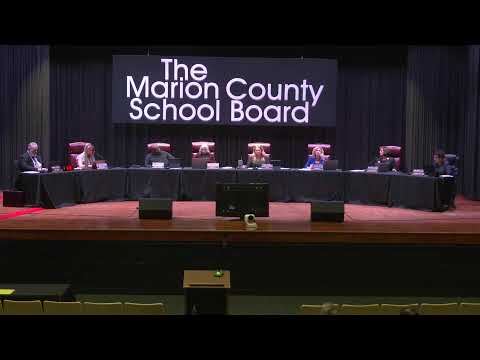
Ben Whitehouse, a district staff presenter, told the Marion County School Board at its Nov. 6 work session that the district projects roughly 600 new students per year over the next decade — about 6,000 students concentrated in Southwest Marion County and The Shores — creating localized overcrowding pressures.
Whitehouse said combining the enrollment and capacity across several North End elementary schools (Fessenden, Oakcrest, Ocala Springs, Reddick Collier and Spar) currently yields about 82% utilization and that targeted rezoning could bring those campuses to roughly 80–82% capacity. To manage that shift, staff recommended creating an Attendance Boundary Advisory Committee (ABAC) composed of parents, teachers and community stakeholders to develop annual boundary reviews and make recommendations to the superintendent.
The proposal lays out an expedited timeline: committee formation and initial meetings in November–December, a work session in December or January, community meetings January–March, rule development and public hearing in March–April, and parent notification by May so any changes would be clear before the next school year. Staff will place a resolution to create the committee on the Nov. 11 board agenda.
Board members pressed staff for more fiscal detail. Dr. James and others asked for operating‑cost breakdowns and enforcement of protections for exceptional student education (ESE) services during rezoning discussions. Whitehouse acknowledged potential efficiencies from combining campuses — including a Spar‑Anthony consolidation that staff estimated could be financed by delaying another project and reallocating about $55 million in capital funds — but he cautioned that decisions about construction timing and rezoning could take years to implement.
The board also raised community‑engagement and equity concerns: members asked for virtual and in‑person tours of exemplar schools, clarity on how auxiliary zones (created after Evergreen’s closure) will be handled, and a clear description of which nominations and appointments are needed for the ABAC. Attorney Powers reminded members that any advisory committee members will be subject to Sunshine Law rules and that the board must follow required procedures if it chooses to transfer or dedicate property.
Whitehouse and staff were directed to return to the board with detailed cost splits for facilities under consideration (including maintenance and utilities), a meeting schedule for the ABAC, and a prioritized list of what the district will study next — including a separate work session on the Fiddlers Springs program. Next formal steps are the Nov. 11 resolution to create the ABAC and the committee’s first convening if the board approves the resolution.