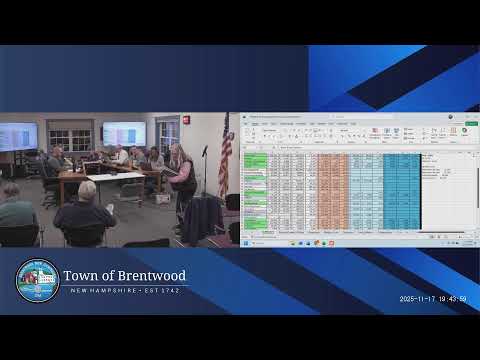
Brentwood budget committee approves several 2026 department budgets after extended debate over elections funding
Loading...
Summary
The Brentwood budget committee voted to approve emergency management, executive, legal, elections, town meeting, town clerk and tax collector budgets and smaller departmental budgets; a contentious debate over funding three vs. four elections and a $70/hour police detail rate drew the most discussion.
The Brentwood Budget Committee on Nov. 10 approved a slate of proposed 2026 department budgets while members sparred over how many elections to fund and how to account for certain salary and coverage lines.
The committee approved minutes from its previous regular session and then moved through department budgets. The emergency management budget was approved at $4,627, a figure described as essentially level with last year. The executive office budget, proposed by the select board at $19,412 (a 7% decrease), also passed after members asked about pre-employment physicals, annual medical exams and a contingency line that had been zeroed out.
A longer discussion surrounded the legal budget. The select board proposed $33,503 for outside legal services; members noted legal costs spiked to about $46,000 in the previous year amid personnel and contract work. Committee members discussed that a board member had volunteered limited legal review in the past, but said volunteer help cannot be relied on as a budgetary certainty. The legal budget passed with one recorded nay.
The elections budget produced the most debate. The select board proposed $29,951 for elections, which reflects higher costs in an election year. Some committee members urged budgeting for only three elections next year — which staff calculated would reduce the line to $25,601 — to avoid inflating the tax cap. Proponents of the select-board figure argued for “level funding” (including a higher number of elections) to reduce variability under SB 2 defaults. A motion to adopt the three‑election figure failed on a 3–5 vote. After further discussion the committee approved the select board’s $29,951 proposal; the vote included recorded opposition and an abstention.
Committee members detailed how key election line items were calculated: ballot clerks’ pay (12 clerks at about $10/hour for full days), supervisors at $200 per meeting, software and printing tied to the number of ballot sheets, and a police detail line based on a $70/hour town detail rate for officers. Members said the $70 figure reflects the town’s internal detail rate and excludes administrative fees charged to outside entities; the detail rate was described as including cruiser rental and billing administrative costs.
Budget votes continued with town meeting ($3,601) and two administrative budgets that required correcting a FICA calculation. Town clerk and tax collector budgets were approved at $97,524 and $98,573 respectively after staff corrected a FICA line (about $6,033). Members spent substantial time discussing how Daphne’s office accounted for extra weeks for a part‑time employee as “coverage” versus overtime, and asked staff to add a clearer coverage or overtime line in future budgets to improve transparency.
Smaller items approved included the joint loss management budget at $2 (flat) and a nominal health officer budget with 50‑cent placeholder lines to preserve the ability to pay FICA/Medicare if the role becomes paid.
During public comment, local resident “Mister Miller” questioned whether the town should simply pay officers overtime rather than budget a separate detail rate; committee members and staff replied the town’s detail rate covers administrative and cruiser costs and is used for budgeting when the highest‑paid potential officer is unknown. Resident Liz Feria urged the committee to fund only three elections if that is the actual expected workload.
The committee tentatively scheduled follow‑up meetings to finish outstanding budgets in December and January and then adjourned. Remaining budgets to review at future meetings include fire, highway and other large departmental requests.
The committee’s next meeting is tentatively set for 6 p.m. Wednesday, Jan. 7, with additional dates to be confirmed.