Get Full Government Meeting Transcripts, Videos, & Alerts Forever!
Get email alerts on the Budget Default topic
No spam. Unsubscribe anytime.
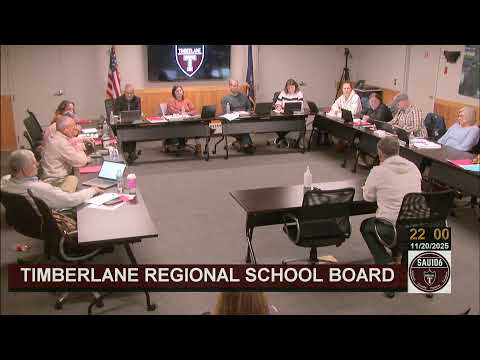
Timberlane board hears $90.5 million default budget, staff flags $2.35M SPED contract increase and legal limit on regular transportation
Summary
Finance staff presented a default budget projection of $90,497,479 driven by salary and benefit increases and a $2,349,767 rise in contracted special-education services; board members probed drivers, hiring options and the legal restriction that bars regular transportation increases from the default.
Finance director Maria read the statutory definition of a default budget and presented the district’s calculation, saying the baseline voted operating budget of $82,334,912 and contractual increases produce a projected default budget of $90,497,479.
Maria said the default increases include $2,079,034 in salary lines, a benefits uptick tied to higher health-trust costs, and a $2,349,767 increase in special-education contracted services to cover required external professional services. She noted a reduction of $142,471 for one-time expenses and a $30,000 tuition line for students attending other LEAs; the presentation also included an $844,115 increase tied to projected lease payments for Phase 4.
Why SPED rose: board members asked whether the growth reflected more students or higher contract rates. Maria and a program lead explained that last year’s $2 million cut in SPED created a gap the district now must restore, and that the projection reflects this year’s costs plus roughly a 5% projected annual contract increase. The district reported 65 SPED contractors—about 54.5 FTE equivalent—alongside 592 total employees and 8,213 students.
Transportation and the law: the business office said recent legal guidance (confirmed by the district attorney) prevents the board from including regular transportation rate increases in the statutory default calculation, even when the district is contractually bound to pay a higher rate. Staff explained that the district had historically reduced regular transportation by $500,000 in the voted budget, so the default base already lacks that money; the combination of the omitted contractual increase and last year’s cut create a shortfall the board must plan for.
Board reaction and next steps: trustees pressed staff on whether hiring in-house specialists would reduce reliance on contractors and on the percentage increases behind the SPED number. Staff said contractor pay and benefits sometimes include offerings (PTO, insurance) that make contracting competitive with in‑house hires and that some posted positions attracted no applicants. The board took no action on the default tonight and asked staff to return with additional line-item detail for follow-up review.
The district encouraged board members and the public to contact finance staff with questions and scheduled the default budget for more detailed review at a future meeting.