Get Full Government Meeting Transcripts, Videos, & Alerts Forever!
Get email alerts on the Workforce Scholarships topic
No spam. Unsubscribe anytime.
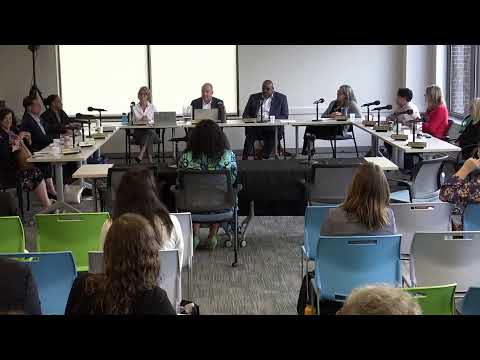
EEC board approves $7.5M scholarship package to shore up Career Pathways and expand educator scholarships
Summary
The Board of Early Education and Care approved using $5 million to sustain Career Pathways and $2.5 million to the Early Educator Scholarship, with minor eligibility changes to broaden access and comply with General Law chapter 15A section 19F. The vote was a voice vote; the motion passed.
The Board of Early Education and Care on Thursday approved the department's plan to use a $7.5 million FY25 appropriation to strengthen workforce pathways and expand scholarships for early educators.
The board's action, moved by the chair and approved by voice vote, directs the department to seek Board of Higher Education approval to allocate $5,000,000 toward making the Career Pathways program whole and $2,500,000 toward the existing Early Educator Scholarship program, with eligibility modifications required to comply with General Law chapter 15A section 19F. "I would move that the Board of Early Education Care, subject to revision by the commissioner, approves the department's proposal to submit to the Board of Higher Education for its approval the use of $5,000,000 for the new scholarship funds towards the existing career pathways program... and the use of the remaining 2,500,000 from the new scholarship funds towards the existing ECE scholarship program," the chair said in making the motion.
Department staff and board members framed the vote as a short-term fix to ensure the reduction in Career Pathways funding does not interrupt access while other state initiatives (including Mass Educate and free community college programs) come online. EEC staff said the Career Pathways line was reduced this fiscal year from $10 million to $5 million and the $5 million allocation is intended to preserve course access, advising and wraparound supports that help educators "dip their toe into" higher education.
Presenters said the scholarship tweaks would broaden eligibility (including allowing some educators to access scholarship funds before the prior six-month work-experience requirement) and add priority access for educators serving socioeconomically disadvantaged communities if demand exceeds supply.
Board members and higher-education partners urged attention to language access, flexible course formats and measures for evaluating program success. One member underscored the need to recognize diverse goals among participants — some seek credentialing or job-embedded training rather than degree completion — and recommended tracking multiple definitions of success.
The motion passed by voice vote; no formal roll-call tally was recorded in the transcript. The department said it will submit the proposal to the Board of Higher Education and implement the eligibility changes subject to that collaboration and legal compliance.
What’s next: EEC staff said they will work with the Department of Higher Education and other partners to operationalize the eligibility changes, prioritize applicants as needed, and report back to the board as the scholarships are deployed.