Get Full Government Meeting Transcripts, Videos, & Alerts Forever!
Get email alerts on the Privacy And Surveillance topic
No spam. Unsubscribe anytime.
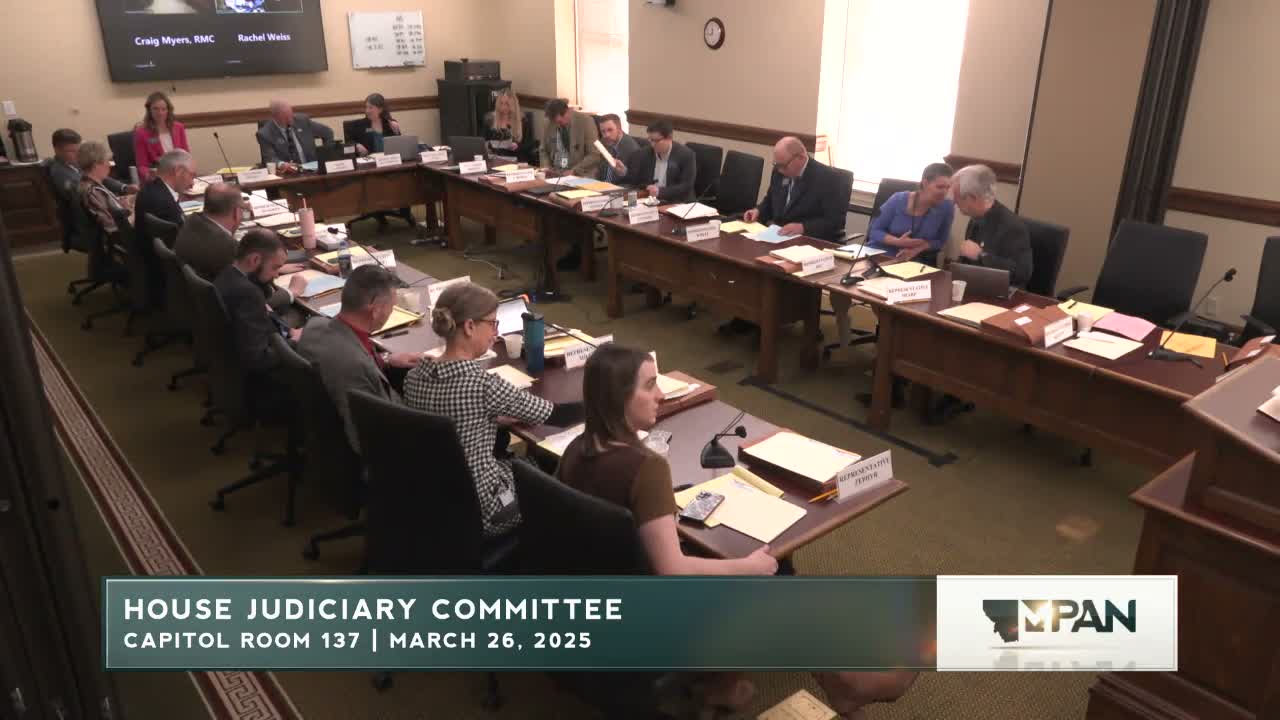
Committee hears SB 282 to limit government purchase of consumer data without warrant
Summary
SB 282 would bar state and local governments from purchasing commercial electronic data (including geolocation and sensitive pseudonymous datasets) for investigative purposes unless supported by a warrant or investigative subpoena; proponents called it a Fourth Amendment update, while sheriffs and industry groups urged technical clarifications and retention of an emergency voluntary-disclosure exception.
House Judiciary considered Senate Bill 282, an effort to update Montana''s search-and-seizure framework for the digital age by restricting government agencies from buying commercially available electronic data about people for investigative use without a warrant or subpoena.
Senator Daniel Emmerich told the committee the bill responds to a modern problem: data brokers can package geolocation and other behavioral datasets that allow mass tracking of Americans and agencies can obtain them without judicial oversight. Proponents including Henry Seaton (ACLU of Montana) and Alex Matthews (Restore the Fourth) framed the measure as a constitutional protection that require warrants for pattern-of-life and location data related to demonstrations, medical visits or other private activities.
Opponents and stakeholders raised narrow but operationally important concerns. The Montana Sheriffs and Peace Officers Association asked the committee to remove a repeal in the draft that would delete a statutory voluntary-disclosure/emergency exception (Section 46-5-614) that allows providers to share data in good-faith emergency situations such as immediate threats to life or serious injury; the sheriffs argued that repeal could prevent rapid voluntary disclosures in kidnappings or suicide threats. TechNet and the Consumer Data Industry Association requested narrower definitions and exceptions because agencies contract with third-party vendors for fraud-prevention, benefits eligibility verification and digital-identity services that rely on pseudonymous or aggregated data.
Committee members questioned how the bill interacts with existing warrants, processing fees for records obtained under warrant, and routine law enforcement practices like ankle-bracelet monitoring. Sponsor Emmerich agreed the bill's intent is to prevent warrant circumvention via commercial purchase and said he would accept an amendment to remove the unintended repeal of the voluntary-disclosure statute.
The committee closed the hearing after extended questioning and the sponsor's agreement to technical fixes. No committee vote was taken in the session recorded in the transcript.