Get Full Government Meeting Transcripts, Videos, & Alerts Forever!
Get email alerts on the Judicial Elections topic
No spam. Unsubscribe anytime.
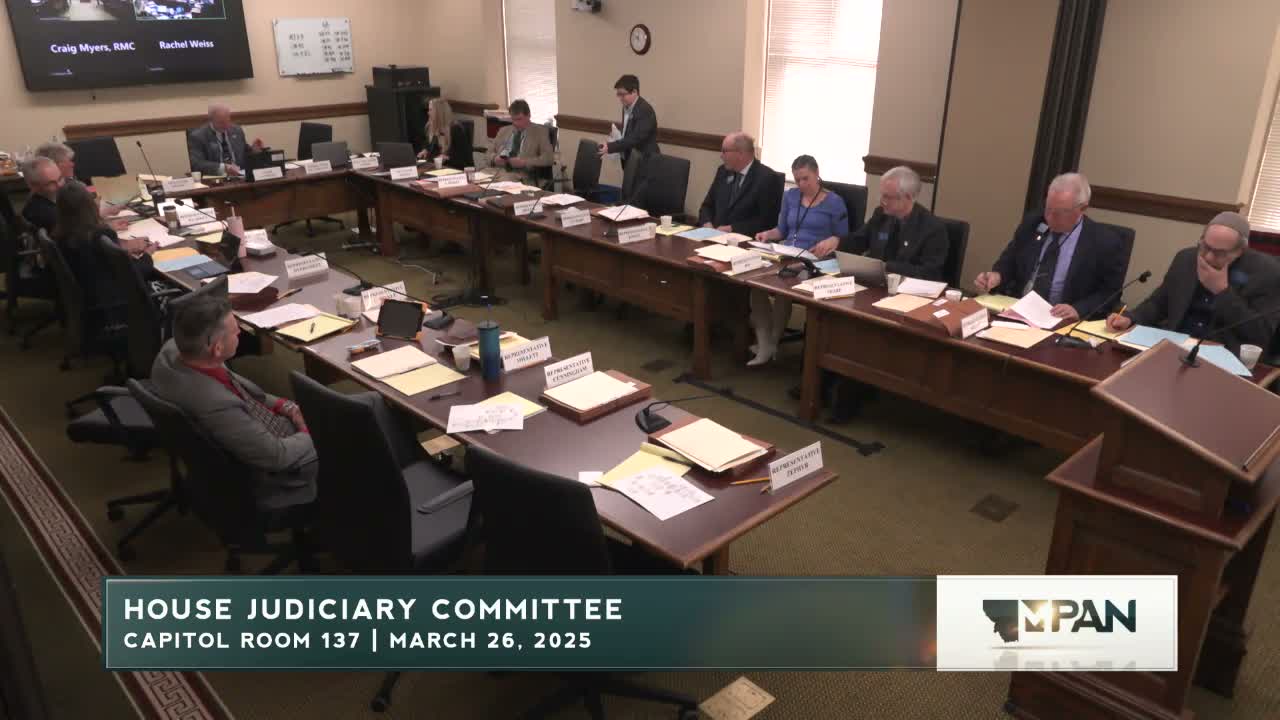
Heated exchange in House Judiciary over SB 42 to allow partisan judicial endorsements
Summary
SB 42 would let judicial candidates display party affiliation and accept party endorsements; supporters said party labels give voters useful information, while opponents — including the State Bar, judicial associations and many civic groups — warned it would politicize the bench and discourage qualified candidates.
House Judiciary heard hours of sharply contested testimony on Senate Bill 42, which would permit partisan nomination and party endorsements for judicial candidates. Senator Daniel Emmerich, the sponsor, said the bill would make judicial elections more transparent and give voters an additional, readily available cue about candidates' values and judicial philosophy.
Supporters included Lieutenant Governor Kristin Juras and advocacy groups such as the Montana Family Foundation and Americans for Prosperity. Juras recounted running for the highest court and said party-aligned spending had already influenced the outcome of that race; she argued partisan labels would help voters who lack time or resources to research down-ballot judicial candidates. Proponents argued partisan disclosure expands free speech and helps voters "make an informed vote."
Opponents were numerous and vocal: the State Bar of Montana, Montana Judges Association, Montana Trial Lawyers Association, Friends of the Third Branch, Big Sky 55 Plus and multiple constitutional delegates and legal practitioners urged the committee to reject the bill. They argued partisan labels would erode judicial independence, invite greater political spending and pressure on judges, reduce public trust and dissuade meritorious applicants who wish to avoid partisan labels. Opponents pointed to decades of nonpartisan practice in Montana and cited research and experience from other states indicating partisan labels often give voters a misleading shortcut and could increase the power of political parties and special interests.
Committee members explored alternatives raised by opponents and supporters: published candidate questionnaires, voter-education materials, and enhanced disclosure of judicial performance metrics. Sponsors countered that the current nonpartisan reality is often "nonpartisan in name only" because parties and special interests already spend on judicial races. The hearing closed after extended questioning and debate; no committee vote was recorded in the transcript.