Get Full Government Meeting Transcripts, Videos, & Alerts Forever!
Get email alerts on the Transportation Policy topic
No spam. Unsubscribe anytime.
San Francisco school board adopts new transportation policy as state budget pressures mount
Summary
The San Francisco Board of Education approved a substitute motion to adopt a new general‑education transportation policy to trim bus service and phase changes over three years, citing deepening state budget shortfalls. The measure passed on a 6‑aye roll call after parents, bus drivers and transit advocates urged careful outreach and safety protections.
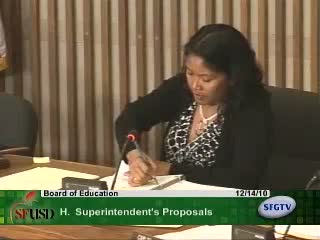
The San Francisco Board of Education on Dec. 14 approved a substitute motion to adopt a new general‑education transportation policy that will reduce some yellow‑bus routes and phase changes in over the next three years as the district responds to deepening state budget cuts.
Superintendent Garcia, who warned earlier in the meeting that recent state deficit estimates had climbed from earlier projections (previously cited at $15–18 billion then $25 billion) to roughly "$31,000,000,000," said the district must plan now for difficult choices and seek broad community involvement to protect classroom priorities.
The policy drew sustained public comment. Michelle Jacques Menegas of the Parent Advisory Council told the board PAC members were "anxious about whether the school bus they count on will be there for their children next year" and urged clear communication and inclusion of routes/stops in outreach. A parent who identified themselves on the speaker list as William Maggs said the change could force families to move: "Some parents will literally be making decisions about moving based on this policy," and described a 90‑minute public‑transit commute to their child's school.
Paul Stein of United Transportation Union Local 1741, representing school bus drivers, said the cuts also mean job losses for drivers and urged the board to include pupil‑transportation safety in the policy. He warned against promoting "bike trains" as an adequate substitute for routes already filled to capacity.
Several board members acknowledged the hardship of cuts while defending the move as necessary to preserve core classroom services. "It is a travesty and a crime to our students that we're so underfunded," Commissioner Feuer said, adding that the board had no choice but to trim services to maintain class size and staffing. Commissioners called for close coordination with the San Francisco Municipal Transportation Agency and for targeted outreach so families know about route and stop changes well in advance.
The board recorded a roll‑call vote and adopted the substitute transportation policy with six ayes. The board directed staff to phase changes in over the next three years, to consult with MTA on routes and service options, and to include communications and community engagement plans to reduce disruption to families.
The district declined to promise restoration of eliminated routes, saying restoration would depend on state revenue changes or new funding. The board emphasized that special‑education transportation and safety considerations would be prioritized, and asked staff to pursue use‑of‑space and sibling‑ride options where feasible.
The board's action follows a committee‑level review and public engagement by the Parent Advisory Council and the ad hoc committee on student assignment, and comes amid projections of sustained state budget shortfalls that district leaders say will require further difficult decisions.