Get Full Government Meeting Transcripts, Videos, & Alerts Forever!
Get email alerts on the Education topic
No spam. Unsubscribe anytime.
House passes $1 million grant program for English-language instructional tools
Summary
The House passed First Substitute HB69 to create a competitive grant program for supplemental English-language arts software and writing tools, with the sponsor seeking a $1 million appropriation aimed at reaching roughly half the state’s students in grades 4–12.
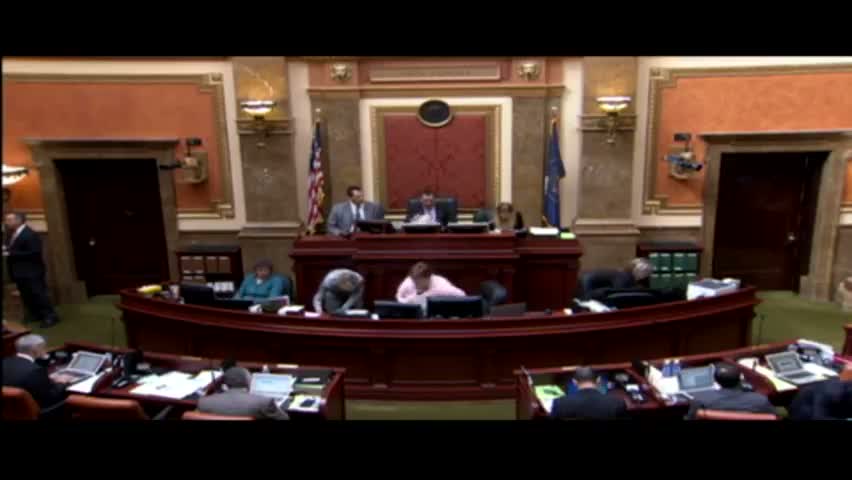
The Utah House passed First Substitute House Bill 69 on a 39–33 vote, approving a competitive grant program to provide supplemental English language arts instructional software and writing tools to public and charter schools.
Representative Moss, the bill sponsor, told colleagues the program would distribute grants through an RFP and would support both reading and writing instruction. “We’re asking for an appropriation of a million dollars,” Moss said, adding that that amount would serve about half the state’s 420,000 students in grades 4 through 12 at “approximately $6.06 per student.”
Moss said the program is intended to be supplementary, not mandatory, and to give teachers a tool to individualize instruction and provide immediate feedback. “This is to be for the individual student… it’s to be self motivated and for the teacher to use, not to relate to a grade or be specific to the test,” Moss said during floor debate.
Members raised several questions during the floor exchange. Representative Fred Cox asked whether the $1 million would be ongoing or one-time; Moss said that the decision about recurring funding would be made during the appropriations process. Representative Cutler asked whether the sponsor had identified particular vendors; Moss said no specific vendor was targeted and the RFP process would select providers. Representative Anderson expressed concern about hardware access in some districts; Moss replied that many schools now have Chromebooks or iPads but acknowledged that broader infrastructure funding is an appropriations issue.
Some members urged caution about state-directed programs. Representative Brown said local school districts should have discretion and warned that funding allocated 'below the line' can reduce base funding for other local priorities. Supporters emphasized classroom benefits: Representative Polson, an English teacher, described writing as a fundamental life skill and urged support.
The bill’s sponsor closed by saying the proposal complements prior investments in STEM and would help teachers provide critical reading and writing instruction. After closing remarks the House opened and closed voting; the clerk announced HB69 had passed by a 39–33 margin and will be transmitted to the Senate for further consideration.
Next steps: The bill now moves to the Utah Senate, where it may face committee review and appropriation decisions that will determine whether the $1 million request is included and whether funds are ongoing or one-time.