Get Full Government Meeting Transcripts, Videos, & Alerts Forever!
Get email alerts on the Emissions Inspection topic
No spam. Unsubscribe anytime.
Senate approves changes to emissions-inspection penalties, shifting primary liability to technicians
Summary
The Utah Senate passed SB186, changing enforcement of emissions inspections so certified technicians — not automatically shop owners — face most penalties for negligent errors; the bill sets a $500 penalty for a second negligent offense and permits certification suspension for repeat mistakes, while retaining larger fines for willful violations.
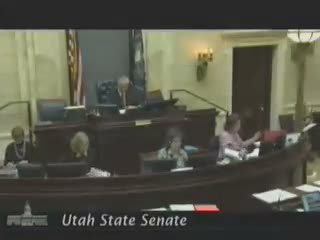
The Utah Senate passed Senate Bill 186 on final passage, moving much of the enforcement responsibility for vehicle emissions inspections from shop owners to certified technicians and establishing new penalties for negligent and willful conduct. The bill passed under suspension of the rules with a recorded vote of 15 yeas and 11 nays; three senators were absent.
Sponsor Senator Madsen told colleagues the measure arose from Administrative Rules Review Committee work and aims to align liability with the party that trains and certifies technicians. He described the bill’s structure: a first negligent error would trigger a refresher-training requirement (up to eight hours optional), a second negligent mistake would carry a $500 penalty against the technician, and a third negligent mistake could result in a two-year suspension of that technician’s certification. Madsen said harsher sanctions remain for “willful and knowing” violations, including heavy fines against shop owners if the health department can prove the shop knowingly participated in a scheme to pass vehicles that should fail inspection.
Opponents on the floor argued the bill still imposes severe penalties and raised fairness concerns for small businesses. Senator Butters asked about a fiscal note and questioned how the state concluded there would be no direct measurable state appropriation; Madsen responded that the bill’s fiscal analysis showed no new state appropriations would be required. Several senators noted testimony reporting prior fines under the existing system that had reached the equivalent of an entire day’s or month’s emissions revenue — amounts some witnesses described as up to roughly $20,000 for a second offense under earlier health-department rules.
Supporters and industry representatives said the Association of Emissions Shops favored the change because it prevents shops from being forced out of business for errors by employees they did not train or directly supervise. Madsen said the bill would place accountability “where it most appropriately lies” — with certified technicians for negligent errors and with owners only when willful, provable misconduct can be demonstrated.
Under the motion recorded on the floor, the bill advanced to the House for further consideration with the Senate’s recorded final passage tally of 15 yeas, 11 nays, and 3 absent. The bill sponsor said staff and committee testimony influenced the structure of the penalties and the training provisions.
The next procedural step is transmittal to the House for their action; the transcript records the final Senate tally and the forwarding of the measure.