Get Full Government Meeting Transcripts, Videos, & Alerts Forever!
Get email alerts on the Fiscal Monitoring topic
No spam. Unsubscribe anytime.
Cartwright officials told to return about $39,389 in federal ESSER funds after state monitoring
Summary
Arizona Department of Education fiscal monitoring found two questioned costs — a $603 procurement issue and missing documentation — and disallowed longevity payouts totaling $39,389; the district will place a voucher to return funds on the next board agenda.
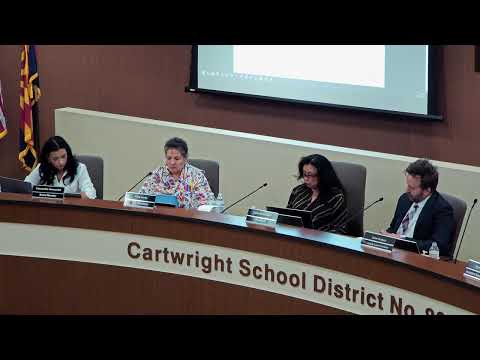
The Cartwright School District was notified this summer that Arizona Department of Education fiscal monitoring identified questioned and disallowed uses of federal grant money, including $39,389 in disallowed ESSER-era longevity payouts, the district told its governing board on Aug. 19.
"The disallowed costs were from the longevity payout," Dr. Etheridge said in a fiscal-monitoring update to the board, describing the ADE review of FY22–23 grant records. He said ADE also flagged a $603 textbook procurement line as a "question cost" because federal procurement rules differ from state procurement exemptions.
Dr. Etheridge told the board the district received the ADE findings in July and has 15 days to return the disallowed funds. "The voucher for the approval of this return of the funds will be on the next governing board meeting," he said.
The longevity payments were made in December 2022, Dr. Etheridge said, but the formal board approval of the longevity program was completed in January 2023. ADE concluded that retroactive payments to employees no longer employed at the time were disallowed under the federal grant, producing the $39,389 figure.
Vice President Rosa Cantu asked whether the individual who received a questioned payment would be required to repay the district. Dr. Etheridge said the district is accountable to return the funds because the district had already disbursed the payments; he added that the district could pursue further investigation afterward. "For right now, the district is accountable because we paid that employee," he said.
Board members were not asked to vote on the repayment at the Aug. 19 meeting; administration said the formal voucher to return funds will be presented for approval at the next governing-board meeting.
What happened next: Administration will place a voucher to return the disallowed ESSER funds on the next board meeting agenda; staff said they will also bring supporting documentation and will investigate whether any district recovery action is appropriate.