
CSAC president urges unity, prioritizes housing, wildfire resilience and elder care
Get AI-powered insights, summaries, and transcripts
Subscribe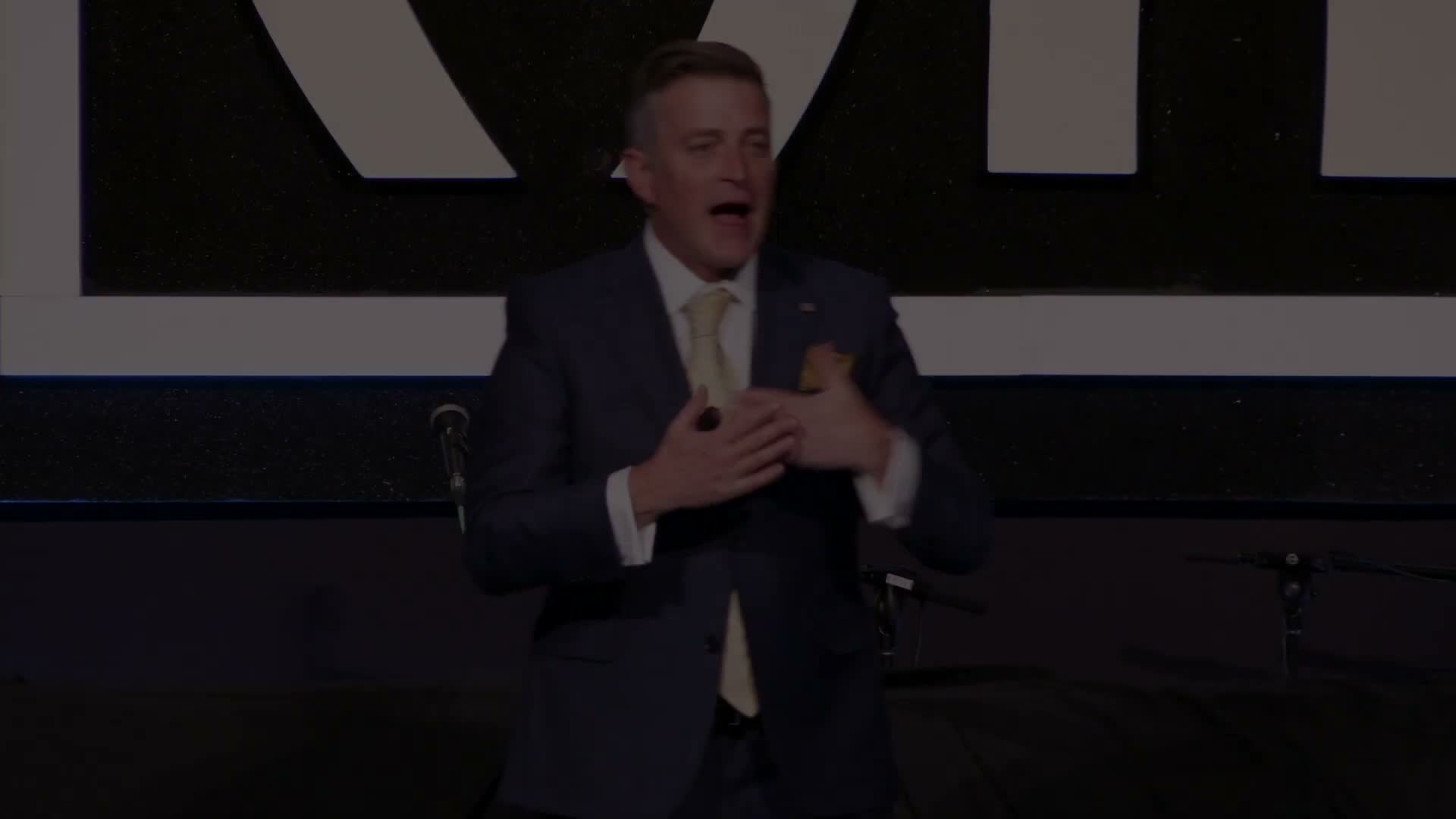
Summary
At the California State Association of Counties annual meeting, the newly installed CSAC president urged county leaders to focus on homelessness, housing affordability, climate adaptation, childcare and preparation for an aging population while emphasizing unity and CSAC’s advocacy role.
Unidentified Speaker, president of the California State Association of Counties, accepted the presidency and used the address to outline county priorities for the year, stressing unity across California’s 58 counties and the practical work supervisors do day-to-day. "I am so honored and grateful that you all have placed your trust in me to be your president for the next year," the speaker said, opening the remarks.
The president framed CSAC as a unifying advocate for counties and urged investment in source regions that supply the state’s water, clean air and outdoor recreation, noting travel across the North Coast, Sierra Nevada, the Bay Area and the Central Valley. "That's where your water and your clean air and your recreation come from, and we should invest in it," the speaker said.
Homelessness and housing affordability were presented as immediate concerns. The president said homelessness has not decreased despite efforts and raised the challenge of housing costs for county employees and local leaders. "If I didn't buy a house when I did on a supervisor salary, I couldn't have a house," the speaker said, using a personal example to underline workforce impacts.
Climate and wildfire risk, the need for childcare and early education systems, and the demographic shift toward an older population were listed as concurrent priorities. The president cited a projection that by 2030 roughly one-quarter of Californians will be over 60, with a large share over 85, and warned the state lacks sufficient infrastructure to serve that shift.
On intergovernmental relations, the speaker framed CSAC’s role as securing flexibility and resources from state and federal partners so county-level solutions can work locally. The address cautioned against unfunded realignments and mandates that can impede local service delivery and said CSAC must "remind" higher levels of government that county success is required for state success.
The president also pointed to rapid turnover in the Legislature as both a challenge and an opportunity. With what the speaker described as an unusually inexperienced class of legislators, CSAC has a role in training new members about county responsibilities.
The remarks included organizational acknowledgements—more than 40 retiring supervisors (including named figures such as Keith Carson and Erin Hannigan), senior staff (Graham Knauss, Chastity Benson, Jacqueline Wong Hernandez, Alan Fernandez) and leaders of CSAC programs (Paul Dancek). The address credited the CSAC Institute and the California Counties Foundation with training the next generation of local leaders.
The president closed by identifying civic division as the greatest current threat to community wellbeing and urged members to act in ways that "make my community stronger" before speaking or taking action. The speech concluded with personal acknowledgements of family and Inyo County supporters and a call to return to work on the priorities named.
The address set the agenda for CSAC’s coming year of advocacy and training; no formal motions or votes were recorded in the transcript.