
Saint Joseph council adopts amended chronic-nuisance ordinance, removes '200-foot' adjacent-property clause
Get AI-powered insights, summaries, and transcripts
Subscribe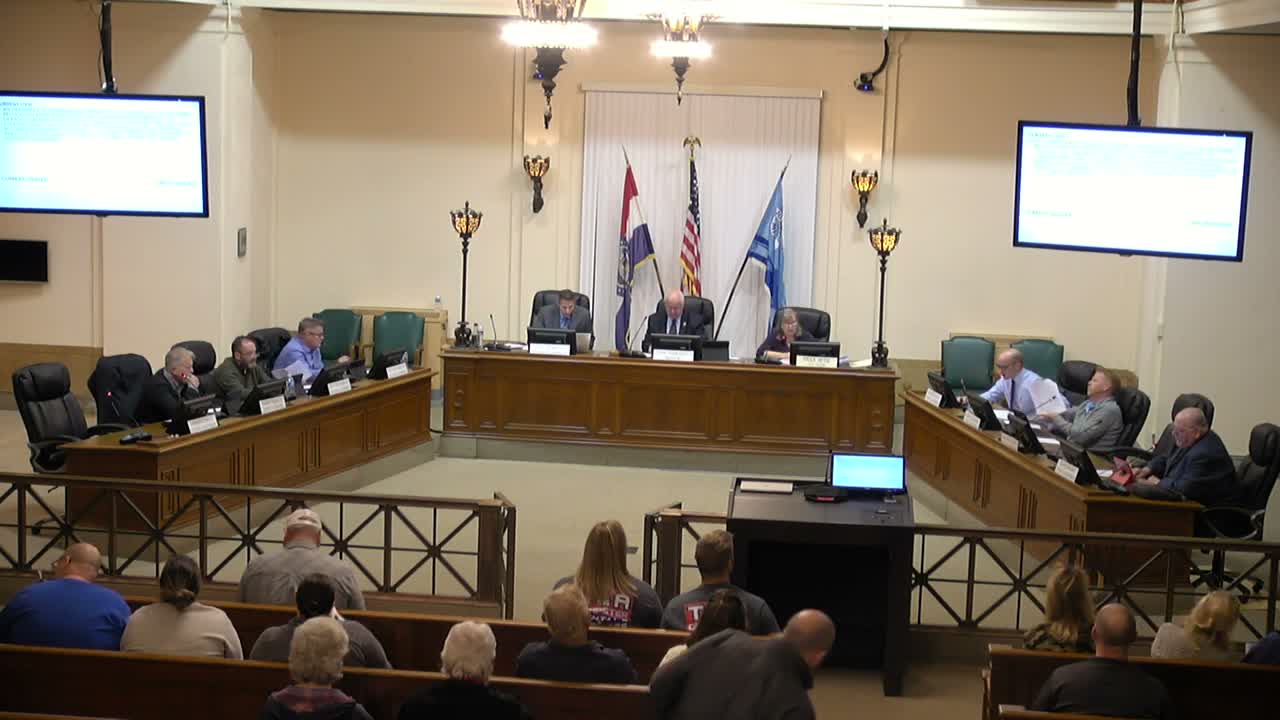
Summary
The Saint Joseph City Council adopted an ordinance establishing rules for chronic-nuisance businesses but removed a provision that would have implicated adjacent properties within 200 feet after debate and an amendment that passed unanimously.
The Saint Joseph City Council on Nov. 12 approved an ordinance adding a chronic-nuisance-business article to the city's exterior property maintenance code but removed language that would have applied enforcement to adjacent properties within 200 feet.
The measure, introduced as Ordinance 7, revises sections governing suspension, revocation and administrative penalties and adds definitions and enforcement procedures for chronic-nuisance businesses, city staff said. Council member Eslinger pulled the item for clarification, saying the 200-foot provision could expose neighboring property owners to citations even when they were not the source of nuisance activity.
Assistant City Attorney Josh Emberton told the council the intent of the 200-foot language was not to cite adjacent property owners but to identify where nuisance activity occurs and ensure the original business responsible for the activity could be held to account. Emberton said the enforcement process includes a courtesy notice, a notice of continuing chronic nuisance, an opportunity to abate and, if necessary, referral to the Administrative Violation Review Board.
"The chronic nuisance business would still be considered the business that was contributing to the nuisance," Emberton said. "At no point in any of that process does it contemplate hauling in the neighboring businesses to justify why they're allowing trespassers and loiterers to linger on their property during the day."
Council member Eslinger proposed and moved to delete the adjacent-property provision. Members discussed the risk of uneven enforcement if the clause remained and the possibility of revisiting code language later to strengthen enforcement if needed. The amendment to remove the 200-foot clause passed 7-0; the ordinance as amended was then approved, also by a unanimous vote.
The ordinance establishes a multi-step administrative process before penalties apply, city staff said, including notice and an abatement period. The council did not adopt additional procedural changes or specify new penalty amounts during the Nov. 12 meeting.
City officials said the goal of the code change is to hold businesses that contribute to persistent nuisance or blight accountable while protecting neighboring property owners from being wrongly cited. The council indicated it may revisit the language in a future amendment if enforcement practices expose gaps.
The council took the action during its consent-agenda handling after the item was pulled for discussion; the vote was recorded as unanimous.