Get Full Government Meeting Transcripts, Videos, & Alerts Forever!
Get email alerts on the Parks Accessibility topic
No spam. Unsubscribe anytime.
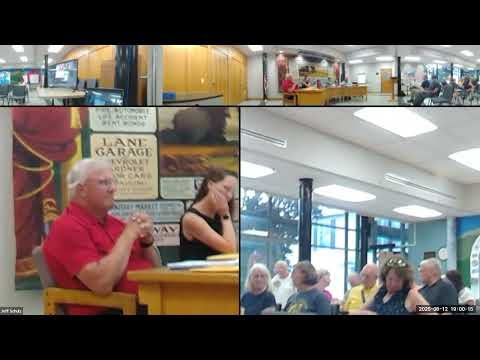
Northfield residents and board clash over Cheney Field parking and accessibility as contractor demobilizes
Summary
A heated and sustained public discussion left the select board without a final vote: conservation groups oppose any new permanent parking at Cheney Field, accessibility advocates pressed for some vehicle access for people with limited mobility, and the board agreed to assemble a stakeholder group to study alternatives before a final decision.
The Select Board opened a prolonged public discussion about Cheney Field after water‑tank construction crews cleared a staging area that residents and committee reports describe as plane‑like and visible from town. Board members said the contractor will demobilize soon, creating a narrow window to decide whether to retain a small, unpaved parking area or to restore the site to its prior natural condition.
Multiple conservation and town‑forest voices made a unified plea against creating permanent parking in Cheney Field. "We would like to see improved accessibility, but we'd really, really like to save [the field] from changing from having a parking lot," a resident spokesperson told the board, adding that the North Hill Town Forest access feasibility study (2022) favored gravel parking and wayfinding but generally opposed paving or large parking lots.
Accessibility advocates and members of the town’s accessibility and walkability task force urged the board to consider small, controlled parking to allow older residents and people with mobility limitations to access the field. Dan Anderson, a member of the town’s accessibility task force, asked for a facilitated, good‑faith discussion among representatives of differing interests to seek common ground before the contractor finished demobilizing.
Neighbors who live on Byam Road and nearby lanes raised safety and turning concerns about additional traffic using narrow, single‑lane approaches. Several speakers asked whether opening adjacent private or institutional land (for example, Norwich University property) for shuttle or parking access had been explored; responses indicated limited immediate options because private parties and permitting constraints would take time.
Procedural and practical questions dominated: what size parking area (if any) should remain, who would pay for surfacing or restoration, whether material staged in the field would be used for tank backfill, and how any short‑term changes could be written into contract close‑out instructions without a costly change order. Karen Hutchinson, a resident, asked whether the contract obligated the contractor to return the site as close as possible to pre‑construction condition; town staff confirmed contract language requires restoration but said the board could direct different, non‑costly outcomes if agreed by stakeholders.
The board did not take a final vote. Instead, members agreed to: (1) assemble a working group with representatives from the accessibility task force, town forest stewardship and conservation commissions, neighbors and other stakeholders; (2) meet publicly to explore alternatives, and (3) provide timely guidance to staff before the contractor fully demobilizes. "We are going to facilitate whatever this is and recognize that there's gonna be disagreements, but we're going to make a decision as publicly as we can," the chair said.
Next steps: the board asked organizers to identify representatives and begin facilitated meetings so that the public can offer input; the manager will track contractor demobilization schedule so any options requiring contractor action can be confirmed or declined before equipment leaves the site.