Get Full Government Meeting Transcripts, Videos, & Alerts Forever!
Get email alerts on the Heritage Survey And CEQA Guidance topic
No spam. Unsubscribe anytime.
Planning staff agrees in principle with SPUR/Heritage recommendations; pledges updates to survey practice and Preservation Bulletin 16
Summary
At an April 2 hearing, Planning Department staff said it generally supports most SPUR and San Francisco Architectural Heritage recommendations on citywide surveys, outreach and CEQA guidance and committed to scoping a citywide survey and updating Preservation Bulletin 16 within about a year; commissioners pressed staff for interim clarity on HRE scope and public access to survey materials.
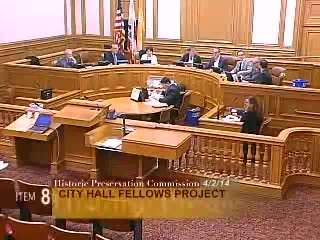
Planning Department staff told the Historic Preservation Commission April 2 that it generally agrees with most recommendations in the joint SPUR / San Francisco Architectural Heritage report and outlined staff plans to respond, while commissioners and outside representatives pressed for clearer interim guidance.
Tim Frey, preservation staff, said the department supports a citywide historic‑resource survey program but noted constraints: consultant capacity, staff time and public participation requirements. He estimated that a full citywide survey “could take anywhere from 4 to 10 years to complete” depending on resources and scope.
On a cluster of CEQA recommendations, staff and outside experts agreed there is utility in using the Secretary of the Interior’s Standards as a safe harbor, but Sarah Jones, the department’s environmental review officer, cautioned that compliance with those standards is not the only way to avoid a significant CEQA impact. “A project that isn’t consistent with the standards might still not result in a significant impact under CEQA,” Jones said, explaining the difference between meeting the standards and the CEQA significance threshold.
SPUR representative Sarah Karlinsky urged stronger outreach and recommended the planning commission receive context statements as informational items and have public representation on survey advisory groups. Karlinsky and Mike Buehler (San Francisco Architectural Heritage) emphasized targeting survey work to neighborhoods facing active development and creating interim standards (for example, line-of-sight boundaries for temporary surveys) while the full citywide program is developed.
Staff said many of the report’s technical recommendations would be addressed in a forthcoming update to Preservation Bulletin 16 and related administrative guidance. Tim Frey and other staff said they expect a draft update and roadmap on HRE (historic resource evaluation) scoping within roughly a year and offered to provide periodic check‑ins to the commission.
Commissioners focused on practical concerns: making context statements and adopted surveys accessible to the public (staff said recent surveys and context statements are posted on the preservation pages and older materials can be obtained from the preservation library), clarifying when an HRE is required and starting survey work in residential areas where owners report surprise and cost burdens.
No formal vote was required; staff committed to schedules and follow‑ups and to making guidance more explicit in updated bulletins and online resources.