Get Full Government Meeting Transcripts, Videos, & Alerts Forever!
Get email alerts on the Fleet topic
No spam. Unsubscribe anytime.
San Francisco Fire Department warns aging fleet, long lead times strain response capacity
Summary
SFFD leaders told the Fire Commission that a large share of engines and trucks are past NFPA-recommended service life, reserve apparatus are thin and supply-chain delays plus rising costs complicate replacement plans ahead of a Budget & Finance Committee hearing.
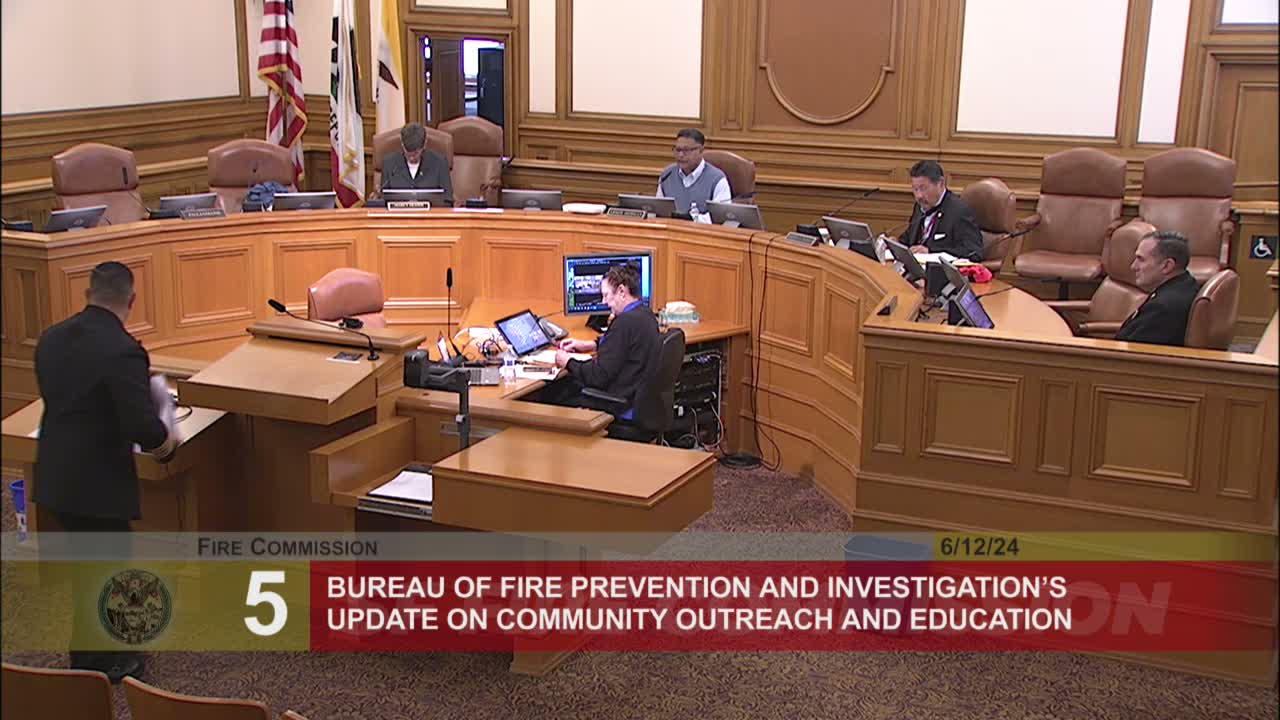
The San Francisco Fire Department told the Fire Commission on June 28 that its engine, truck and ambulance fleets are older than recommended and at risk of driving down operational capacity without new funding.
Deputy Chief Shane Kailoa said the department operates 44 in-service engines and 20 trucks, and that a substantial share of those vehicles exceed National Fire Protection Association service-life guidance. "About 31% of our engines are 20 years old and 53% of our trucks are over 20 years old," Kailoa said in his presentation, adding that the department operates "approximately 50-plus" ambulances with several age cohorts.
The presentation stressed long procurement lead times and price inflation since 2019: Kailoa cited delivery timelines of roughly 660 days for suppression apparatus and 220 days for ambulances, and described cost increases for apparatus since 2019. "Post COVID we faced supply-chain issues, skyrocketing cost of those apparatus, and decreased purchasing power," he said.
Kailoa warned that reserves are thin. "Not too long ago, about two to three months ago, we had one reserve truck left in the city," he said. Without a robust reserve fleet, the department could be forced to "down a truck company" if additional vehicles fail while others are in maintenance.
Commissioners pressed for more detail about where reserve units are staged and how San Francisco's custom apparatus needs (hills, narrow streets) affect cost. Kailoa said reserve vehicles are staged at certain firehouses and the Bureau of Equipment; he also confirmed that San Francisco's apparatus are built to special specs and that those customizations are included in the higher price.
Chief of Department Janine Nicholson said the fleet will be a top priority in the department's budget advocacy. "We ran a whole lot of scenarios," she said, acknowledging tradeoffs with options such as leasing. "If we lease 20 engines this year, we still have to pay that note moving forward. What are we going to be able to get next year and the year after?"
Kailoa and Nicholson said the department will present the need and scenarios to the Board of Supervisors' Budget and Finance Committee at hearings this week, asking for funding to begin rebuilding reserves and replace vehicles beyond NFPA guidance.
The presentation included operational context: Deputy Chief Darius Letrope's operations report earlier in the meeting described two recent second-alarm incidents that taxed resources and illustrated how stretched apparatus can affect incident response.
Next steps: the department will provide scenarios and cost estimates to the Budget and Finance Committee and continue to brief the Fire Commission. No appropriation or replacement contract was approved at the meeting.