Get Full Government Meeting Transcripts, Videos, & Alerts Forever!
Get email alerts on the Separation Of Powers topic
No spam. Unsubscribe anytime.
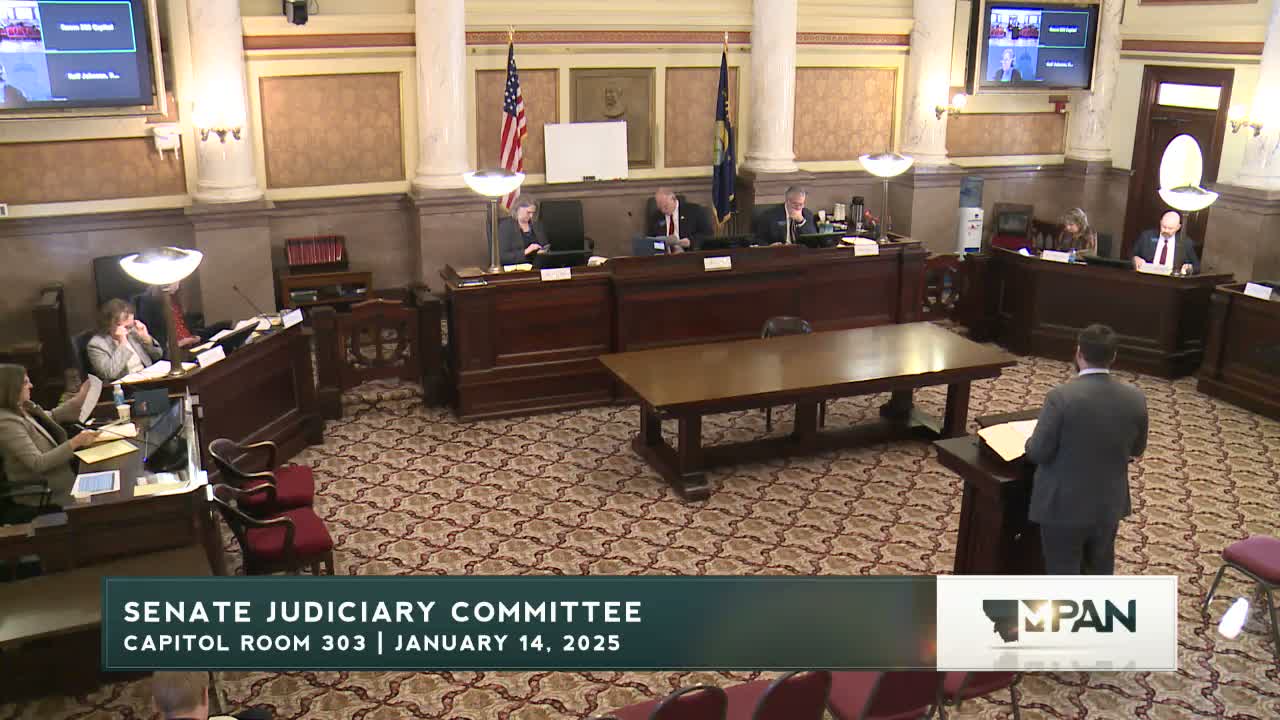
Broad separation-of-powers bill draws sharp debate in Judiciary Committee
Summary
Senate Bill 44 would codify separation-of-powers principles and define the powers of state branches and certain boards. Supporters said it clarifies authority; opponents including the State Bar, ACLU and Friends of the Third Branch warned it intrudes on judicial interpretation and risks constitutional litigation.
Senator Daniel Emmerich opened Senate Bill 44 as a broad statutory effort to codify separation-of-powers doctrine and to define legislative, executive and judicial powers, in addition to clarifying the roles of the Board of Regents and Board of Public Education.
Proponents said the bill seeks to clarify constitutional boundaries so branches and boards understand their respective authority. James King, testifying as an individual, told the committee he saw the bill as necessary to check what he described as judicial overreach in particular cases.
Opponents strongly objected. Bruce Spencer of the State Bar warned the bill attempts to regulate judicial interpretation and may contravene constitutional separation of powers; Friends of the Third Branch, the ACLU, Big Sky 55+ and other witnesses echoed concerns that the statute would invite litigation over constitutional limits and could be used politically to punish judges. The State Bar cited concerns that codified definitions might be used to impeach judges who follow case law.
Committee members debated constitutional history and the role of the courts in interpreting the constitution (including references to Marbury v. Madison in the discussion). The sponsor said the statute does not amend the constitution and is intended to reflect powers already set out in the constitution with clearer statutory definitions; opponents said the proposal was large and deserved more careful, item-by-item consideration rather than being advanced as a single omnibus bill.
No vote was taken; the hearing closed with the sponsor open to amendments and committee members urging more review.