Get Full Government Meeting Transcripts, Videos, & Alerts Forever!
Get email alerts on the Committee Eas topic
No spam. Unsubscribe anytime.
Committee clears a slate of executive actions and concurrence motions; multiple bills move to the floor
Summary
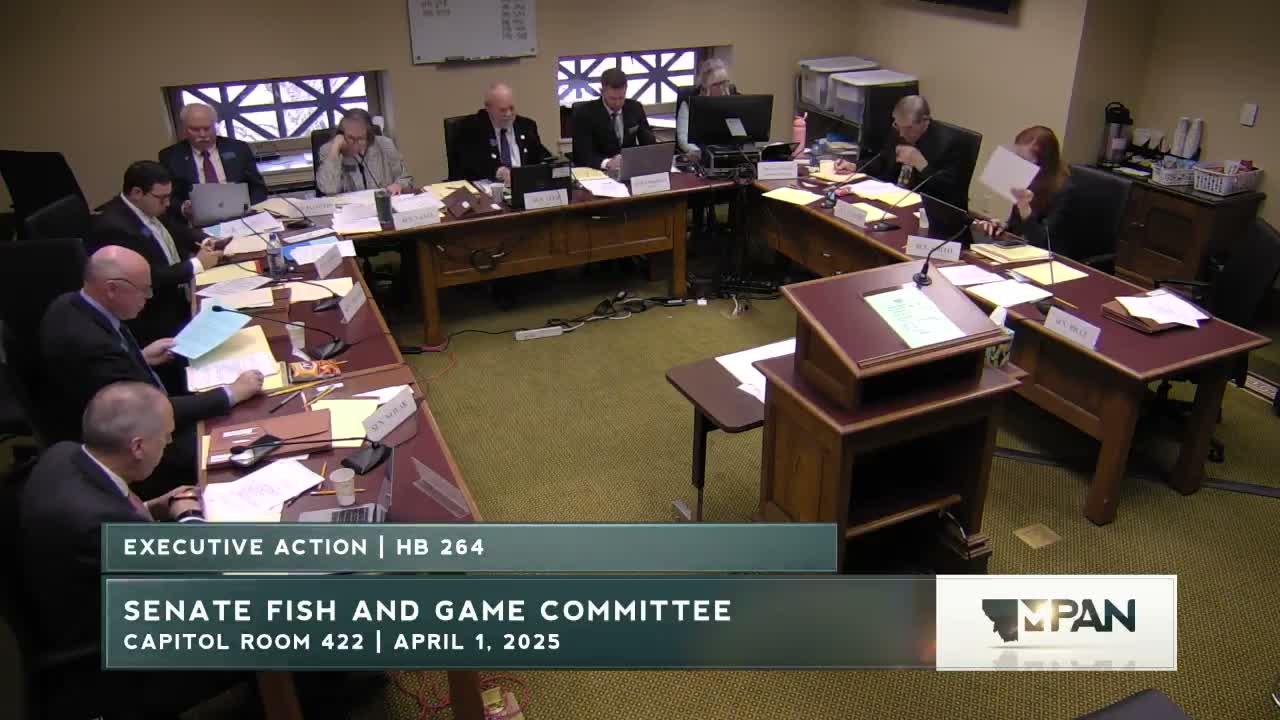
After hearings, Senate Fish and Game approved a set of concurrence motions and amendments (House Bills 264, 330, 283, 354, 450, 468, 568 and others) and reported them to the Senate floor, mostly by voice vote or roll call following brief discussion and limited amendments.
During the committee’s executive actions segment, senators considered a package of House bills and amendments and moved a number of items to the Senate floor.
Key actions recorded in the transcript: - HB 264 (wildlife location data, telemetry frequencies): amendment drafted with FWP input (clean‑up language about 'project' vs. 'research' partners) passed and the bill was concurred in as amended. - HB 330 (auctions/lotteries for antelope and swans): passed to the floor by voice vote. - HB 283 (adds lottery option for some special tags): taken from the table and passed by roll call (6 yes, 5 no) to come off the table and then concurred in. - HB 354 (criminal trespass and revocation of hunting privileges): committee made a conceptual amendment changing 'must' to 'may' (adding discretion) and passed the bill as amended. - HB 450 (class D5 licenses for bird training dogs): passed to the floor; the bill requires applicants report number of dogs to be trained and prints that number on the license. - HB 468 (watercraft law cleanup, Title 23): passed to the floor after discussion about removing a multi‑year decal requirement; staff noted federal changes to the program requirements. - HB 568 (Montana Hunters First Act — nonresident impact study): committee adopted an amendment narrowing scope to reduce the fiscal note and concurred in the bill as amended.
Several motions were voice votes and some roll calls; proxies were used in some cases and were recorded orally for the record. The committee closed its business and adjourned.
Next steps: Each bill advanced to the floor with the committee’s recommendation; committee staff will prepare formal reports and carry assignments for floor action.