Get Full Government Meeting Transcripts, Videos, & Alerts Forever!
Get email alerts on the Ballot Measures topic
No spam. Unsubscribe anytime.
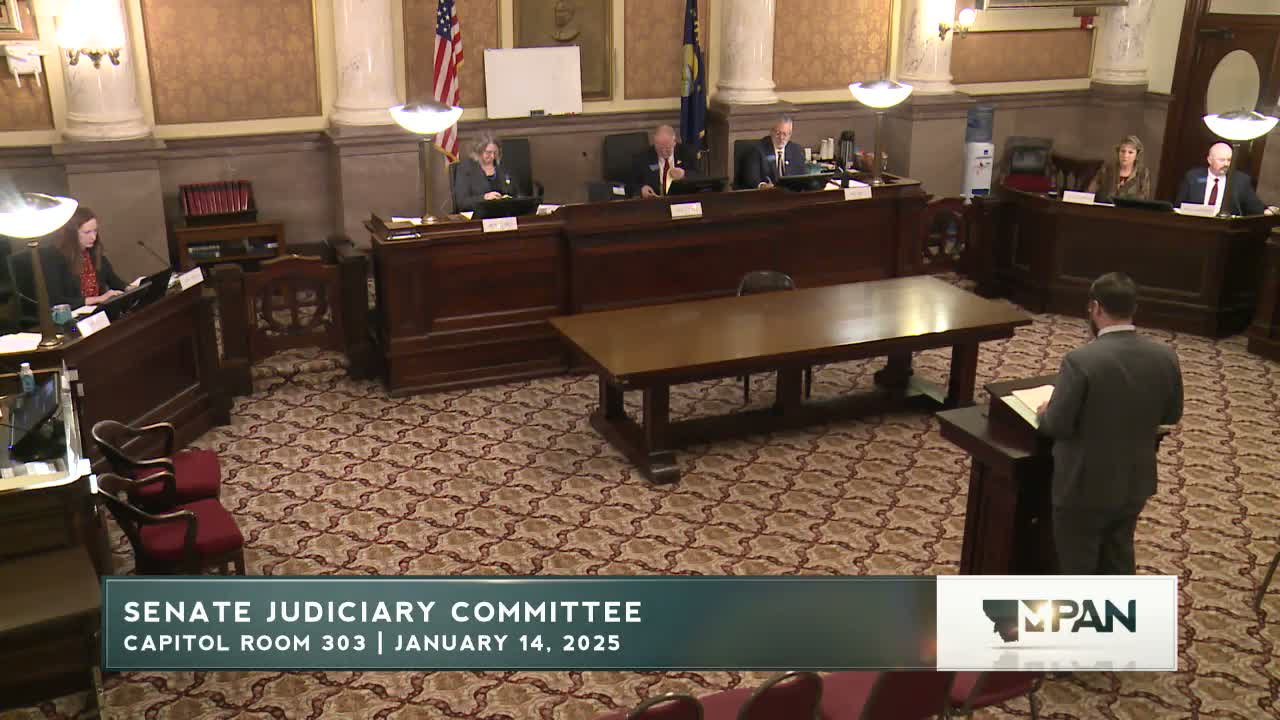
Committee hears bill to route ballot-measure challenges through district courts
Summary
Senator Daniel Emmerich told the Judiciary Committee SB 13 would send legal sufficiency challenges to district courts for fact-finding before appeal to the Montana Supreme Court. Civil liberties groups, the ACLU, and advocacy organizations urged a "do not pass," saying the change would add delay and burden already-stretched district courts.
Senator Daniel Emmerich, sponsor of Senate Bill 13, told the Senate Judiciary Committee the bill would eliminate the Montana Supreme Court's original jurisdiction over legal sufficiency challenges to ballot measures so those cases would go first to district courts, allowing fact-finding there and permitting appeal to the Supreme Court if parties choose.
Supporters of maintaining the status quo pushed back. Henry Seaton of the ACLU of Montana argued the change "is a solution in search of a problem," saying the Supreme Court has handled original jurisdiction cases without issue and that sending those cases through district courts would slow the process and risk clogging rural dockets. Heather O'Loughlin of the Montana Budget and Policy Center testified SB 13 "adds another step in the process and creates further hurdles for citizens in accessing their constitutional right to consider ballot measures." Al Smith of the Montana Trial Lawyers Association warned the bill "will just extend the time for judicial review of these matters because either party that loses is just gonna appeal it to the Supreme Court."
Members questioned whether existing statutes already permit fact-finding in district courts when appropriate and raised practical concerns. Senator Smith asked about a five-day filing deadline in current law that speeds an appeal from district court to the Supreme Court; the sponsor acknowledged the new draft omits that deadline and said he would work with members on an amendment to restore time limits to avoid unnecessary delay. Committee members also asked about legislative history and whether earlier bipartisan reforms that moved original jurisdiction to the Supreme Court to speed ballot challenges had been considered.
No vote was taken; the hearing closed after testimony and questions. The sponsor said he would consider amendments, and opponents urged the committee to reject the bill because of access and resource risks.