Get Full Government Meeting Transcripts, Videos, & Alerts Forever!
Get email alerts on the Hb71 Mountain Lion topic
No spam. Unsubscribe anytime.
Heated Testimony at Hearing on HB71: Second Mountain-Lion Tag Authority and Tendoy Sheep Language Removed
Summary
House Bill 71 would add mountain lion to species eligible for a discretionary second special license and remove outdated Tendoy bighorn sheep reporting language. FWP says the change is a targeted management tool; houndsmen and conservation groups warned it's premature without study data and risks social and biological impacts.
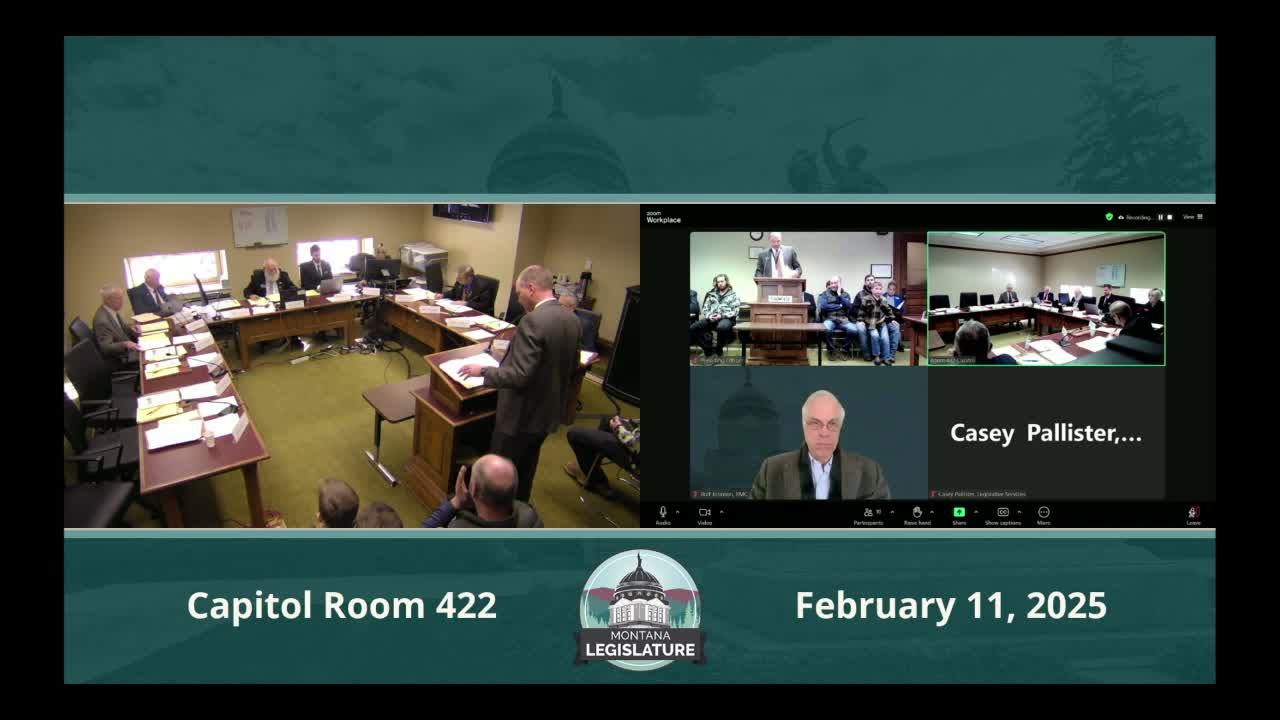
House Bill 71 drew extended and at times contentious testimony as the Senate Fish and Game Committee considered a proposal to add mountain lion to the list of species for which the Fish and Wildlife Commission could authorize a second special license and to strike outdated Tendoy bighorn-sheep language.
Representative Shannon Maness, carrying the bill from the House, told the committee HB71 "adds mountain lion to the species of game animals for which a second animal may be harvested by an individual in the same year" but stressed the change's discretionary nature: the commission would decide where, when and how many second licenses could be made available. "This bill does not guarantee a lion hunter could hold a license to harvest two lions in the same year," Maness said.
Emily Cooper, licensing bureau chief for Montana Fish, Wildlife and Parks, testified on behalf of the director. Cooper said the statutory change would give the commission an additional tool in LMUs where harvest structure has not met management objectives and that the bill would not alter how the commission sets quotas. On the Tendoy sheep language, Cooper said the reestablishment project has progressed and the outdated reporting requirement can be removed.
Opponents, including Stacy Bartsch (president, Montana State Houndsman Association) and Winston Opelt (reading a formal opposition), argued the change is unnecessary and risks biologically unsound outcomes. Bartsch cited that Fish, Wildlife and Parks sells about 5,500 lion tags annually and questioned whether adding a second-tag authority yields meaningful benefit; she urged waiting for the ongoing field study to complete.
Several houndsmen and guides (Josh Shively, Connor Hopkins, Cody Allison and others) provided detailed field testimony, warning that mountain-lion social structure and kitten survival are sensitive to increased harvest pressure and that quotas are limits rather than targets. Remote caller Ryan Castle said he had not found a supportive biologist for the proposal and warned that offering two tags at the commission's discretion risks politicizing decisions that should be biology-led.
Committee members probed FWP on where and when second-license authority would be used; Cooper responded that the commission had asked the department to explore whether this tool is an option and that, if added to statute, the commission would specify LMUs, season timing and quantities via its discretion and possible rulemaking.
On the Tendoy bighorn-sheep matter, Representative Maness and Cooper said the herd is reestablished and the reporting requirement is no longer necessary.
What happens next: The hearing closed with the sponsor asking for a do pass. Committee members expressed divergent views and asked for follow-up information on how the commission would use variable authorities; no committee vote was recorded in this session.