Get Full Government Meeting Transcripts, Videos, & Alerts Forever!
Get email alerts on the Taxation topic
No spam. Unsubscribe anytime.
Write Back Act proposed to return growth from Montana’s 95 school-equalization mills to taxpayers
Summary
House Bill 483 (the Write Back Act) would return revenue growth from the uniform 95 school equalization mills to taxpayers, raise school transportation reimbursement, and use revenue to reduce variable local mills; proponents said it builds on prior legislation and targets transportation and retirement relief.
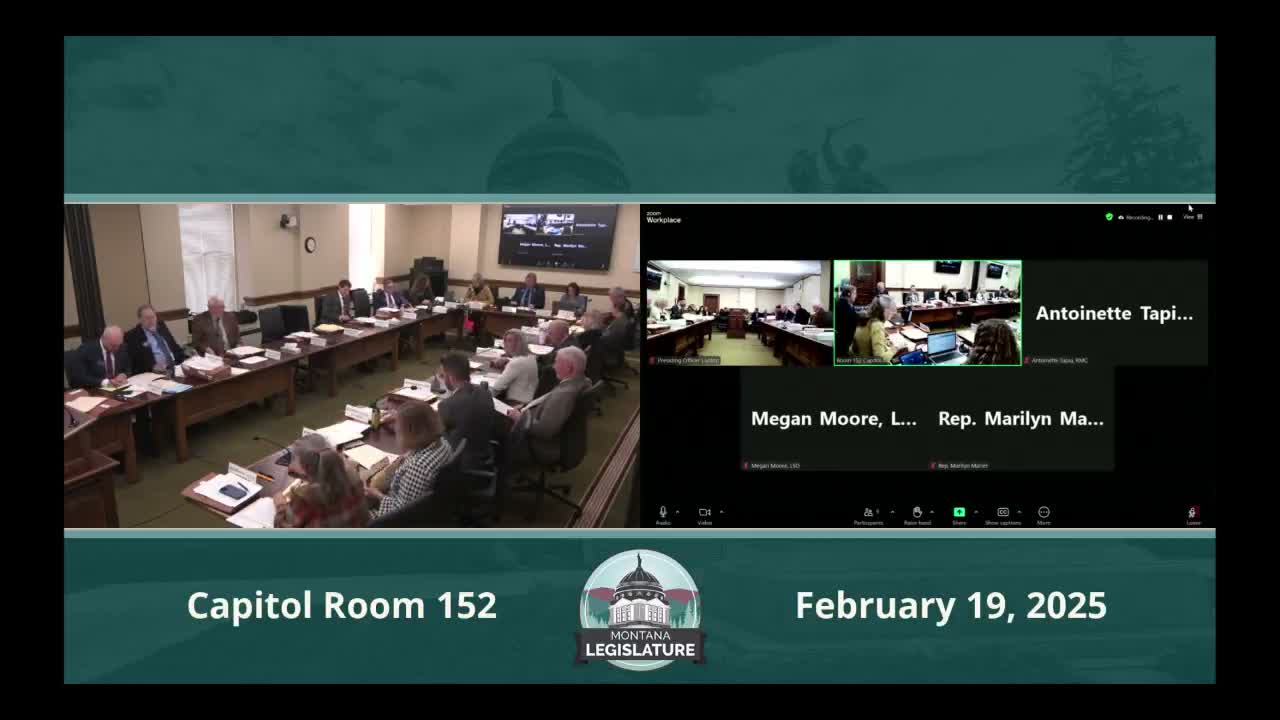
Representative Courtney Sprunger (spelled S P R U N G E R in the transcript), of House District 7, opened the hearing on House Bill 483, which she called the "Write Back Act." Sprunger told the committee the bill would return excess revenue growth from the uniform 95 school equalization mills to taxpayers while preserving school funding. "The Write Back Act is exactly that," she said, describing it as a way to provide property-tax relief while keeping critical school funding stable.
Sprunger outlined several elements: use revenue growth to help counties and school districts cover transportation, buses, teacher retirement and GTB obligations; lock in the uniform 95 mills as a primary funding source for schools; channel revenue growth beyond state obligations directly back to taxpayers to lower local levies; increase school transportation reimbursement rates (unchanged for about 20 years); and create safeguards to prevent temporary tax spikes between reappraisals (the GTB lag).
Lance Melton, representing the Montana School Boards Association and the Montana Association of School Business Officials, testified in support and provided a handout to the committee. Melton said HB 483 follows prior legislation (including House Bill 587) and reflects recommendations from the property-tax task force to protect the 95 mills. He cited projected figures in the committee materials: House Joint Resolution 2 projects about $69.9 million in growth from the 95 mills; after an assumed deduction included in the governor’s proposed budget, Melton said roughly $56.5 million would be available for distribution to reduce variable mills and support statewide priorities.
Melton also described wide disparity in the per-pupil value of a mill across districts and framed HB 483 as a step toward greater equity in school funding. He told the committee that the plan would use growth from the 95 mills for transportation reimbursement increases and county retirement tax relief among other priorities, and that amounts could be affected by other bills under consideration, such as a homestead exemption proposal (House Bill 231).
There was broad proponent testimony and no opponents recorded in the transcript. Informational witnesses and staff were referenced elsewhere in the hearing. The transcript does not record a committee vote on HB 483; the hearing proceeded as a presentation with proponent testimony and question time.
Next steps: the bill will proceed through the committee process; no vote was recorded in the transcript.