Get Full Government Meeting Transcripts, Videos, & Alerts Forever!
Revenue Department explains agricultural land classes, valuation formula and how classification drives tax differences
Summary
The Department of Revenue presented Montana’s agricultural land classification rules, including automatic qualification at 160+ acres, the 20‑acre nonqualified threshold, a $1,500 gross‑income application test for smaller parcels, AUM calculations for grazing, and valuation inputs (NRCS productivity, commodity prices, 6.4% cap rate); parcel examples showed large tax differences for neighboring properties.
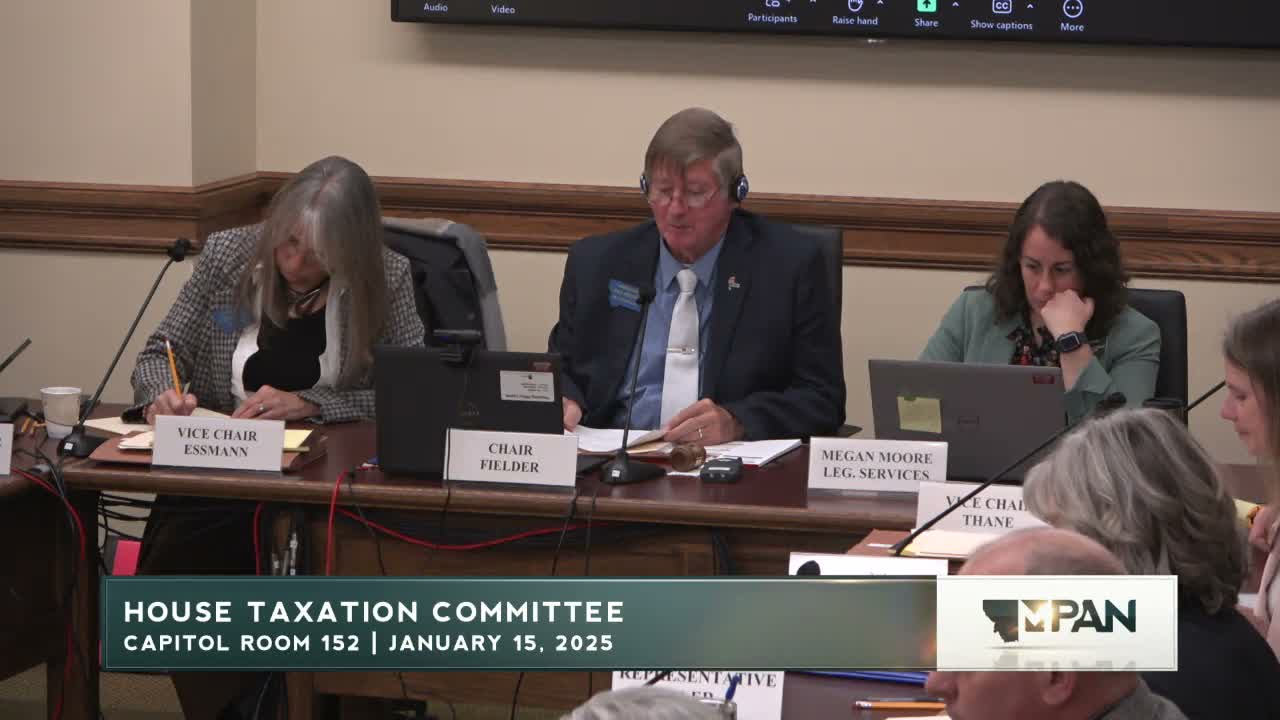
Bryce Kautz of the Department of Revenue presented a detailed overview of agricultural land classification (Class 3) and valuation methodology to the House Taxation Committee.
Kautz explained Montana is a classification state: the legislature sets classes and valuation standards, and the Department applies classification and values. He summarized automatic‑qualification rules (contiguous parcels of 160 acres or more automatically qualify as "qualified agricultural property" regardless of current use, except for industrial/commercial uses) and the nonqualified subclass (parcels of 20–160 acres automatically receive a "nonqual" designation that is valued using a statewide…
Already have an account? Log in
Subscribe to keep reading
Unlock the rest of this article — and every article on Citizen Portal.
- Unlimited articles
- AI-powered breakdowns of topics, speakers, decisions, and budgets
- Instant alerts when your location has a new meeting
- Follow topics and more locations
- 1,000 AI Insights / month, plus AI Chat