Get Full Government Meeting Transcripts, Videos, & Alerts Forever!
Get email alerts on the Board Of Investments topic
No spam. Unsubscribe anytime.
Board of Investments details investment strategy and use of Homes Act funds to support affordable housing
Summary
Dan Villa of the Montana Board of Investments explained the Unified Investment Program managing ~$28.67 billion, the Board's fiduciary duties and nine asset classes, and described deploying $106 million in Homes Act funds via collateralized bank deposits to finance 969 affordable housing units while preserving principal for redeployment.
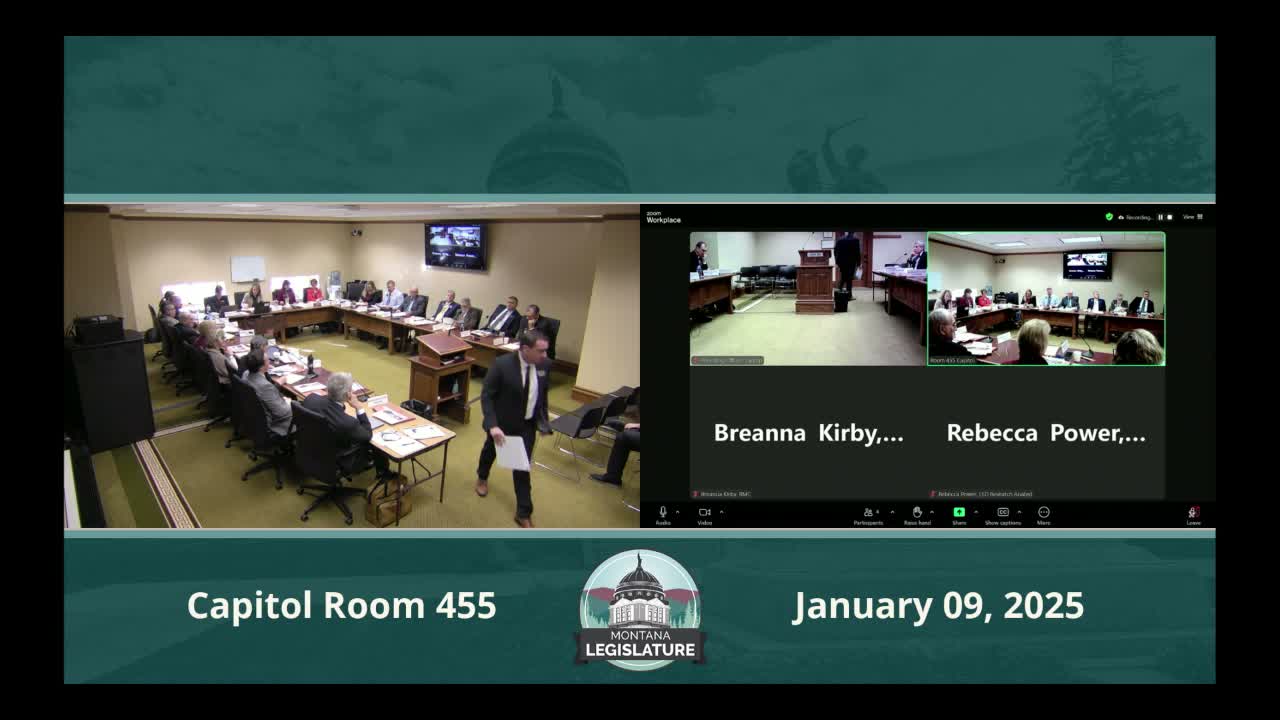
Dan Villa, executive director of the Montana Board of Investments, briefed the House State Administration committee on the Board's role, scale and recent deployment of state housing funds.
Villa said the Board oversees about $28,670,000,000 across state, local government, university and special purpose district funds; roughly 15.3% of those assets are pension dollars. He described the Board's fiduciary obligations under Article 8 Section 13, the agency's audit regimen and the Board's nine asset classes, including domestic and international equities, core and non-core fixed income, private investments, real estate and real assets.
On program deployment, Villa described how $106,000,000 in Homes Act funds were used to reduce construction financing costs for affordable housing. The Board placed collateralized deposits with Montana banks at subsidized rates so builders could borrow at reduced construction rates; those deposits are structured as multi-year collateralized instruments and will roll back with interest to be redeployed in future projects, Villa said.
Committee members asked whether the Board invests in China or other international markets. Villa said the Board is OFAC-compliant and applies other internal restrictions; domestic equities are largely passive index strategies while international exposure uses active managers where market inefficiencies allow value above passive alternatives.
Villa emphasized cost control and due diligence: the Board has reduced operating costs and works to limit fees charged to asset managers. He said the Board will not make investments based on non-pecuniary factors unless those investments demonstrably deliver dollar-for-dollar benefits to the state under recently adopted statutory constraints.
The committee did not take action on investments during the session; members requested further detail in written materials and were reminded how to access the Board's annual reports and statutory disclosures online.