Get Full Government Meeting Transcripts, Videos, & Alerts Forever!
Get email alerts on the Election Administration topic
No spam. Unsubscribe anytime.
Committee hears bill to bar counties from stripping election duties from elected clerk during term
Summary
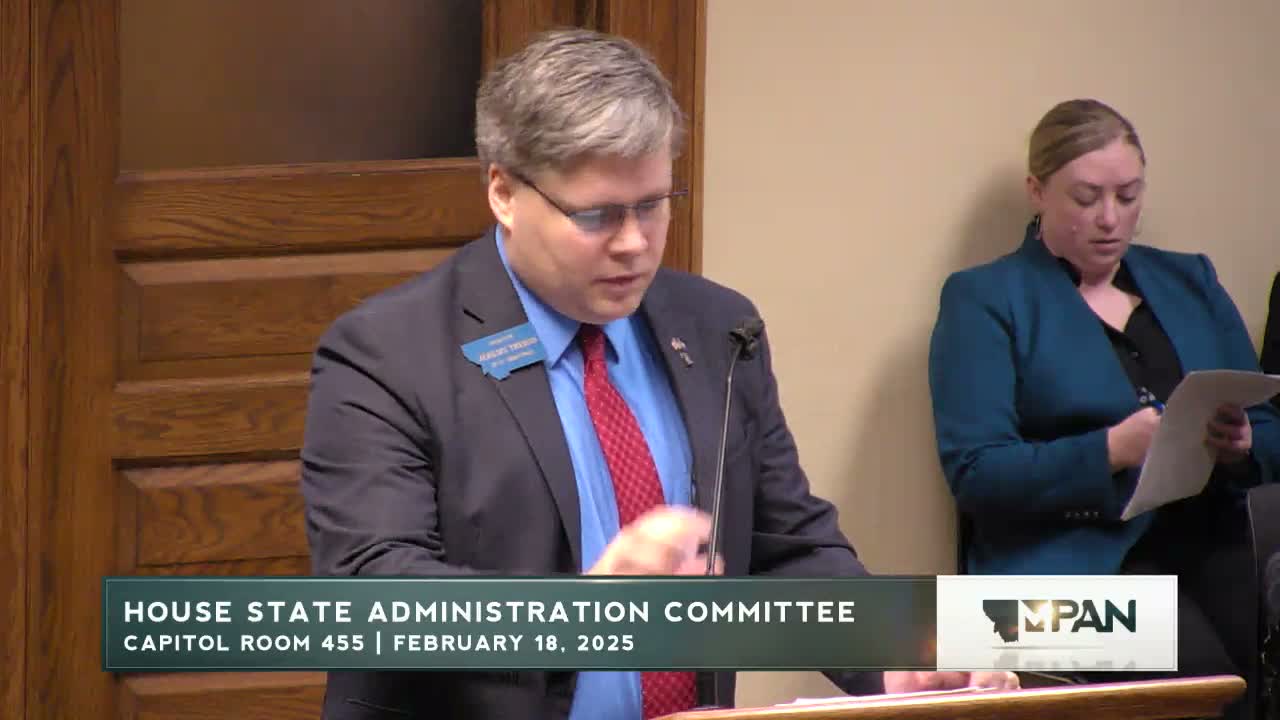
Sen. Trevis told the House State Administration committee that Senate Bill 128 would prohibit county governing bodies from removing election-administration duties from an elected county clerk and recorder during that official’s term; sponsor cited a Cascade County dispute as the impetus and said the bill is nonretroactive. No committee vote was taken at the hearing.
Sen. Matt Trevis (Senate District 10) told the House State Administration committee he introduced Senate Bill 128 to prevent county governing bodies from removing election-administration responsibilities from an elected county clerk and recorder during that official’s term in office. The one-page bill allows the clerk to voluntarily relinquish those duties or for duties to be changed between terms, but it bars unilateral removal midterm.
The sponsor framed the bill as a response to a recent Cascade County episode in which a long-serving clerk and recorder lost election-administration duties after a contested local change of authority. "I think as far as voter expectations go ... if I vote for someone who I want to have elections administrative responsibilities, that was the main reason a lot of people voted for," Trevis said, describing the proposal as limited in scope and nonretroactive.
Committee members asked how the bill would interact with existing local oversight and legal remedies. Trevis acknowledged county commissions retain oversight roles and pointed to canvass procedures, audits and the possibility of legal recourse in egregious cases, but he emphasized the bill's narrow aim: to preserve voters' expectations for the duration of an elected official's term.
The hearing record shows no proponents or opponents in the room or online. There was no committee motion or recorded vote on SB128 during the session; the matter was heard and closed for this committee day.
Next steps: The committee concluded the public hearing; no committee action or final vote on SB128 was recorded in the transcript.