Get Full Government Meeting Transcripts, Videos, & Alerts Forever!
Get email alerts on the Medical Aid In Dying topic
No spam. Unsubscribe anytime.
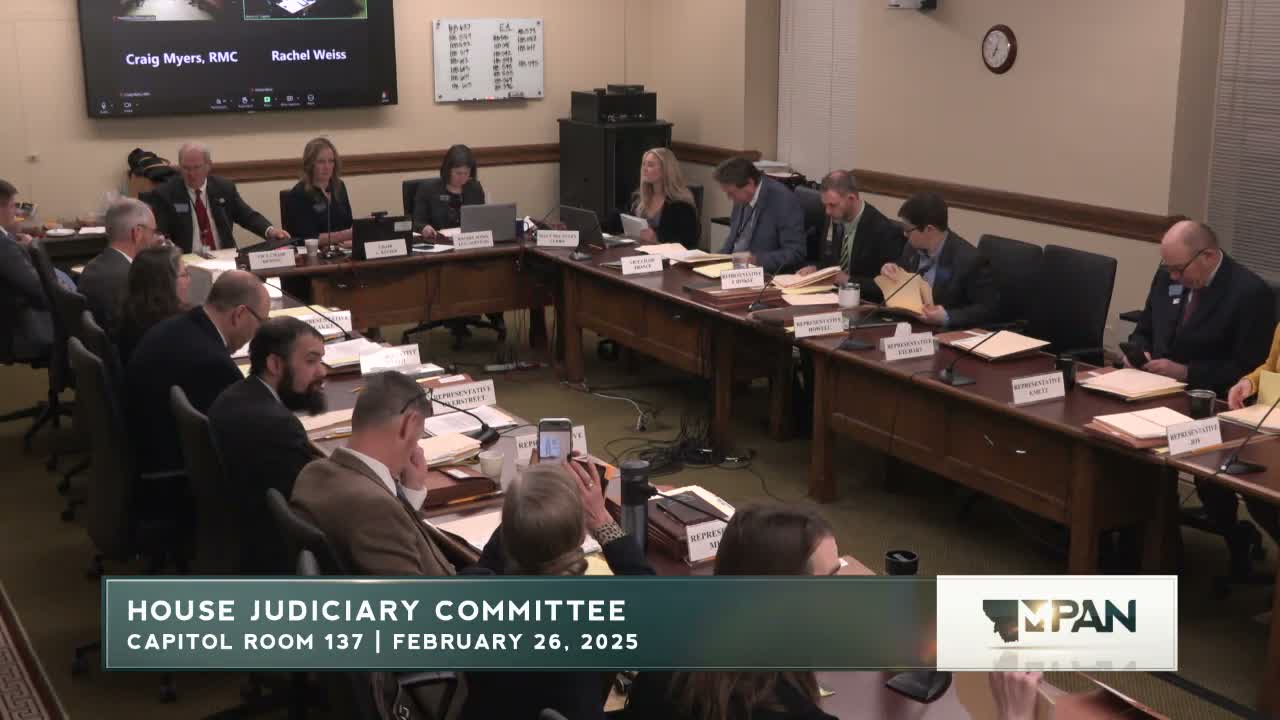
Montana lawmakers hear hours of testimony on bill to codify medical aid in dying
Summary
Supporters, including hospice clinicians and civil liberties groups, say House Bill 637 provides needed safeguards and legal clarity for terminally ill patients and participating providers. Opponents — led by the lieutenant governor and disability advocates — warned of risks to vulnerable people and contested the legal basis of the bill post‑Baxter.
Representative Julie Darling, sponsor of House Bill 637, told the House Judiciary Committee she brought the Montana Patient and Physician Protections and Care Act to create a statutory framework allowing medical aid in dying for adults with terminal diagnoses who can self‑administer a prescribed medication.
HB 637 sets eligibility criteria including certification of a terminal condition, a prognosis of roughly six months to live, capacity to make an informed decision, a minimum 48‑hour waiting period before receiving a prescription, and witness and reporting requirements. The bill also creates an opt‑in model allowing providers and facilities to decline participation and includes provider protections from professional sanction when they follow the statute’s procedures.
Proponents filled the hearing room and the remote queue with personal testimony and clinical perspective. Henry Seaton of the ACLU of Montana said the bill protects patient autonomy while building in safeguards such as second opinions and mental‑health evaluations. Hospice clinicians and family members described cases in which palliative care had proven insufficient and said a formal statute would reduce provider liability uncertainty and help patients plan end‑of‑life care.
Opponents, including Lieutenant Governor Kristin Juras, argued HB 637 conflicts with the state’s longstanding policy opposing suicide and said the 2009 Baxter decision did not make assisted suicide broadly legal but offered a narrow consent defense. Disability‑rights organizations, some physicians, and faith groups raised concerns about coercion, mistaken prognoses, and the potential for unequal application to vulnerable groups.
Committee members pressed sponsors and opposers on the legal status of Baxter, differences between hastening death and allowing death by withholding or withdrawing life‑sustaining treatment, and practical safeguards such as residency and waiting‑period length. The sponsor said the measure is modeled on existing statutes in Oregon and Colorado and is intended to provide clarity and consistent procedures without expanding access beyond current practice.
The committee heard extensive back‑and‑forth and did not take a final vote during this hearing. The record shows strong, organized support and opposition and multiple suggested amendments addressing waiting periods, prescriber types, reporting, and protections for providers.