Get Full Government Meeting Transcripts, Videos, & Alerts Forever!
Get email alerts on the Aquaculture Definition topic
No spam. Unsubscribe anytime.
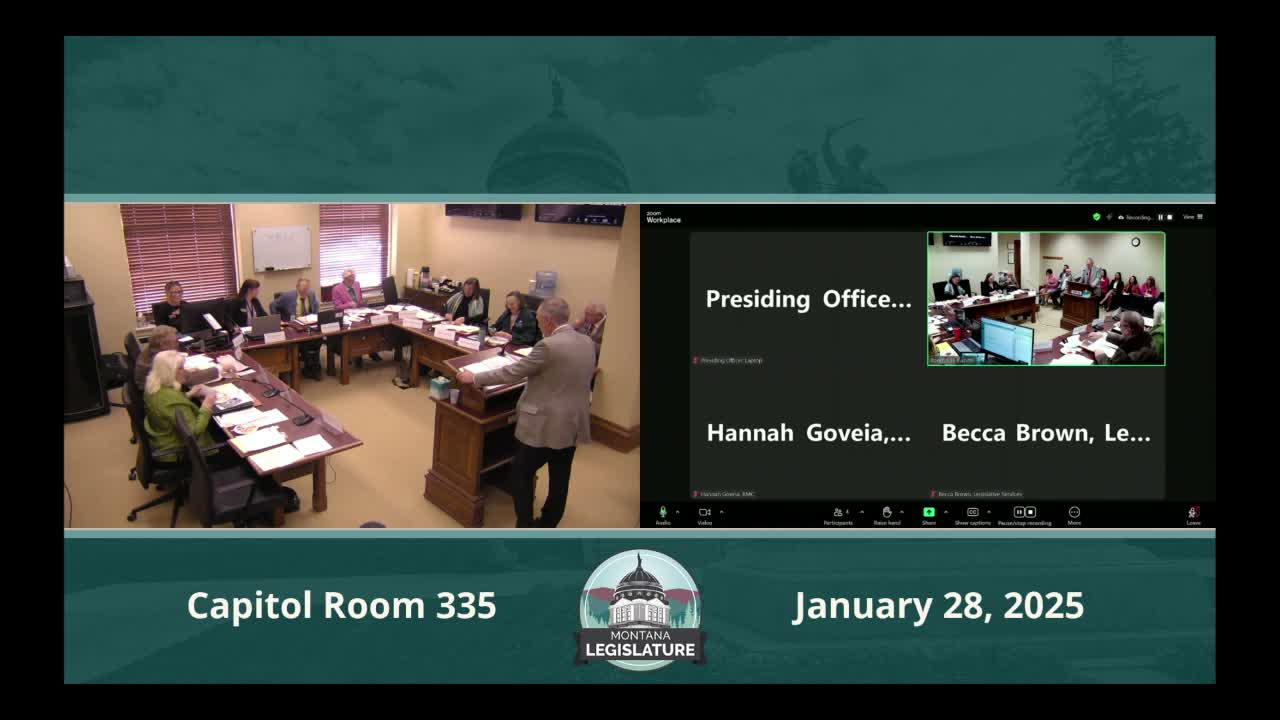
Montana committee hears bill to classify aquaculture as agriculture to open markets for shrimp farmers
Summary
Sen. Greg Hertz told the Senate Agriculture, Livestock and Irrigation Committee a bill to add aquaculture to Montana's agriculture code would let farmers like Jim Vaughn sell shrimp to restaurants year-round; Trout Unlimited asked for an amendment to limit the change to commercial aquaculture and protect Title 87 fish regulations.
Helena ' Sen. Greg Hertz, sponsor of legislation to add aquaculture and aquaculture products to Montana's agriculture code, told the Senate Agriculture, Livestock and Irrigation Committee that the bill aims to give small producers access to restaurant and wholesale markets they cannot reliably reach under current county-by-county interpretations of health rules.
"This bill ' it just talks about, kind of puts us in the same direction as to definitions as an agricultural product," Hertz said, introducing the measure and citing a prior food-freedom provision that opened farmers markets for similar products.
The bill hearing centered on Mission Valley Shrimp owner Jim Vaughn's effort to raise saltwater shrimp in above-ground tanks in Charlotte, Montana. Vaughn described a high-density biofloc system that he said produces a one-to-one feed-to-growth ratio and runs at about 84 degrees Fahrenheit year-round. He said he had to fight Lake County for three years to obtain a wholesale license and wants a state-level definition so future growers do not face inconsistent county standards.
"I do have a wholesale license now and it came down to me buying a $600 3 compartment sink to wash dishes I don't use," Vaughn said, describing the local licensure hurdles he faced and saying the bill would prevent similarly burdensome local requirements for the next producer.
Why it matters
If enacted, the change would place aquaculture and aquaculture products within the Department of Agriculture's produce program (Title 80 of the Montana Code Annotated), potentially shifting some regulatory roles from county sanitarians and the Department of Public Health and Human Services (DPHHS) to the Department of Agriculture. That shift matters for restaurants and for interstate sales: DPHHS witnesses said federal seafood processing rules still apply when a product is processed.
"Through that wholesale license, usually, they're required to go through a HACCP plan," Stacy Evangeline, supervisor of environmental health and food safety at DPHHS, said, naming the Hazard Analysis Critical Control Point process and citing the FDA seafood HACCP requirements that guide when processing triggers additional food-safety obligations.
Concerns and a proposed fix
Conservation groups said the bill's definitions could be misused to avoid fish-and-game oversight of private ponds and commercial hatcheries regulated under Title 87. Clayton Elliott of Trout Unlimited testified as an opponent in order to propose an amendment that would add the word "commercial" to the definition of aquaculture and incorporate conditions tied to FWP controlled-species permits into the bill's "controlled conditions" language.
"Our sort of nightmare scenario is that somebody could abuse this definition of aquaculture ' say, our private fish pond with Northern Pike in it is now an aquaculture facility and not subject to regulation under Title 87," Elliott said. He told the committee he had discussed a narrow amendment with the sponsor and did not expect it to affect Vaughn's shrimp farm.
Agency positions and next steps
DPHHS and Department of Agriculture staff provided informational testimony. DPHHS stressed that the HACCP plan and facility review remain crucial when seafood is processed by a producer or by a receiving restaurant. Anna Keckshe, agency legal counsel for the Department of Agriculture, said adding aquaculture to Title 80 would place aquaculture products into the Department of Agriculture's regulatory domain for produce grading and related programs.
Ed Evanson, commodity services bureau chief at the Department of Agriculture, said the department would regulate aquaculture products similarly to other produce items for quality and grading but not from a public-health perspective.
Senators and witnesses agreed the bill raises interagency implementation issues that require ironing out language and administrative responsibility. Sponsor Hertz said he welcomed the amendment and would work with agencies to resolve overlaps.
"We're gonna have the Department of Agriculture review those and make sure they fit within and what we wanna do," Hertz said in closing. "This bill is a definition."
No vote was taken at the hearing. Committee members were given a legislative fiscal memo and the sponsor and agencies will review the amendment language and regulatory implications before the next committee action.
What was not decided
The committee did not take a formal vote and did not adopt amendments at the hearing. Several senators pressed for clarity on which agency would take primary responsibility for wholesale versus retail oversight; DPHHS said it currently handles wholesale/retail food licensing, while the Department of Agriculture said the proposed edits would move aquaculture products into its Title 80 produce program.
The hearing concluded with an introduction of Jillian Street, the new director of the Department of Agriculture, who offered the department's cooperation on implementation and agritourism opportunities.
The committee adjourned without taking formal action on the bill.