Get Full Government Meeting Transcripts, Videos, & Alerts Forever!
Get email alerts on the Municipal Finance topic
No spam. Unsubscribe anytime.
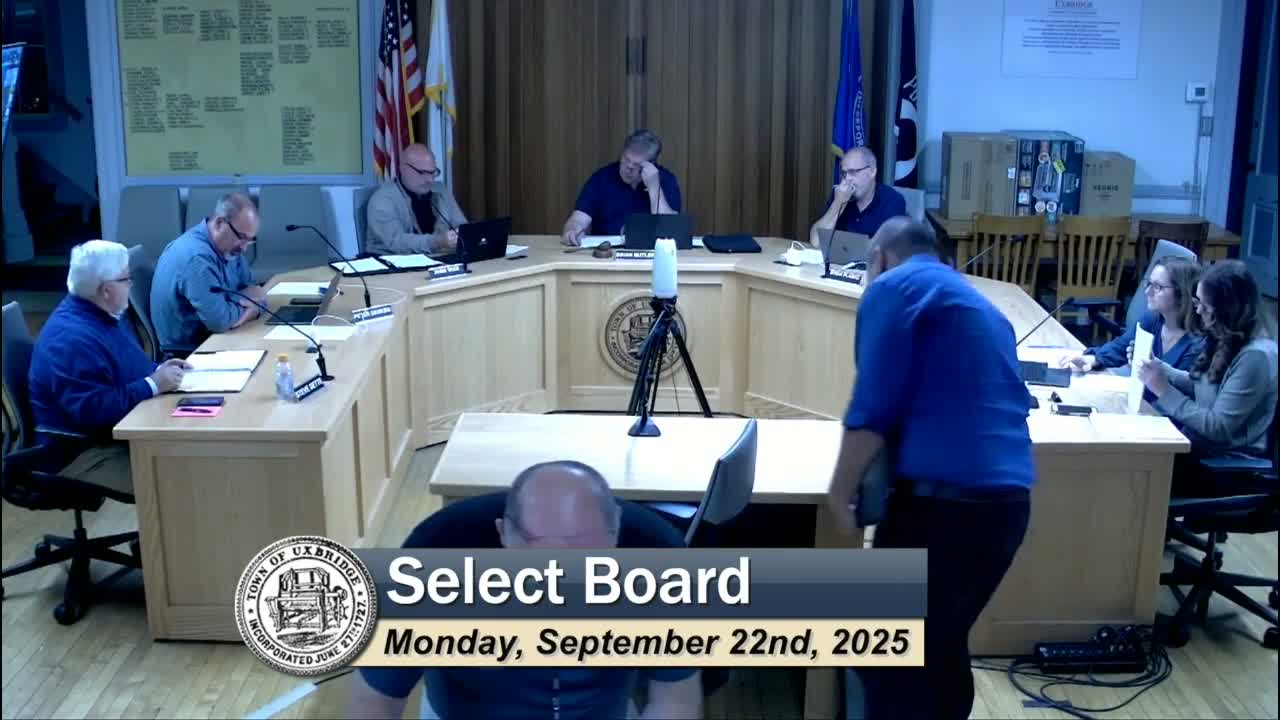
Select Board hears legal‑budget analysis and agrees to prioritize targeted forensic audit RFP
Summary
Finance staff reported large legal‑line overruns tied to capital projects and development reviews; board agreed to prepare a phased RFP for a targeted forensic audit of revolving accounts and flagged the need for clearer legal‑cost coding on capital projects.
Town finance staff briefed the Select Board on Sept. 22 about this year’s legal spending and approaches to recouping off‑retainer legal costs. Staff said that when work outside the retainer (for easements, contract reviews and capital projects) is tallied, the town would have paid roughly $47,000 more than the prior non‑retainer billing, validating the retainer’s value for routine legal needs.
Finance staff and town counsel explained current practice for 53G/developer accounts and proposed requiring project applicants to deposit funds for anticipated third‑party and legal review, with those deposits held in special revenue accounts so project‑specific legal costs are offset against developer contributions. Board members asked for clearer reconciliation reporting that shows reimbursable legal costs tied to specific projects and how collected receipts offset the legal line.
On the forensic audit request (funded previously by Town Meeting), staff reported difficulty recruiting municipal audit firms for a broad forensic scope and recommended a phased approach to the RFP: target specific revolving accounts and high‑priority school finance items rather than a single broad, high‑scope forensic engagement. The board directed staff to develop a prioritized RFP and return with a plan for phased procurement and scope definition, including coordination with the new school business manager.
Next steps: staff to draft RFP language for board review, identify prioritized audit targets (revolving accounts, circuit‑breaker calculations, selected capital projects) and seek bids. The board emphasized it will not cancel the approved appropriation but wants to pursue achievable, phased work.