Get Full Government Meeting Transcripts, Videos, & Alerts Forever!
Get email alerts on the Public Safety topic
No spam. Unsubscribe anytime.
Uxbridge board weighs traffic‑constable program and liability risks for flaggers
Summary
Officials heard a detailed presentation from the police chief on options for traffic details after state certification changes. The board debated allowing qualified local residents or municipal employees to serve, vendor contracting with a local preference, and liability, training and management arrangements.
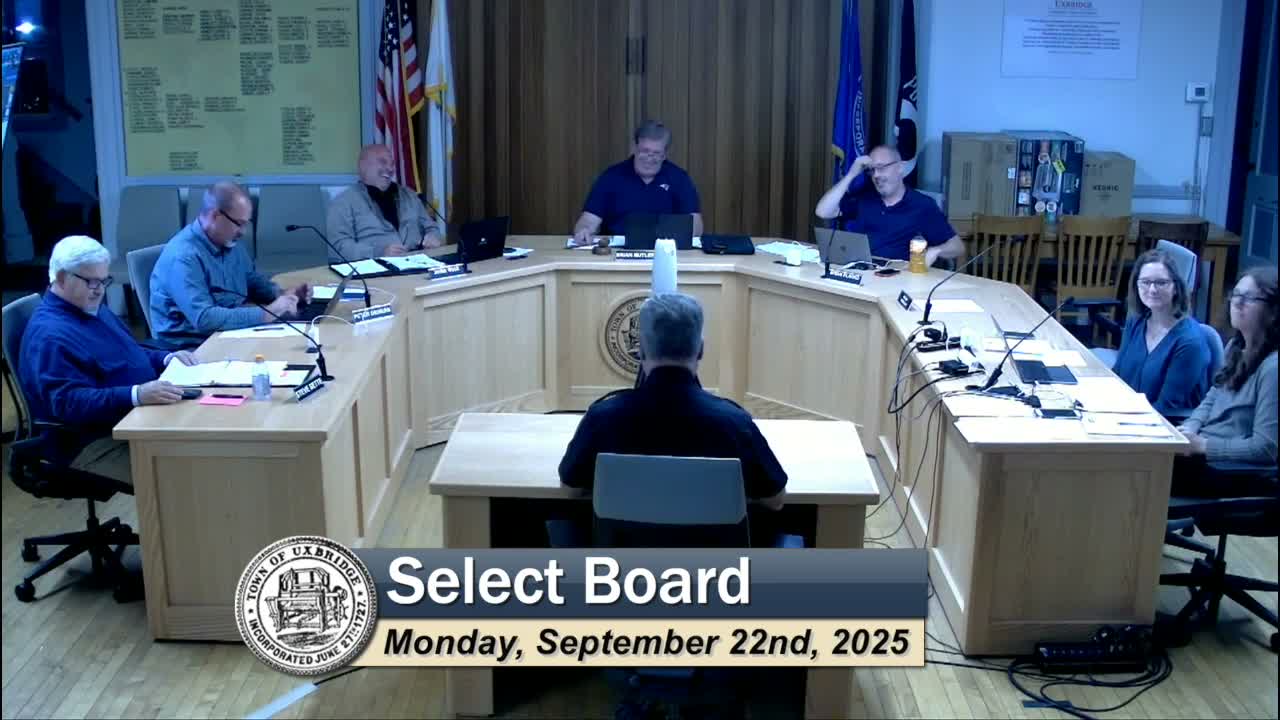
The police chief briefed the Select Board Sept. 22 on the town’s traffic‑control system and proposed options following state changes to part‑time police certification. The chief described the town’s current priority order for paid details (Uxbridge full‑time officers, part‑time officers, town‑approved traffic constables, then out‑of‑town officers, and finally vendor flaggers) and noted that national and state requirements ended a simple part‑time officer model.
Chief said the traffic‑constable program requires background checks, medical exams, annual training and equipment and that flagging remains a physically demanding, potentially dangerous duty. He warned the Select Board about municipal liability if the town hired unvetted civilian flaggers or municipal volunteers without a clear oversight and training regime.
Board members raised alternatives: 1) continue the existing program that favors certified officers and town traffic constables; 2) require contractors to use a vendor that gives a hiring preference to qualified Uxbridge residents; 3) create a town‑managed roster of qualified municipal employees or public‑safety personnel (fire, DPW, former law enforcement) to prioritize local hires; or 4) have the town procure flagging services from a company that must demonstrate resident preference in hiring.
Several members said they favored finding ways for qualified Uxbridge residents, veterans and DPW/fire personnel to benefit from details while preserving professional oversight. Concerns included senior work‑off program hour caps, prevailing‑wage implications, training, radio communications and whether school crossing guards have the necessary radio/scene awareness for construction details.
The board did not adopt a final policy; members asked the chief to explore options including a vendor procurement with a local preference and a possible CERT/senior‑work‑off role for low‑risk assignments. The chief recommended the final roster remain under police management to ensure safety and interoperability with department radios and incident protocols.
Next steps: staff will return with draft procurement language or program rules addressing resident preference, training standards and liability protections.