Get Full Government Meeting Transcripts, Videos, & Alerts Forever!
Get email alerts on the Alcohol Policy topic
No spam. Unsubscribe anytime.
Debate over allowing 18–20-year-olds to drink in limited settings raises federal and safety questions
Summary
Senate Bill 195 would permit people aged 18–20 to possess and consume beer or wine with parental/guardian/spouse consent and local opt-in; opponents raised concerns about potential loss of federal highway funds and road-safety risks, while DOT staff said federal regulations may allow a limited carve-out.
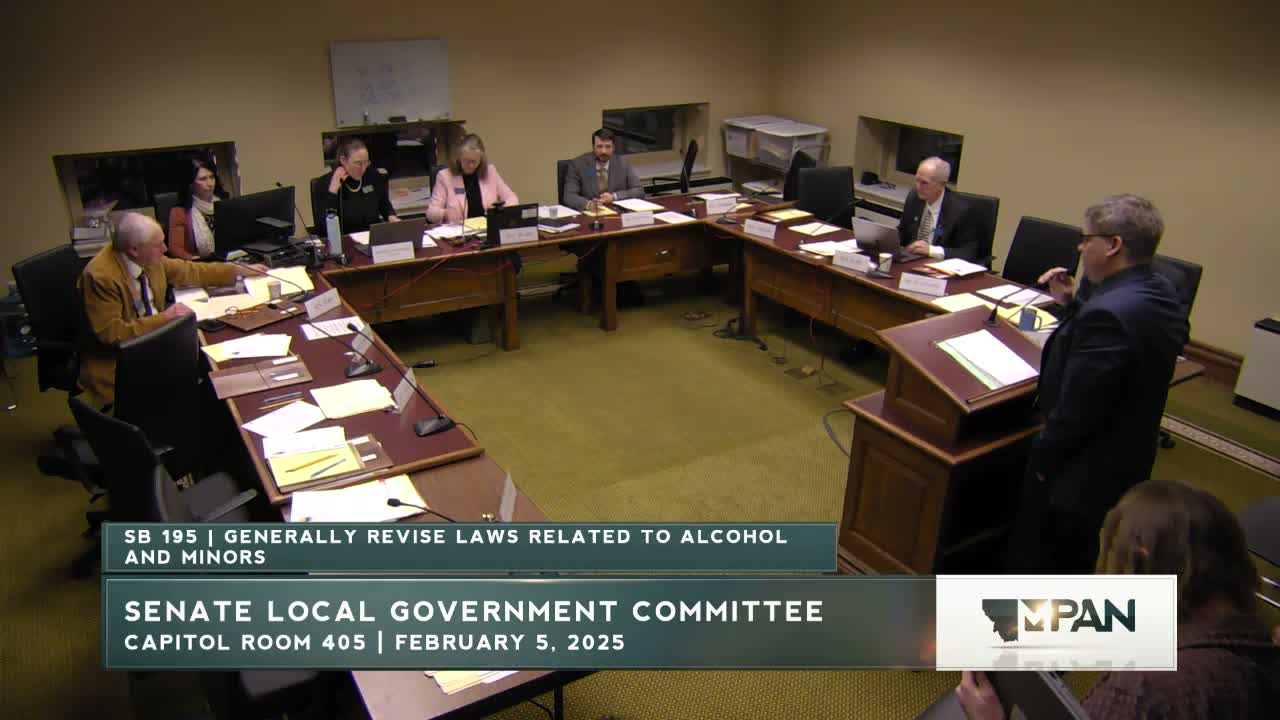
Senate Bill 195, sponsored by Senator Jeremy Trebas, would allow a person aged at least 18 but under 21 to possess and consume beer or table wine on private property or licensed premises when accompanied by a parent, legal guardian, spouse or a licensee who permits it and where local government has opted in.
Opponents, including the Montana Restaurant Association, warned of enforcement and liability challenges for servers and licensees and argued the measure could jeopardize federal highway funding under the 1984 National Minimum Drinking Age Act. Brad Griffin said states that do not maintain a minimum drinking age of 21 can risk the withholding of 8% of certain federal highway funds.
Department of Transportation Director Chris Dorrington told the committee that after a review the department concluded a regulatory exception in 23 CFR 1.208.3 — which allows certain possession exceptions when accompanied by a parent, legal guardian or spouse aged 21 or older — means the prior large fiscal note could be revised to $0; he nonetheless presented traffic-safety statistics showing young-driver involvement in fatal crashes and warned of public-safety consequences.
Stakeholders from the distillers’ guild and tasting rooms said the measure would complicate on-premises service and compliance regimes at sampling rooms and breweries. The Alcohol Beverage Control Division and state traffic-safety officials provided informational testimony and offered to answer implementation questions.
Committee members asked about enforcement, ID-check procedures and experiences in other states; the sponsor said participation by a licensee and local opt-in gives local control and that standard ID checks would remain required. The sponsor closed the hearing and left the bill for further consideration by the committee.
What’s next: The committee did not vote on SB195 during this hearing; informational witnesses from ABC and DOT are available for additional questions.