Get Full Government Meeting Transcripts, Videos, & Alerts Forever!
Get email alerts on the School Aid Budget Timing topic
No spam. Unsubscribe anytime.
Superintendents tell Lansing late budget, shifting grant rules hamper classroom services
Summary
Superintendents told the House Appropriations Subcommittee that late state budgets, changing competitive-grant rules and duplicated reporting requirements are diverting staff time and delaying curriculum, mental-health hires and transportation purchases; they urged more predictable, formulaic funding and streamlined reporting.
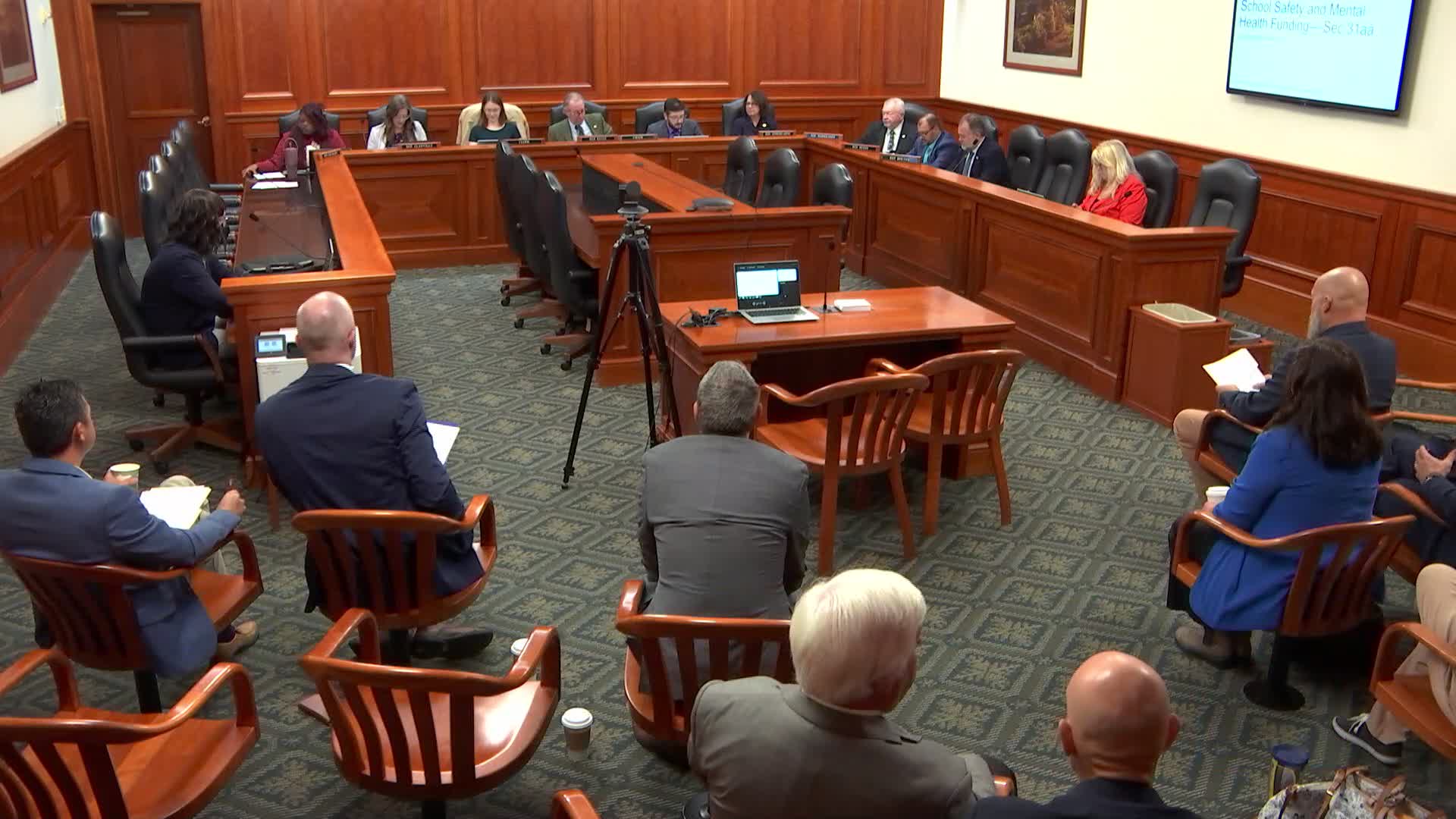
LANSING — Superintendents from rural and urban districts told the House Appropriations Subcommittee on School Aid and the Department of Education on a recent morning that late state budgets and shifting grant rules are delaying services for students and adding heavy administrative burdens.
Patrick O'Rourke, superintendent of Fowler Public Schools, said transportation funding included in the recent budget “made a huge difference for my district,” then warned that inconsistent grant guidance and late payments have real consequences: “We did qualify for that [35j] funding, but I want to dive back and go through what that entire process looked like,” he said, describing an application released in January, updated guidance in March and a May memo that delayed payments from May 20 to June 20 — forcing districts to postpone purchases and professional development.
The delay compounds staffing constraints in small districts, O'Rourke said. He described a three-person central office that must handle finance, human resources and communications and said competitive grants require complex accounting lines and after‑the‑fact documentation that “takes away from our staff being able to stay as close as possible to our students.”
Katie Zunekaszmakowski, superintendent at Johannesburg-Lewiston Area Schools, urged lawmakers to keep some targeted categoricals while folding others into core funding. “Categoricals are important to level the playing field,” she said, noting that transportation and at‑risk dollars respond to concrete differences between districts and that some assessments and reports could be streamlined.
Several witnesses and lawmakers criticized duplicate reporting systems. O'Rourke described REP (Registry of Educational Personnel) and MSDS reporting as collecting similar information with different codes, requiring days or weeks of staff time to reconcile and exposing districts to penalties if the reports do not align.
School-safety and mental-health funding, which expanded in the years after the Oxford school shooting, also drew concern. Steve Archibald, superintendent of South Lyon Community Schools, said earlier flexible grants allowed districts to act quickly but that recent legislation has more than doubled the explanatory text and added “choke points and barriers” that increase administrative lift. “Many districts, including mine, have held off on hiring counselors, social workers, and psychologists, simply because we don't know that we'll have these dollars,” he said.
Witnesses proposed several fixes: align or separate budget timing to match school fiscal years; convert some competitive grants into formula (categorical) funding to reduce inequities between well‑staffed and small districts; simplify and harmonize reporting codes; and provide multi‑year, predictable funding for mental-health and safety programs.
Lawmakers asked about trade-offs. Representative Jenkins Arnold noted that some superintendents want flexibility while many others want to keep categoricals; witnesses said the solution is to evaluate each categorical individually and work with districts to identify which can be rolled into a foundation allowance and which must remain targeted.
The subcommittee recorded two routine motions: approval of the minutes from the June 11, 2025 meeting and a motion to excuse absent members, both adopted by unanimous consent. The committee closed with the chair inviting continued dialogue between legislators, MDE and local school leaders.
What happens next: witnesses offered to sit down with legislators and MDE to review categorical lines and reporting requirements; no formal policy change or vote on the substantive proposals occurred during the session.