Get Full Government Meeting Transcripts, Videos, & Alerts Forever!
Get email alerts on the Mill Levies topic
No spam. Unsubscribe anytime.
Montana committee hears wide opposition to bill that would sunset voter-approved mill levies
Summary
Senate Bill 204 would impose 10-year sunsets on existing voter-approved mill levies, prompting heavy opposition from fire districts, cities, school groups and transit agencies that said it would destabilize funding for public safety, schools and infrastructure.
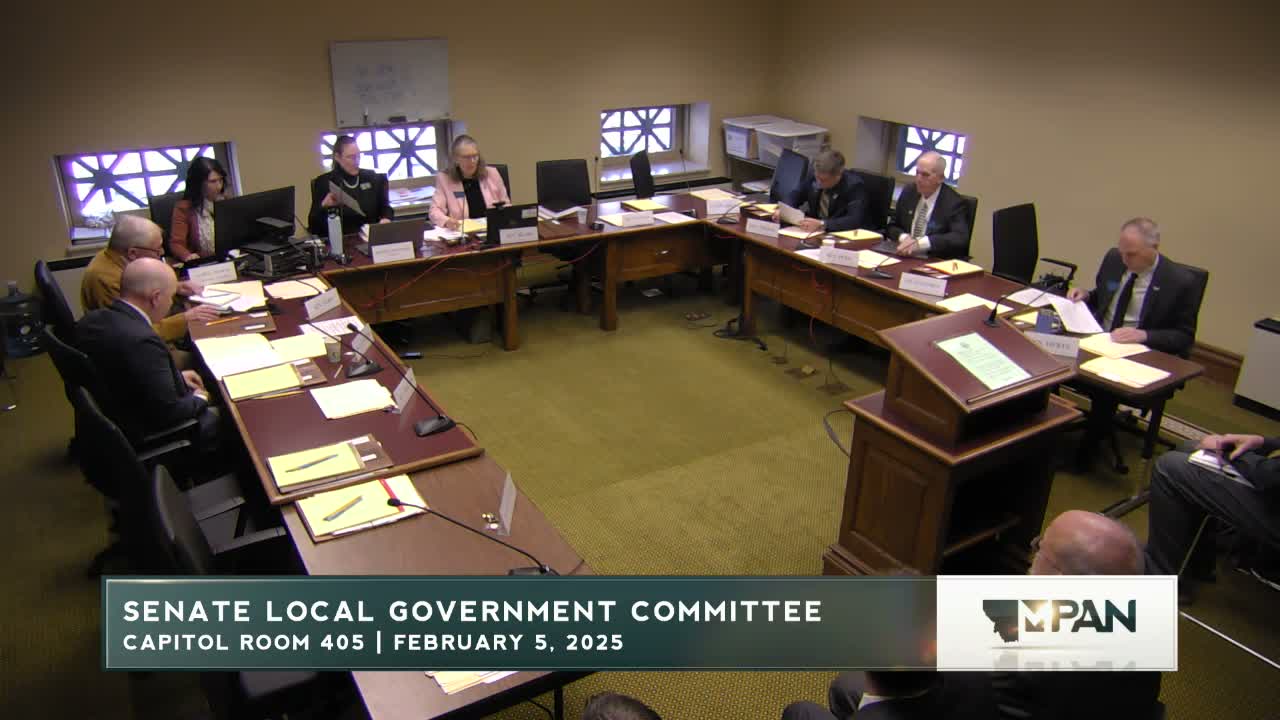
Senator Greg Hertz opened the hearing on Senate Bill 204, saying the measure — a recommendation from the property-tax task force — would give voters recurring opportunities to revisit previously approved mill levies by limiting their duration and staggering expirations. “This bill was a recommendation out of the property tax task force,” Hertz said in opening remarks.
Opponents filled the committee room and the online record, arguing the bill would introduce funding instability for essential services. Stuart Fuller, a 24-year fire-district trustee, said West Valley currently protects about 11,000 structures and 15,000 people and that call volume had risen from roughly 200 in 1996 to about 1,000 last year. “We cannot sustain this volunteer fire department without adequate funding for equipment,” Fuller said, noting a recently approved truck cost over $500,000 and that a 10-year sunset would break long-term replacement planning.
Witnesses representing the Montana State Firefighters Association, city managers, school boards, transit districts and aging-service providers echoed those concerns. Deborah Silk of the Montana School Boards Association warned that the bill could imperil more than $200 million in previously voted overbase levies for schools and raised a possible constitutional problem under Article 2, Section 31, which she said prohibits laws impairing existing contractual obligations. “We would argue that when the voters vote on an overbase levy, that that, in fact, is a contractual obligation,” Silk testified.
Other speakers described local specifics: Kalispell officials said levies were placed on ballots as permanent measures under existing statute and that SB204 would alter voters’ expectations; Belgrade’s police chief said a past levy supplies about half his operating budget; Missoula transit officials warned that voter-approved levies make up nearly 70% of Mountain Line’s budget.
Representatives from the Montana Association of Counties, Montana Sheriffs and Peace Officers Association, conservation districts, the construction trades, and labor unions all urged the committee to oppose the bill or to carve out public-safety levies. Joette Woods (MACo) said the association would accept the bill only if it included an exemption for detention centers, law enforcement, search and rescue and ambulance services.
An Office of Public Instruction witness advised that enactment would require statutory cleanup to avoid conflicts. During questioning, committee members pressed proponents and opponents on how the current petition process can remove or alter existing levies and on the constitutional argument about impairing contracts.
Senator Hertz closed by saying he would supply information on repeal procedures and historical context and asked the committee for a do-pass. The committee did not act on the bill during this hearing; no formal vote was recorded.
What’s next: The sponsor said he would provide follow-up material and consider amendments; the committee closed the SB204 hearing and moved on to other bills.