Get Full Government Meeting Transcripts, Videos, & Alerts Forever!
Get email alerts on the Hunter Satisfaction Study topic
No spam. Unsubscribe anytime.
Senate Joint Resolution 17 orders study of resident hunter satisfaction amid rising nonresident pressure
Summary
Senate Joint Resolution 17 would direct Fish, Wildlife & Parks to study resident hunter satisfaction with nonresident hunting pressure; proponents cited large increases in nonresident tag sales and crowding, while outfitters asked to be included in study design because of economic stakes.
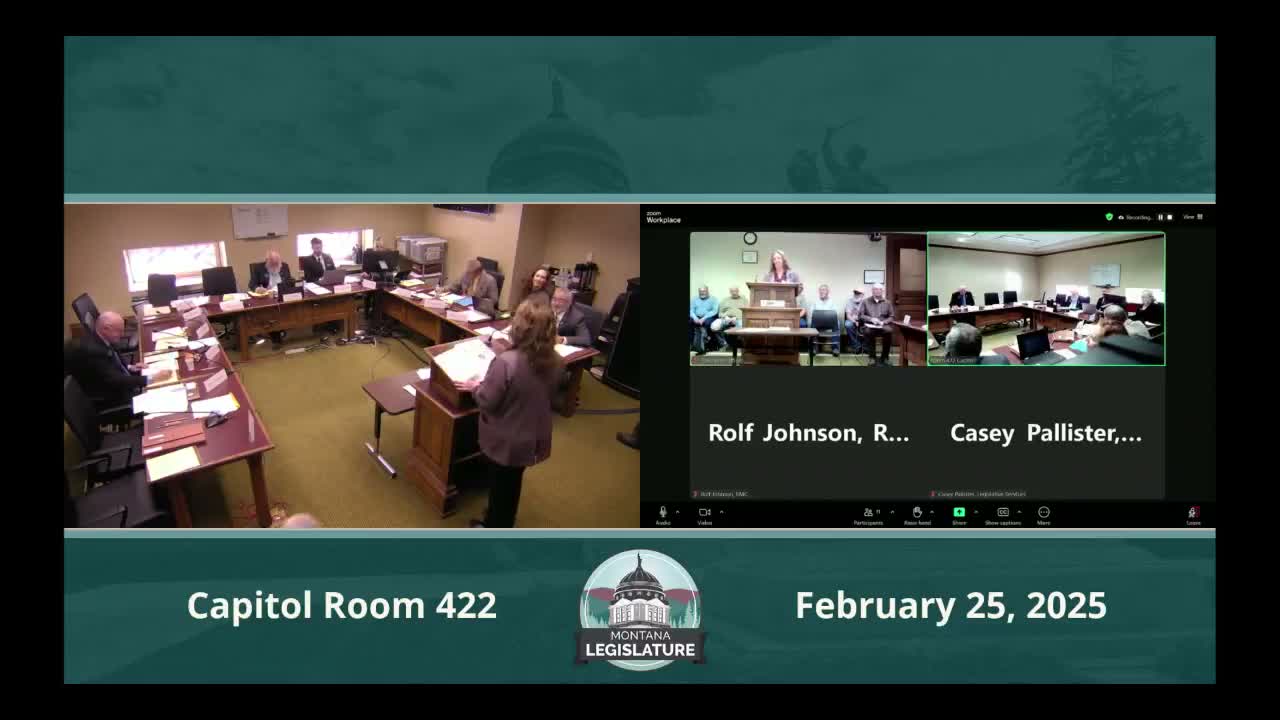
Senator Sarah Novak introduced Senate Joint Resolution 17, which requests an interim study of resident hunter satisfaction with growing nonresident hunting pressure in Montana. Novak told the committee the study would help the Legislature and the department understand resident concerns and consider legislative options before major licensing decisions in 2027.
Proponents from hunting groups and conservation organizations told the committee they have observed dramatic increases in nonresident license sales and crowding in the field. Tom Jacobson of the Montana Wildlife Federation summarized recent changes in tag numbers: "we have gone from 29 58,000, nonresident tags in 2019 to over 85,000 in 2023," a phrasing he used in testimony to emphasize rapid growth; he said the result has been reduced resident access and pressure on public lands. Multiple other proponents — including sportsmen's clubs and Backcountry Hunters and Anglers — urged a "due pass" for the resolution to get a human‑dimension assessment.
The Montana Outfitters and Guides Association expressed guarded opposition to limits that could harm rural businesses but said it supports good data and participation in study design. Fish, Wildlife & Parks chief of conservation policy Quentin Kudjula described how the department conducts human‑dimension surveys: randomized sampling from license databases, target confidence intervals, reminders to increase response rates, and a mix of scaled and open‑ended questions. Committee members asked about survey costs, response rate expectations, sampling frames and whether the department would use in‑house or contractor support for question design. Kudjula said the department could build a randomized sample from license sales and aim for statistical robustness with follow‑up reminders.
Senator Novak closed by noting no fiscal note was available at the hearing but that department license revenue could cover study costs; the committee closed the hearing with questions to be addressed in follow‑up.