Get Full Government Meeting Transcripts, Videos, & Alerts Forever!
Get email alerts on the Short Term Rentals topic
No spam. Unsubscribe anytime.
Montana committee hears clash over bill to declare short‑term rentals 'residential'
Summary
Supporters told the Senate Local Government Committee SB 336 would clarify that most short‑term rentals are residential and protect longstanding owners; opponents warned it could undercut local zoning, weaken safety inspections and worsen housing supply. The sponsor said he will work on amendments.
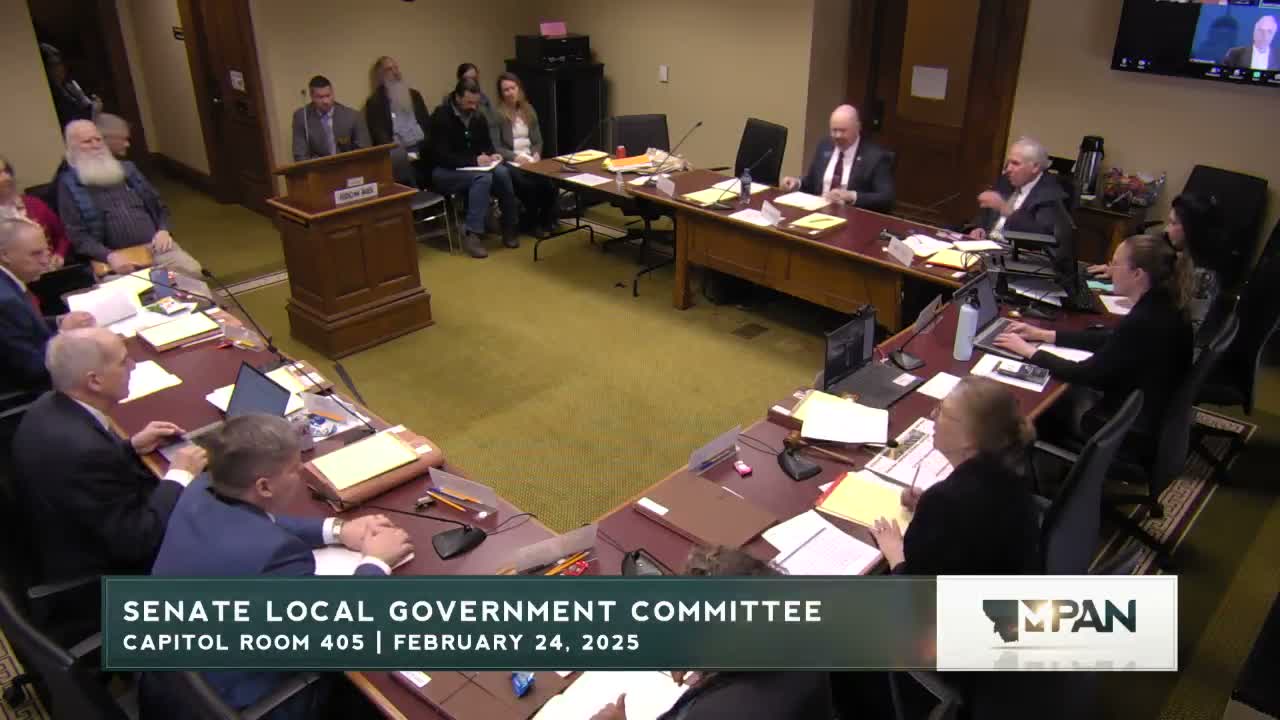
The Senate Local Government Committee on Wednesday heard hours of testimony on Senate Bill 336, which would define short‑term rentals (STRs) as a residential use unless a local government or covenant expressly prohibits them and would grandfather existing rentals.
Senator Greg Hertz, sponsor of SB 336, told the committee the bill is intended to resolve legal uncertainty after recent court rulings and to protect Montanans who rely on rental income. “If we don’t [define them], the courts are gonna make definitions for us,” he said, arguing the measure would preserve owners’ ability to rent portions of primary residences and nearby accessory units.
Proponents — a mix of attorneys, property owners and industry groups — said the bill offers needed clarity. Attorney Stephanie Baucus cited recent Montana Supreme Court decisions and said the law is “in flux,” urging the legislature to settle the question so owners know whether uses are permitted. John Sinrud of the Montana Landlord Association said residential indicators include living activities (showering, eating, watching TV) and asked lawmakers to avoid equating receipt of rental income with a commercial use.
Several homeowners described how short‑term rental income keeps them in their homes and supports local economies. “Short‑term rentals have helped a lot of people,” testified Brian Wells of Park County, describing how STR income made a neighborhood purchase or retirement possible. Witnesses highlighted that most licensed tourist homes statewide are owned by Montanans, and they urged protections including a grandfather clause for existing operators.
Opponents — including the Montana Lodging and Hospitality Association (MLHA) and municipal planners — warned SB 336 would constrain local governments’ ability to regulate and could advantage STR operators over hotels. Melissa Shannon of MLHA said Montana hotels employ thousands and warned the bill could encourage investor‑owned STR growth and further constrain housing supply. The Montana League of Cities and Towns expressed “soft opposition,” asking for clearer language on accessory dwelling units (ADUs) and the primary‑residence threshold, and offered to work with the sponsor on amendments.
City and housing advocates told senators the bill could weaken tools that communities use to manage visitor lodging and preserve long‑term housing stock. Shelter Whitefish and local officials said STR growth in some markets has been rapid and that local zoning options have helped balance visitors’ lodging needs and workforce housing.
On technical questions, Eric Copeland of the Department of Labor and Industry explained that building‑code inspection regimes vary by jurisdiction; in certified cities STRs permitted as residences would be inspected to residential, not commercial, standards. Committee members also asked about licensing (tourist homes are licensed through DPHHS), property taxes and homeowners’ insurance; witnesses described practical limits and advised owners to consult insurers.
The hearing closed without a committee vote. Senator Hertz said he would work with opponents on potential amendments, including clarifications about ADUs and analysis requirements for zoning changes, before the committee takes further action.
The committee’s next procedural step on SB 336 is expected after sponsors and stakeholders confer on amendments and staff prepare any required fiscal or drafting notes.