Get Full Government Meeting Transcripts, Videos, & Alerts Forever!
Get email alerts on the Local Government Liability topic
No spam. Unsubscribe anytime.
Senate committee approves bill requiring voter sign-off on tax levies tied to oversized judgments
Summary
The Senate Local Government Committee amended and passed SB108, which would require voter approval before property tax levies or bond issuances are used to satisfy judgments or settlements that exceed statutory government-liability limits (described in the hearing as $750,000 per claim and $1,500,000 per occurrence). The amendment clarifies exclusions and references the cited liability limit.
The Senate Local Government Committee on executive action passed Senate Bill 108 as amended, a measure that would require voter approval before local governments use property tax levies or bonds to satisfy judgments or settlements that exceed the statutory limits on government liability.
The amendment approved by the committee restores language clarifying that certain judgment levies remain excluded and ties the requirement to the statute the transcript cites as '29108,' which committee staff described as a limit on government tort liability (committee testimony gave amounts of $750,000 per claim and $1,500,000 per occurrence). A committee staff member summarized the amendment as restoring prior language across several sections of the bill that refer to those limits.
Senator Hertz, the bill sponsor, said local governments brought the issue to his attention and argued that large federal lawsuits and settlements that can run well above the statutory limits should be subject to voter review. "These types of large judgments, settlements need to go to the voters so the voters can make a decision on that," he said, adding that the change is intended to reopen negotiation rather than nullify claims.
Opponents raised concerns that requiring voter approval could hamper a government’s ability to settle claims and could, in extreme cases, push jurisdictions toward financial distress if voters declined to allow levies or bonds. Senator Pope asked what would happen if voters refused, saying critics testified the bill "could put a government in bankruptcy." Senator Hertz responded that the bill would not erase the underlying suit but would create a negotiating incentive for large settlements.
Committee members also noted that many local claims are covered by insurance but that some exposures exceed policy limits. Committee staff told members the statute limiting government liability was enacted in 1986, last amended in 1997, and does not include an automatic inflation adjustment.
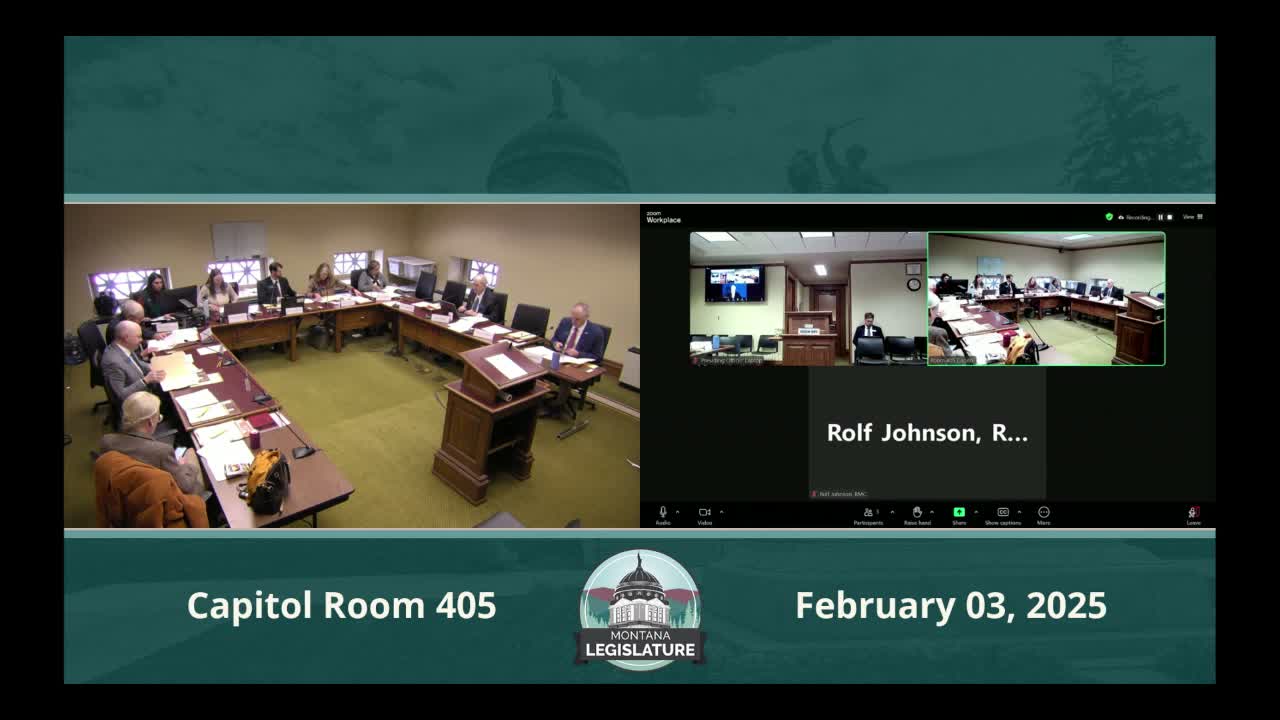
On a roll-call vote following debate, the committee recorded eight ayes and three nays and passed SB108 as amended. Several members cast votes by proxy; the roll call as reported in the transcript named the following votes: Vice Chair Beard (aye), Vice Chair Weber (no), Senator Trebes (aye, by proxy), Senator Pope (no), Senator Ellsworth (aye, by proxy), Senator Hertz (aye), Senator Fern (aye), Senator Lammers (aye), Senator Bogner (aye, by proxy), Senator Boldman (aye), Chair Mandeville (no).
Next steps: The bill passed out of committee and will move on according to the chamber’s calendar.