Get Full Government Meeting Transcripts, Videos, & Alerts Forever!
Get email alerts on the Controlled Substances topic
No spam. Unsubscribe anytime.
Senate Judiciary advances bill to classify gabapentin as Schedule V
Summary
The Senate Judiciary Committee heard testimony supporting House Bill 41, which would classify gabapentin as a Schedule V controlled substance to enable tracking of dispensing and aid toxicology in multi‑drug DUI and post‑mortem cases; the committee later concurred on the bill.
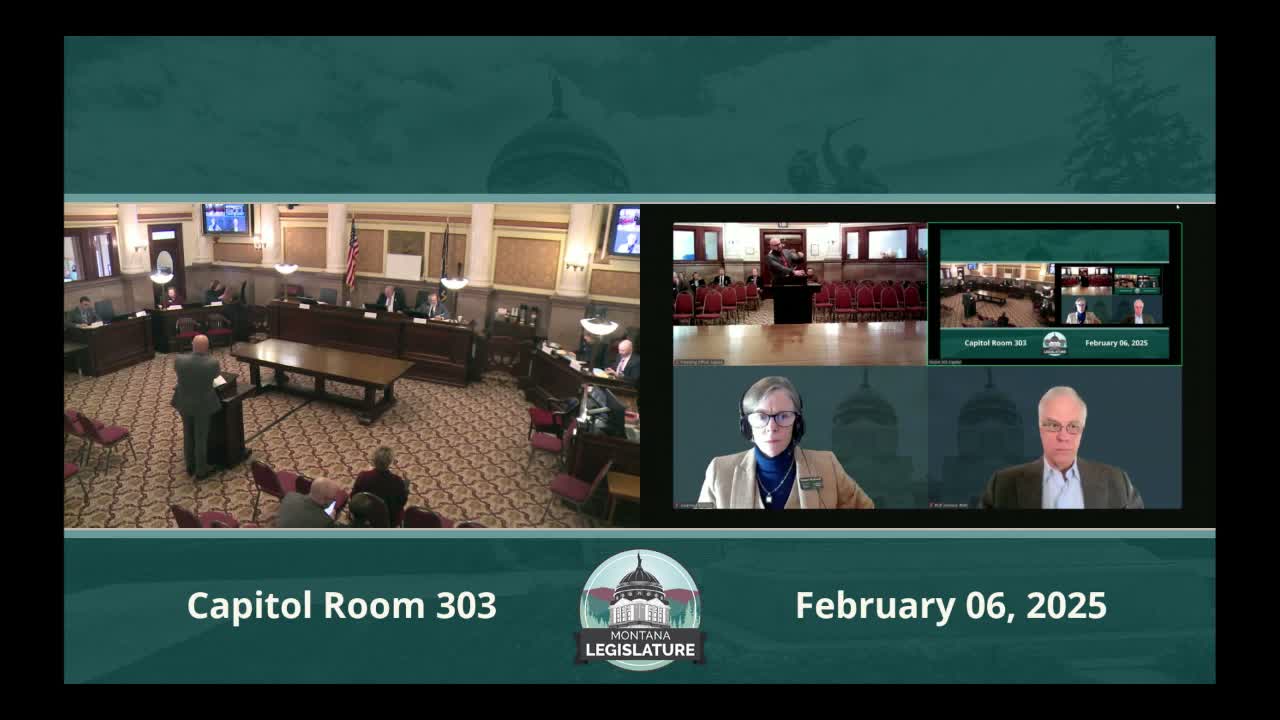
Representative Curtis Schomer introduced House Bill 41 to classify gabapentin as a Schedule V controlled substance, saying the change is a 'safety bill' that would give law enforcement and toxicologists better tools to identify and respond to misuse. "House bill 41 makes gabapentin a schedule 5 drug," Schomer told the committee, and he urged members to support the measure.
Beth Smalley, lead scientist and supervisor of the toxicology and breath alcohol sections at the Montana Forensic Science Division, testified that the division has seen a significant rise in gabapentin detections after adopting improved testing methods. "It is enough of a concern that 7 other states have classified it as a controlled substance," Smalley said, and noted gabapentin is "rarely found alone"—typically appearing in combination with prescription or illicit drugs. She told senators that scheduling would allow Montana to track dispensing and help doctors and pharmacies monitor usage while preserving access for patients.
Law‑enforcement and prosecutorial witnesses also backed the bill. Alex Sturhaan of the Montana Department of Justice described increasingly complex toxicology profiles in DUI stops and offered to provide additional roadside data. Brian Thompson, representing the Montana County Attorneys Association, said prosecutors have struggled to charge abuse where gabapentin is not regulated. Dan Smith of the Montana Police Protective Association and Kevin Wade of the Montana Sheriffs and Peace Officers Association also urged passage.
Committee members pressed witnesses on practical effects. Senator Mansella and others asked whether scheduling would change prescription cost or a patient's ability to obtain medication; Smalley and Representative Denise Baum said scheduling is intended as a tracking mechanism and would not alter prescribing authority, prescription lengths or patient access. On whether gabapentin is addictive and why dealers use it in drug cocktails, witnesses explained it is a central nervous system depressant used for neuropathic pain and as an anticonvulsant; witnesses said it can be combined with other substances and sometimes appears in multi‑drug cases.
After the hearing, during executive action the committee moved to concur in House Bill 41. Senator Ricky carried the motion; the committee chair announced the motion passed, and Senator Ricky volunteered to carry the bill forward in the Senate Judiciary process.
The committee record notes the change is designed to enhance tracking and forensic testing rather than restrict legitimate medical access. The bill will move to the next legislative step with a Senate sponsor.
The committee closed the HB 41 hearing and proceeded to other agenda items.