Get Full Government Meeting Transcripts, Videos, & Alerts Forever!
Get email alerts on the Tribal Consultation topic
No spam. Unsubscribe anytime.
Committee debates costs, definitions as sponsor seeks statutory definition of 'tribal consultation'
Summary
Sen. Susan Weber asked the committee to adopt SB379 to codify a single statutory definition of 'tribal consultation' and provide guidance for liaisons; tribal representatives supported the policy approach, while DNRC and Montana Historical Society flagged potential fiscal impacts and staffing needs.
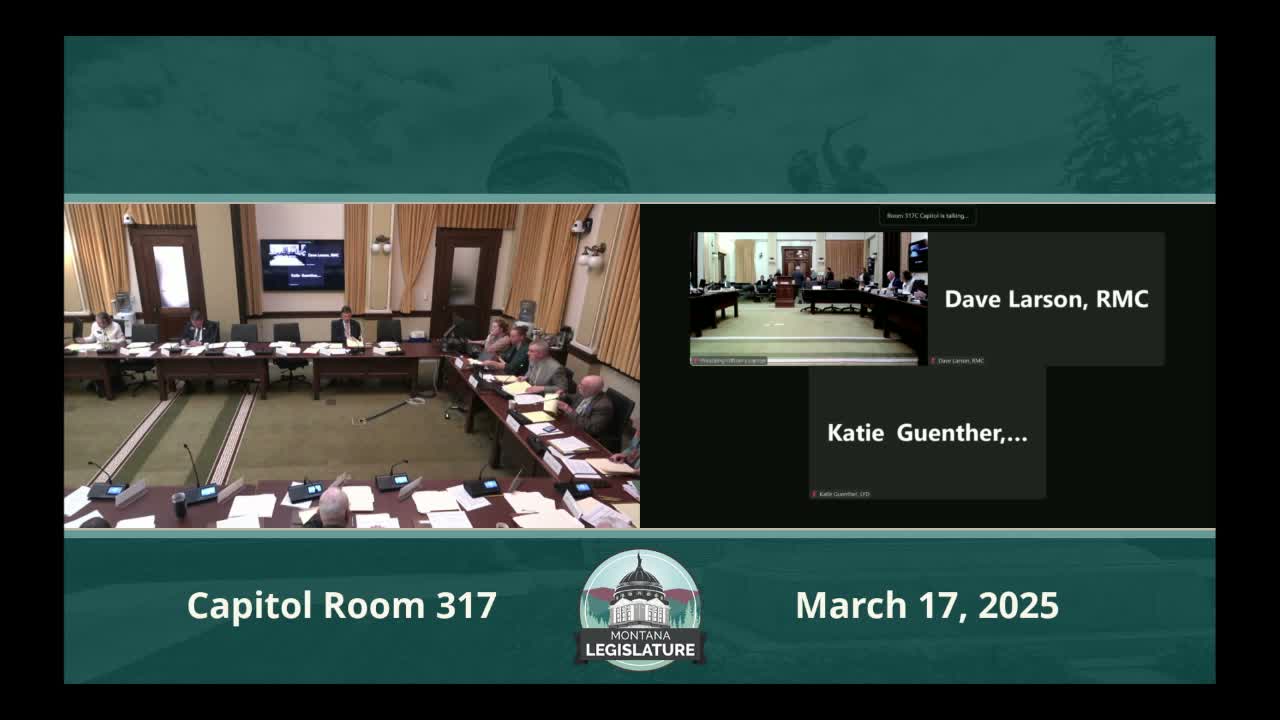
Sen. Susan Weber opened the Senate Finance and Claims hearing on Senate Bill 379, saying the bill would define tribal consultation in statute and provide guidance for what a tribal liaison should do. "It defines what tribal consultation is finally," Weber said, arguing the change is primarily policy and that many agencies already engage tribes.
Patrick Yawaki, representing the Blackfeet, Fort Belknap and Chippewa Cree tribes, urged the committee to treat SB379 as non‑fiscal guidance and said departments can designate existing staff to fulfill consultation roles. "Senate bill 3 79 is policy... guidelines for departments and agencies to utilize to work towards proper state tribal consultation," Yawaki said.
Agency witnesses told a different story on implementation costs. Sean Thomas, division administrator at the Department of Natural Resources and Conservation's Forestry and Trust Lands Division, said the DNRC manages about 5.2 million acres and does not have a director‑supervised liaison position; he said the statute's broader language could require dedicated FTEs for consistent implementation. "What they're asking for under this definition of collaboration and consultation is bigger and broader than what we are currently doing," Thomas said, explaining why DNRC included FTEs in its fiscal note.
Molly Kruckenberg (Montana Historical Society) and Sarah Swanson (Department of Labor and Industry commissioner) described varying existing capacities; Swanson noted her agency already has a two-person tribal liaison office funded in House Bill 2. Committee members pressed whether the bill would create new obligations or simply formalize existing practices; sponsor Weber and tribal advocates said the draft is intended to provide statutory guidance not to mandate new hires.
The committee discussed a technical concern about language in a cited statutory section that uses "when feasible" (as printed in the technical note), and members exchanged views about whether that phrase creates ambiguity. Weber said the bill is intended to enable two‑way conversations and not to "push ourselves on anybody."
At recess the committee indicated it would hold SB379 for an amendment; the hearing closed with the sponsor asking for a do‑pass recommendation once technical issues are resolved.