Get Full Government Meeting Transcripts, Videos, & Alerts Forever!
Get email alerts on the Student Discipline topic
No spam. Unsubscribe anytime.
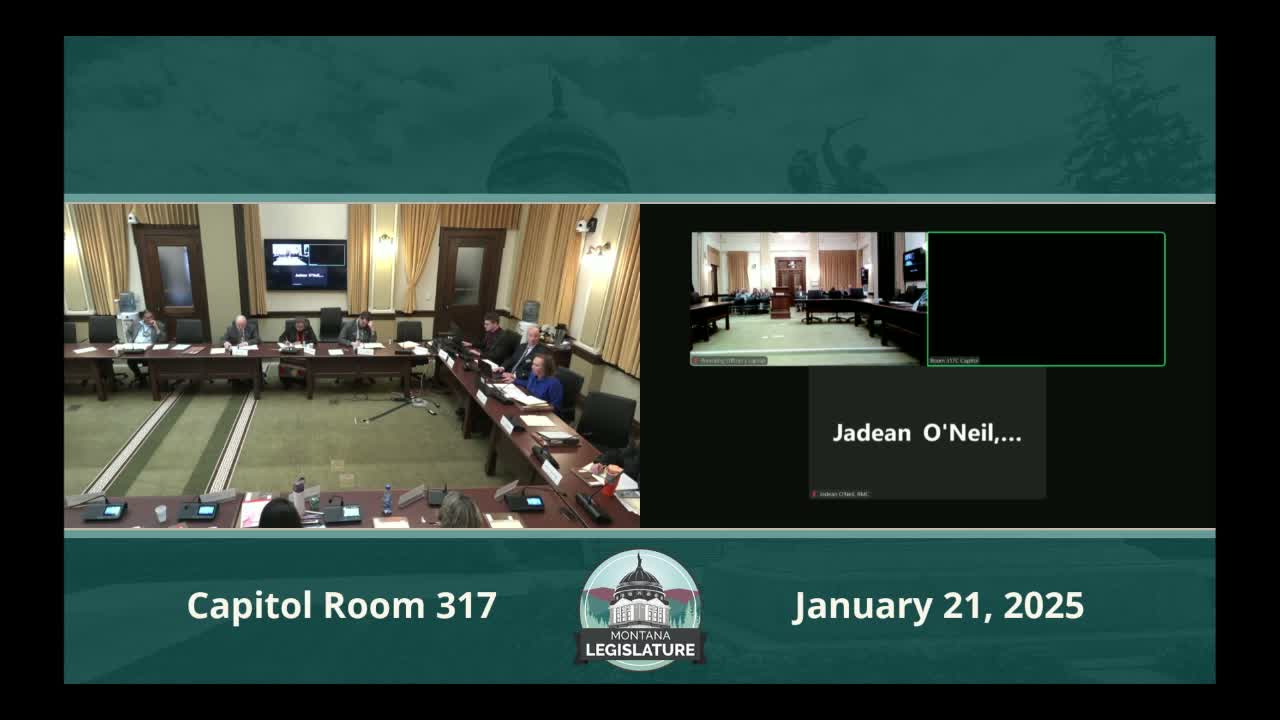
Montana Senate panel hears bill to let teachers temporarily remove disruptive students amid disability-law concerns
Summary
Senate Education Committee heard testimony on SB 138, sponsored by Sen. Russ Tempel, to let teachers temporarily remove disruptive students; proponents cited teacher retention and classroom safety, while Disability Rights Montana and school boards warned the bill may conflict with IDEA/Section 504 and strain small districts.
The Senate Education Committee heard testimony on Senate Bill 138, sponsored by Senator Russ Tempel (District 14), a proposal that would explicitly allow teachers to temporarily remove students from the classroom for disruptive behavior and require a return-to-class plan negotiated with school officials.
The sponsor said the bill aims to retain teachers and protect students who want to learn. "Basically, I want teachers to be able to teach those that want to learn," Senator Russ Tempel said, describing instances of abuse and disruption he said have driven educators from the profession.
Supporters told the committee teacher safety and the classroom environment are pressing issues. Kim Popham, director of public policy and research for the Montana Federation of Public Employees (MFPE), said student behavior is among the top challenges facing teachers and that contract language and professional discretion can help schools respond. "Student behaviors are negatively impacting teaching and learning of students," Popham said, while urging careful implementation that respects existing special-education plans.
Opponents urged narrowing the bill. Lance Melton, appearing for the Montana School Boards Association and several education groups, said the portion of the bill "up to the word 'classroom'" could be helpful but warned the remainder risks violating due process and federal special-education protections. Melton told the committee that many Montana districts are small—about 75, he said—with no on-site administrator, and that the bill’s requirement for a staff member to receive and supervise a removed student may be infeasible in those settings.
Disability Rights Montana’s director of advocacy, Tal Goldin, said the draft ‘‘mandates exclusions’’ and conflicts with federal law protecting students with disabilities. "Children do well if they can," Goldin said, arguing that manifestation determinations and IEP/504 protections must govern exclusionary discipline to avoid discrimination under IDEA and Section 504. Goldin recommended retaining only the language through the word 'classroom' and deleting the later subsection that would impose more prescriptive exclusion procedures.
Committee members questioned witnesses about changes in disciplinary practice, restorative models, and resource gaps. Melton cited a federal change that ended a prior practice of using a soft match for certain Medicaid-funded mental-health supports, leaving the state without about $20,000,000 a year in previously accessible matching funds for student services.
Several senators signaled a path forward through amendment. Vice Chair Novak said she was working on an amendment to address concerns about IEPs and 504 protections and other compliance issues raised in testimony.
No committee action or vote was taken; the hearing closed with the sponsor saying an amendment was expected. The committee did not adopt the bill and will consider further work on language and amendments in subsequent meetings.