Get Full Government Meeting Transcripts, Videos, & Alerts Forever!
Get email alerts on the Statute Of Limitations topic
No spam. Unsubscribe anytime.
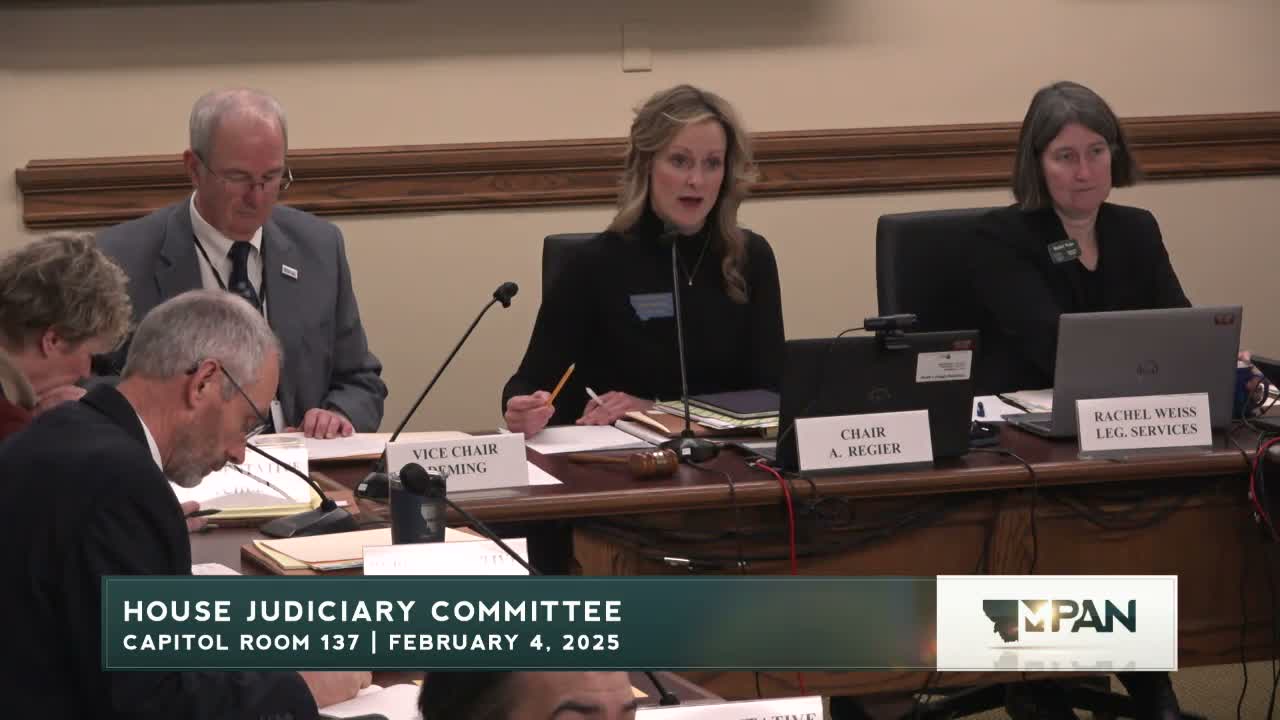
House panel hears bill to clarify two‑year limit for property‑damage lawsuits
Summary
Sponsors say House Bill 301 would lock in a two‑year statute of limitations for damage to real property to prevent successive suits by later owners; opponents warn the change could bar groundwater and continuing‑contamination claims that are often discovered only after costly testing.
Representative Carrie Seekins Crow, sponsor of House Bill 301, told the House Judiciary committee the bill ‘‘clarifies the statute of limitations for damage to real property’’ and ‘‘preserves the current 2 year statute of limitation.’’ She said the proposal would prevent successive suits by new owners and encourage claimants to file promptly.
Why it matters: Supporters said the bill puts real property on the same clear timeline other claims follow and limits what they called effectively unlimited claims pursued decades after damage allegedly occurred. Brian Thompson, testifying for the Montana Chamber of Commerce, summarized the concern: courts, he said, have in some real‑property cases permitted plaintiffs to ‘‘bring that suit far beyond 2 years’’ and the bill would make accrual rules explicit.
Opponents pressed a different point: several attorneys and witnesses warned that contamination and other continuing injuries are often hidden and only discovered after expensive testing. Roger Sullivan, appearing pro se and speaking to an attached Summers creosote example, said groundwater contamination is ‘‘self concealing and continuing’’ and that hydrogeological examinations can be the first proof homeowners have of widespread contamination.
Committee exchanges focused on how the proposed accrual language would operate in practice. Members asked about interactions with federal law (witnesses noted CERCLA remedies and observed a three‑year federal limitation in some contexts), whether prior owners’ nondisclosure creates separate claims for later buyers, and how courts should treat concealed or self‑concealing harms.
What’s next: The hearing closed without a committee vote. Chair Wighear moved to the next item on the agenda after sponsors and opponents completed testimony and committee questions. The bill will return to the committee for executive action as scheduled.