Get Full Government Meeting Transcripts, Videos, & Alerts Forever!
Get email alerts on the Criminal Justice Data topic
No spam. Unsubscribe anytime.
Bill would continue Montana criminal justice data warehouse; funding requested to bring courts online
Summary
Representative Amy Regier presented House Bill 117 to continue the Integrated Justice Data Warehouse established in 2023, seeking funding for software, staff and roughly $500,000 to help courts join the system; proponents urged the committee to pass the bill while technical funding language is clarified.
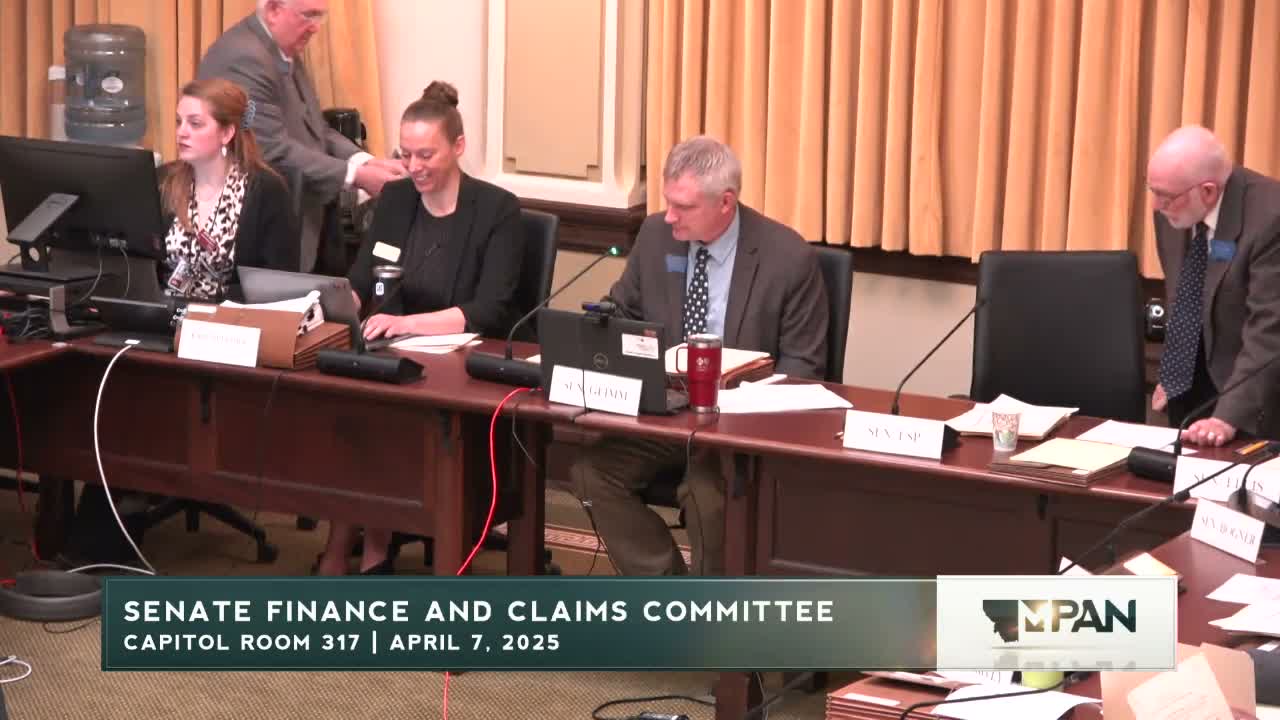
Representative Amy Regier (House District 6) opened the Senate Finance and Claims hearing on House Bill 117, saying the bill continues the work started by 2023’s Senate Bill 11 to maintain and expand the Integrated Justice Data Warehouse managed by the Board of Crime Control.
The bill would establish criminal-justice data priorities for the 2025–26 interim and appropriate funds for database development and related staff. Nataya Bowser, director of the Board of Crime Control, told the committee the project is “critical to collecting and analyzing data that is currently siloed,” and listed key budget pieces: a project manager and business data analyst FTE, approximately $480,000 for software, and roughly $500,000 intended to begin bringing courts into the data‑gathering process. Brian Gookin, director of corrections and chair of the data‑warehouse group, urged a “do pass,” calling the work “a generational, big deal.”
Bowser explained the proposed flow of funds: the appropriation would come to the Board of Crime Control and be passed through to the judiciary as a grant so courts could document planned expenditures that will produce usable data. “We would pass it through to them as a grant…line out what they plan on spending the money on in order to get the data into the warehouse,” she said. Committee members questioned whether current bill language would improperly place the Board in the judicial branch or leave ambiguity about where unspent funds and interest would revert.
Senator Ellis flagged a technical note in the fiscal documentation referring to statute “17‑7304,” saying that statute may prevent interest or unused appropriations from remaining with the receiving agency. Bowser acknowledged the concern and agreed the language likely needs amendment so leftover funds can be used by the Board to continue the warehouse work rather than reverting improperly.
Informational witnesses included Adam Carpenter, the state’s chief data officer; Janice Friis, director of the Statistical Analysis Center; and Ryan Davies, CIO for the Judicial Branch, who were available to answer technical and appropriations questions.
The bill’s supporters told the committee they have been judicious with previously appropriated money and that further funding is necessary to integrate court data and ensure the warehouse serves policymakers. The hearing was closed without a formal vote; sponsors and witnesses said they will follow up with language clarifications on the fiscal and statutory technical notes.
What happens next: committee staff and sponsors indicated they will draft technical amendments to clarify fund flow and disposition before executive action.