Get Full Government Meeting Transcripts, Videos, & Alerts Forever!
Get email alerts on the Thc Potency Cap topic
No spam. Unsubscribe anytime.
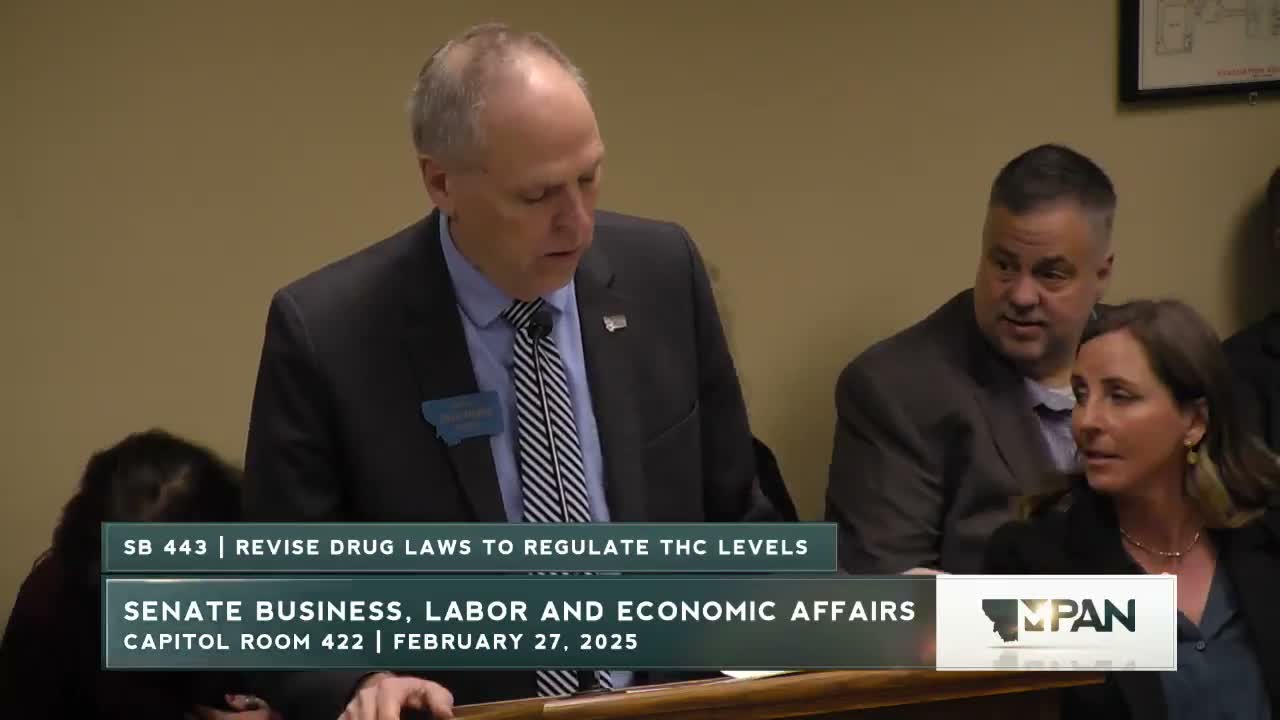
Heated hearing in Helena as Montana senators weigh 15% THC potency cap
Summary
Sen. Greg Hertz's SB 443 would cap retail THC potency at 15% (medical dispensaries exempt). Proponents from prevention and treatment sectors cited scientific studies linking high‑potency THC to psychosis and youth harms; industry witnesses warned the limit would devastate the licensed market, boost the black market, and cost jobs and tax revenue.
Senator Greg Hertz opened Senate Bill 443, proposing a 15% cap on total THC potency for retail cannabis products (with explicit medical dispensary exemptions). Hertz framed the bill as a public‑health intervention directed at high‑potency THC products—what witnesses described as concentrated extracts and vapes that did not exist in earlier decades.
More than one hundred proponents and opponents provided testimony across roughly four hours. Treatment providers, prevention specialists, clinicians and patients described cases of severe adverse reactions, rising youth exposure, and links to psychosis in the scientific literature; several speakers cited a body of studies they said associate higher THC concentrations with elevated risks of psychosis, addiction and emergency presentations. Proponents argued the cap should be accompanied by enforcement and prevention funding.
Opponents — licensed cultivators, processors, retail employees, testing labs and industry associations — countered that the cap would wipe out most legally available products (many Montana growers reported typical flower testing in the 20–30% range), destroy jobs (industry witnesses estimated thousands of employees at risk), drive consumers to unregulated black‑market products and e‑commerce, and impose large economic costs on communities and tax receipts. Testing‑lab witnesses warned that diluting concentrates to meet an arbitrary potency cap could encourage use of additives that pose inhalation risks.
Questions from senators focused on enforcement, exemptions for medical patients, interaction with federal hemp/product mail‑order loopholes, and the timeline for retooling production. The sponsor suggested a delayed effective date could ease transition and said he would consider enforcement and implementation detail. The hearing produced no vote; the committee indicated further work on drafting and on enforcement and fiscal implications would be needed.
Because many claims in the oral record conflict — clinical researchers vs. industry economic data — reporters and policymakers should treat headline numerical claims (jobs at risk, exact treatment admission changes) as assertions to be verified against published studies and fiscal analyses.