Get Full Government Meeting Transcripts, Videos, & Alerts Forever!
Get email alerts on the Public Health Reporting topic
No spam. Unsubscribe anytime.
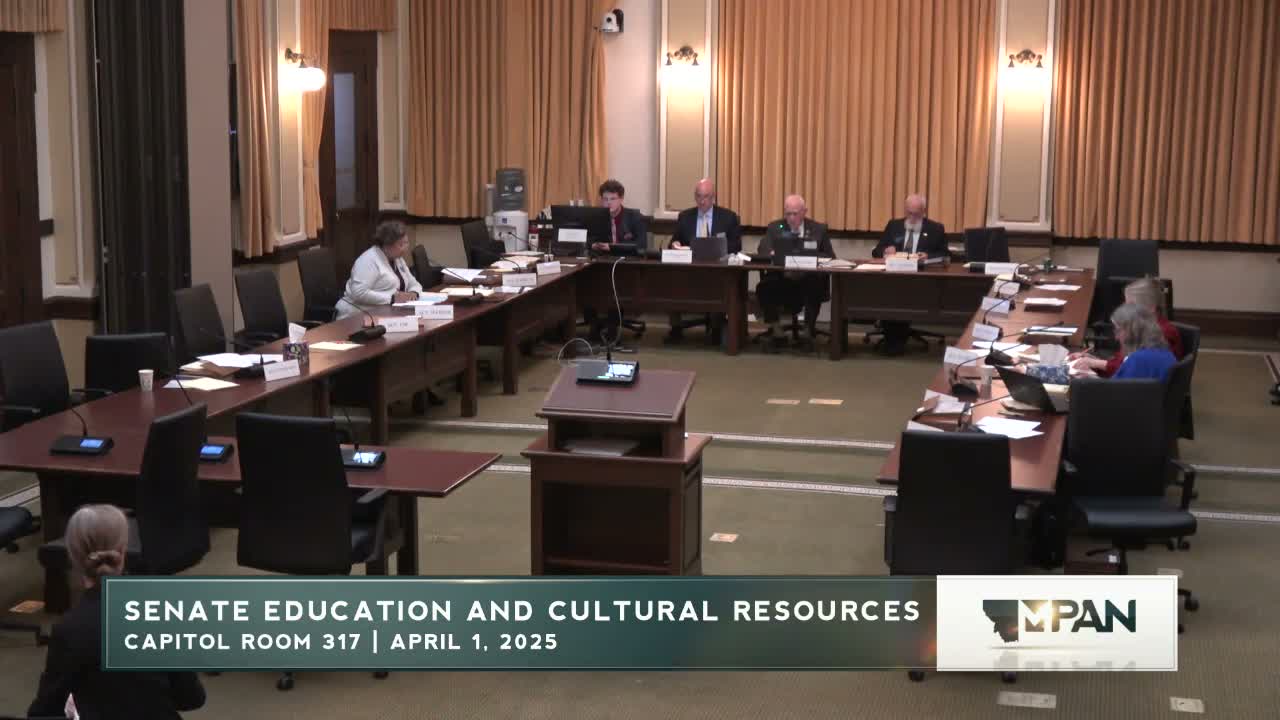
Contested hearing: bill to restore de-identified school immunization reporting draws public-health and privacy debate
Summary
Representative Cunningham's bill to allow schools to submit de-identified, aggregate immunization and exemption data to DPHHS drew support from public-health officials and doctors and objections from privacy-focused citizens and advocacy groups. Sponsor amended data categories to reduce identifiability.
Representative Melody Cunningham told the Senate Education and Cultural Resources Committee that House Bill 364 would restart the flow of de-identified, aggregate immunization and exemption information from schools to the Department of Public Health and Human Services (DPHHS).
Cunningham said Montana is currently the only surrounding state not reporting this aggregated data and that DPHHS and public-health stakeholders requested statutory authority to accept these reports. She said the bill collects counts by school of total students, fully vaccinated students, those with exemptions (medical/religious collapsed into one category), and conditionally enrolled students. The sponsor said she amended the bill to tighten privacy protections by merging exemption categories and collapsing fine-grained grade breakdowns to further reduce identifiability.
Becky Wehner, bureau chief for the Communicable Disease and Prevention Bureau at DPHHS, and epidemiologists testified the data are aggregate and de-identified, help public-health detection of vulnerabilities during outbreaks, and permit statewide and county-level reporting used for preparedness. Medical associations and pediatricians supported the measure as a tool for protecting vulnerable patients.
Opponents, including privacy advocates and some residents, warned that reporting school-level exemption counts could be identifiable in small rural schools, lead to discrimination or bullying, and constitute an overreach into students' medical privacy. The sponsor and DPHHS representatives repeatedly emphasized the aggregated and de-identified nature of the data and the amendment to reduce identifiability. The committee heard both technical public-health justifications and strongly held privacy concerns; Representative Cunningham closed urging a due pass.