Get Full Government Meeting Transcripts, Videos, & Alerts Forever!
Get email alerts on the Insurance Reform topic
No spam. Unsubscribe anytime.
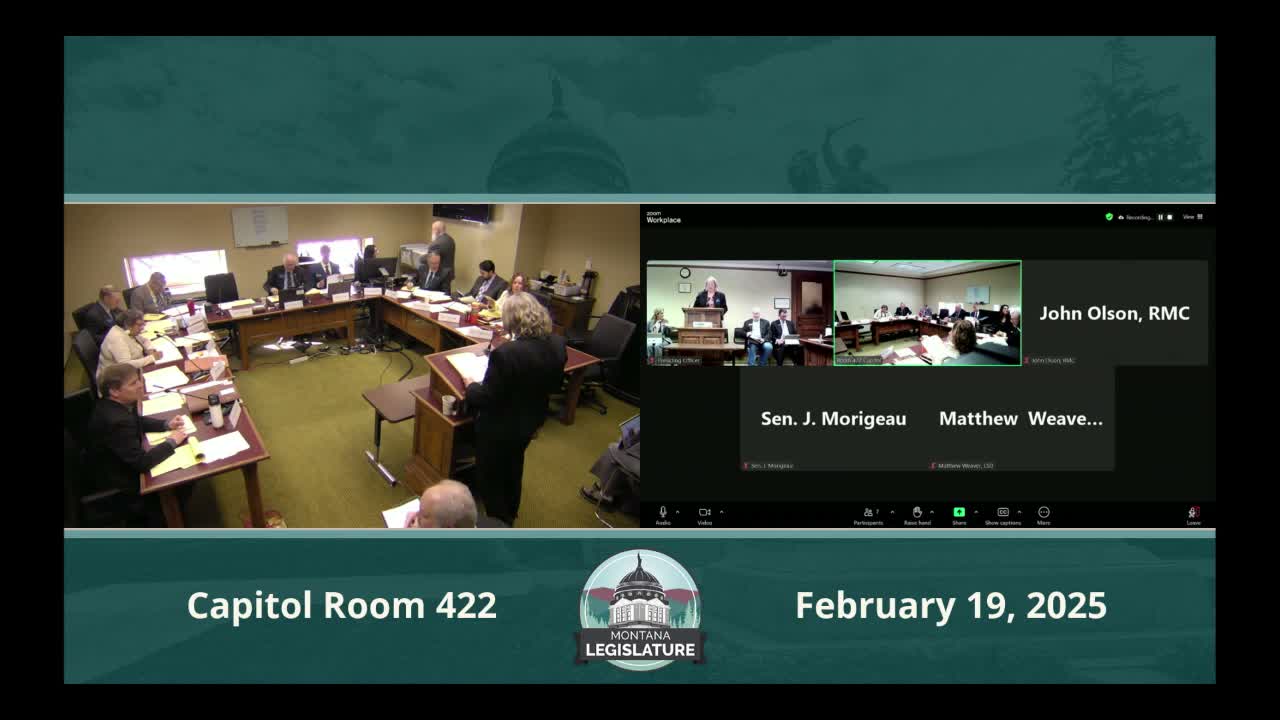
Montana committee weighs prelitigation insurance-disclosure bill aimed at encouraging settlement
Summary
Senate Bill 293 would permit limited prelitigation discovery of insurers' policy limits to speed settlements; trial lawyers and consumer advocates support the idea, while insurers, business groups and self-insured public entities say it will inflate claims and premiums and invite litigation.
Senate Bill 293, presented by Senator Andrea Olson, would allow a claimant or claimant’s attorney to request an insurer’s policy limits before filing suit, with procedural safeguards and potential penalties for improper requests.
Olson said the measure is narrow: it would let injured parties know insurance coverage limits so they can decide whether to pursue litigation or settle. "People don't want to sue," Olson told the committee, arguing that earlier disclosure promotes settlement and reduces litigation costs. Supporters, including the Montana Trial Lawyers Association, said similar laws in other states have expedited settlements by removing the uncertainty that otherwise pushes claimants into filing suits.
Opponents — including the Montana Chamber of Commerce, the Montana Self Insurers Association, and APCIA — said disclosure of policy limits encourages higher demands tied to available pockets, could raise premiums, and would be easy to abuse. Several warned judges and insurers that prelitigation demands would create disputes and unnecessary sanctions claims and could increase liability costs for schools and municipalities that self-insure.
Committee discussion focused on empirical effects in other states (Georgia is the closest model), the sanctions framework in the bill, and whether the change would increase frivolous claims or create more efficient resolutions. Proponents said the bill requires attorney attestation and narrow thresholds intended to minimize misuse.
Next steps: The committee concluded the hearing; members asked staff for comparisons with other states and data on settlement-dollar impacts. No committee vote was recorded at the hearing’s close.