Get Full Government Meeting Transcripts, Videos, & Alerts Forever!
Get email alerts on the Metastatic Step Therapy topic
No spam. Unsubscribe anytime.
Physicians and patients press Montana panel to curb step‑therapy rules for metastatic cancer; insurers urge clinical guidelines
Summary
Sen. Ellie Boldman framed SB 422 as a ban on insurance 'fail‑first' step therapy for stage‑4 cancer patients; physician groups and patient advocates supported immediate access to prescribed drugs, while insurers proposed tying any limit to NCCN or peer‑reviewed oncology guidance and offered amendments to preserve evidence‑based exceptions.
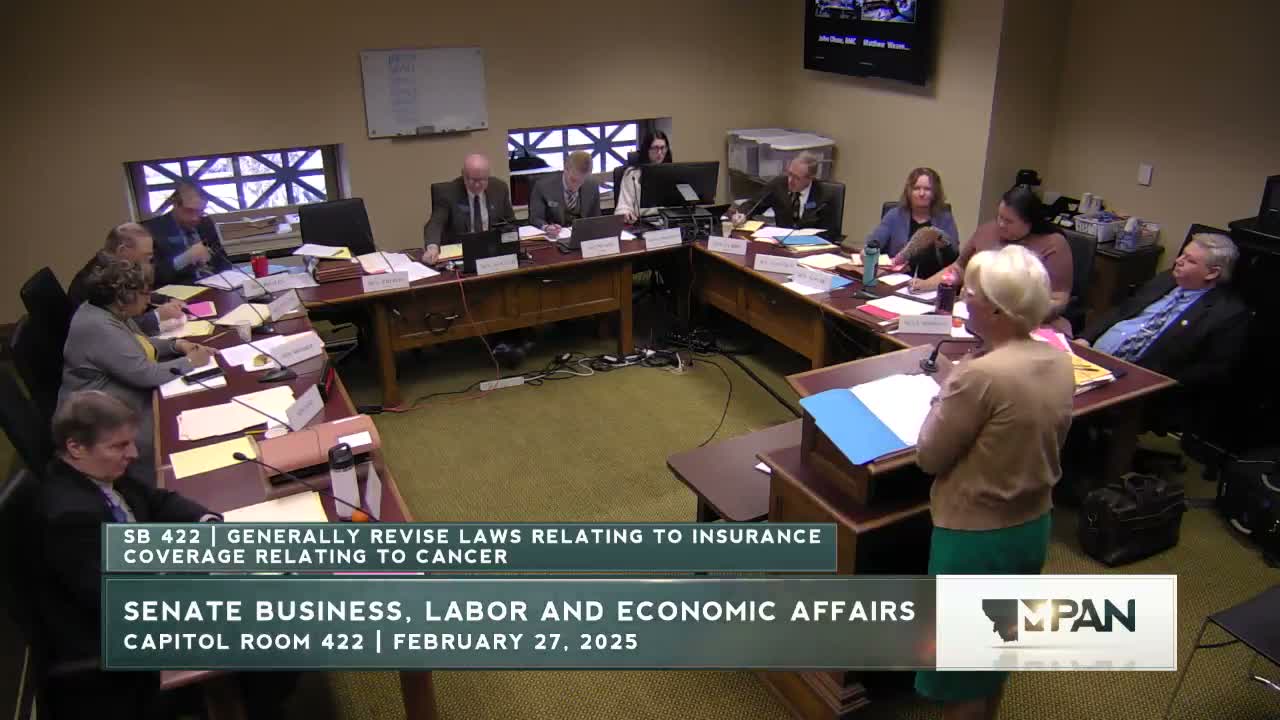
Senator Ellie Boldman told the Senate Business and Labor Committee SB 422 would prohibit insurance step‑therapy (fail‑first) mandates for patients with metastatic cancer so that clinicians can obtain the medicines they judge immediately necessary for stage‑4 care.
The Montana Medical Association and oncologists testified the individualized nature of metastatic care makes delays dangerous; patient witnesses recounted time‑sensitive consequences when insurance rules require trials of less‑preferred treatments. Supporters urged a 'due pass' to prevent insurers from forcing trial‑and‑error treatments on dying patients.
Opponents from regulated insurers and pharmacy benefit managers cautioned that step therapy can follow evidence‑based protocols (for example, NCCN guidelines) that balance safety, efficacy and cost; they proposed amendments that would require adherence to peer‑reviewed oncology standards, prompt administrative review timelines for exceptions, and preserve medically necessary overrides.
Committee questions focused on standards (NCCN and peer‑reviewed evidence), enforcement, timing for appeals, and whether a companion amendment to narrow 'associated conditions' would be acceptable. Senators indicated the sponsor was open to a friendly amendment to reference evidence‑based standards while maintaining patient protections.
The hearing concluded with robust public testimony in support and with insurers offering technical amendments; committee action was deferred pending further drafting.