Get Full Government Meeting Transcripts, Videos, & Alerts Forever!
Get email alerts on the Committee Votes topic
No spam. Unsubscribe anytime.
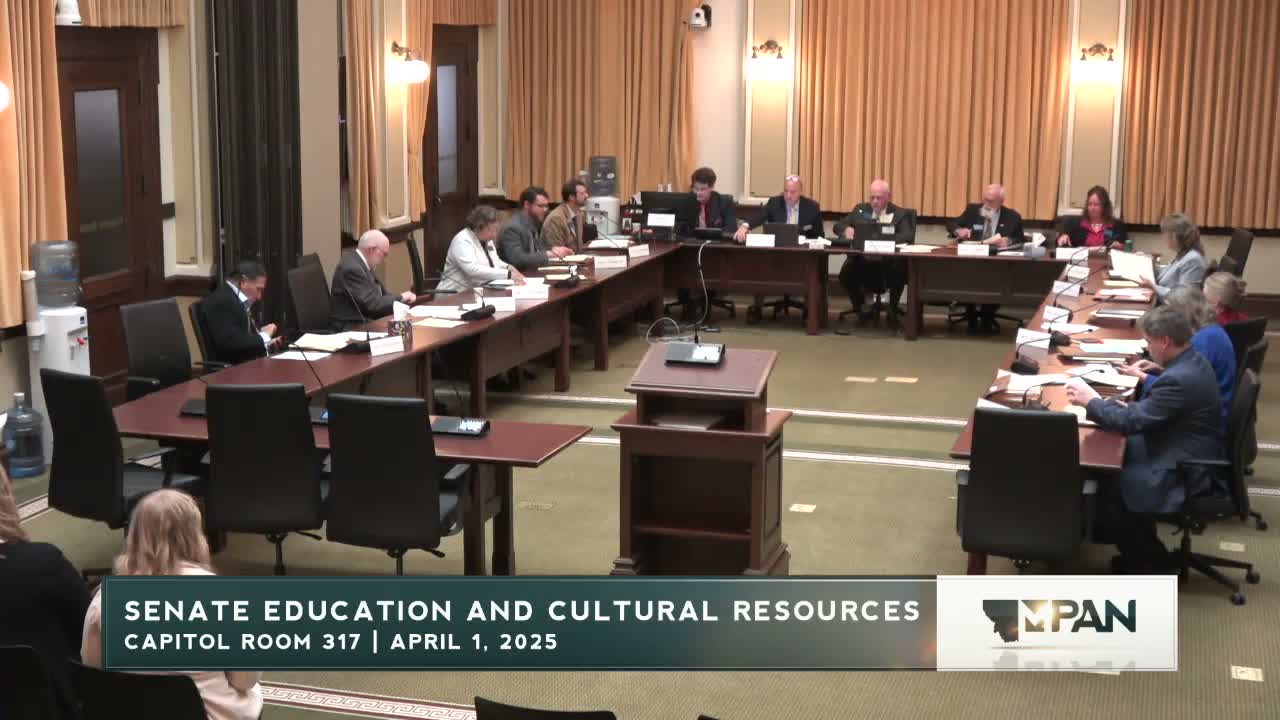
Senate Education Committee advances several school bills in executive action; key votes recorded
Summary
The Senate Education and Cultural Resources Committee approved multiple education bills during a packed executive-action session, moving funding and policy measures to the floor. Key outcomes: House Bill 153 and House Bill 156 passed out of committee as amended; several technical and governance bills also concurred.
The Senate Education and Cultural Resources Committee on May 20 advanced a slate of education measures during executive action, recording roll-call votes on major school-funding and governance bills.
House Bill 153 (Rep. Beattie) — which expands the decennial school-funding study to include a working group on excellence and innovation and revises commission membership — passed the committee after multiple amendments and a final roll-call vote of 9 ayes and 5 nays. Sponsors and staff said the changes restore four public members and adjust appointment timelines so the commission can begin work in May and June.
House Bill 156 (Rep. Beattie) — a countywide base-levy equalization bill that replaces district base levies with a countywide levy to fund the base portion of school budgets — was concurred in after an amendment clarifying calculation mechanics and coordination with other bills; the committee vote was 9 ayes, 5 nays. Staff said the guaranteed tax base multiplier will be calculated using FY26 data with a 3% inflation adjustment.
Other executive-action items the committee approved included House Bill 567 (multi-district agreements), House Bill 606 (revising 'consolidation' language to 'reorganization'), and a joint resolution (HJ6) recognizing the U.S. 250th anniversary. Several items were passed with technical amendments or voice votes; carriers were identified to take the bills to the floor.
Committee members split along policy and representational lines in several roll calls. Questions during votes focused on membership parity on statutory commissions, fiscal calculations, and coordination with other pending legislation. The committee chair said carriers would be identified and the bills advanced to the next stage.