Get Full Government Meeting Transcripts, Videos, & Alerts Forever!
Get email alerts on the Licensure Compact topic
No spam. Unsubscribe anytime.
Panel hears PA interstate licensure compact; trial lawyers flag immunity clause
Summary
HB 183 would adopt the physician assistant interstate compact to ease licensing across states; proponents say it improves rural access while the Montana Trial Lawyers Association urged amending subsection 7(a) to limit broad immunity for the compact commission.
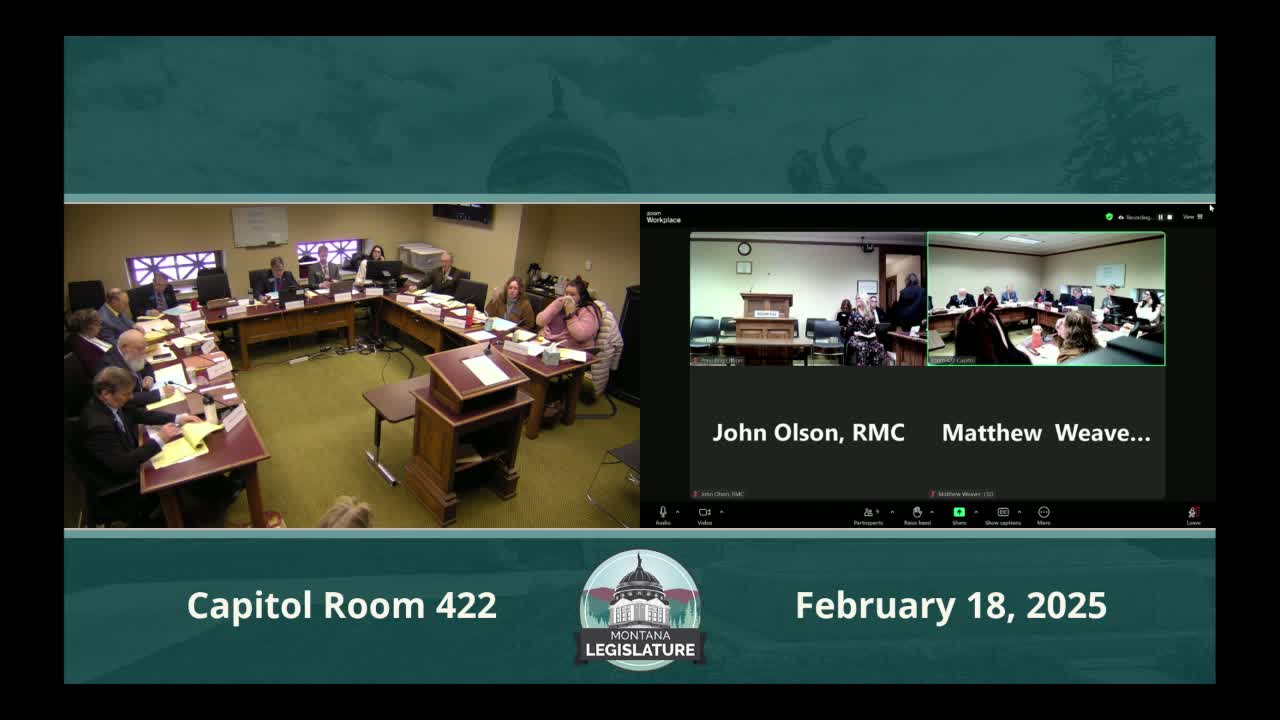
The Senate Business, Labor, and Economic Affairs Committee heard House Bill 183 to adopt the physician assistant (PA) interstate licensure compact.
Representative Jodi Echart, the bill sponsor, said the compact (drafted with input from the PA interstate compact and Council of State Governments representatives) would help rural recruitment and access to care by allowing qualified PAs to more readily practice across state lines. "Compacts...help access to care. It can help rural communities," Echart said, adding that the compact sets consistent vetting and background-check standards among participating states.
Proponents — including Jennifer Hensley of the Montana Academy of Physician Assistants, Stacy Anderson of the Montana Primary Care Association, Aiden Myhre of Billings Clinic, and Kristen Page Nye of AARP Montana — urged passage, arguing the compact would ease workforce shortages and maintain professional oversight.
Nikki Zupanic, representing the Montana Trial Lawyers Association, urged caution and proposed an amendment to subsection 7(a) on page 13 that currently provides broad immunity, defense, and indemnification to members and staff of the compact commission. "Subsection a grants broad complete immunity from any lawsuit...there would be no opportunity for a physician assistant that's been harmed to be able to get any sort of redress," Zupanic told the committee. She said subsections b and c (defense and commission-paid costs) address proper protections but requested that subsection a be struck or amended to cover negligent as well as intentional misconduct.
Kevin Bragg, Bureau Chief for Professional Licensing, said a quick review suggested five of six recent compacts had removed a similarly broad immunity provision, but he cautioned his review was preliminary. The sponsor said she would work with proponents and opponents to reconcile language and ensure Montana’s adoption both protects professionals and preserves access benefits.
No committee vote was taken; the hearing concluded with proponents and the sponsor agreeing to continue discussion about the immunity language.