Get Full Government Meeting Transcripts, Videos, & Alerts Forever!
Get email alerts on the Cannabis Regulation topic
No spam. Unsubscribe anytime.
Montana committee hears bill to freeze cannabis retail footprint for two years
Summary
Senate Bill 27 would freeze Montana’s licensed cannabis locations for two years, allowing new operators only by buying into existing licensed premises and delaying issuance of new dispensary locations until 06/30/2027; proponents say the pause manages growth, while members pressed on enforcement, fiscal assumptions and market effects.
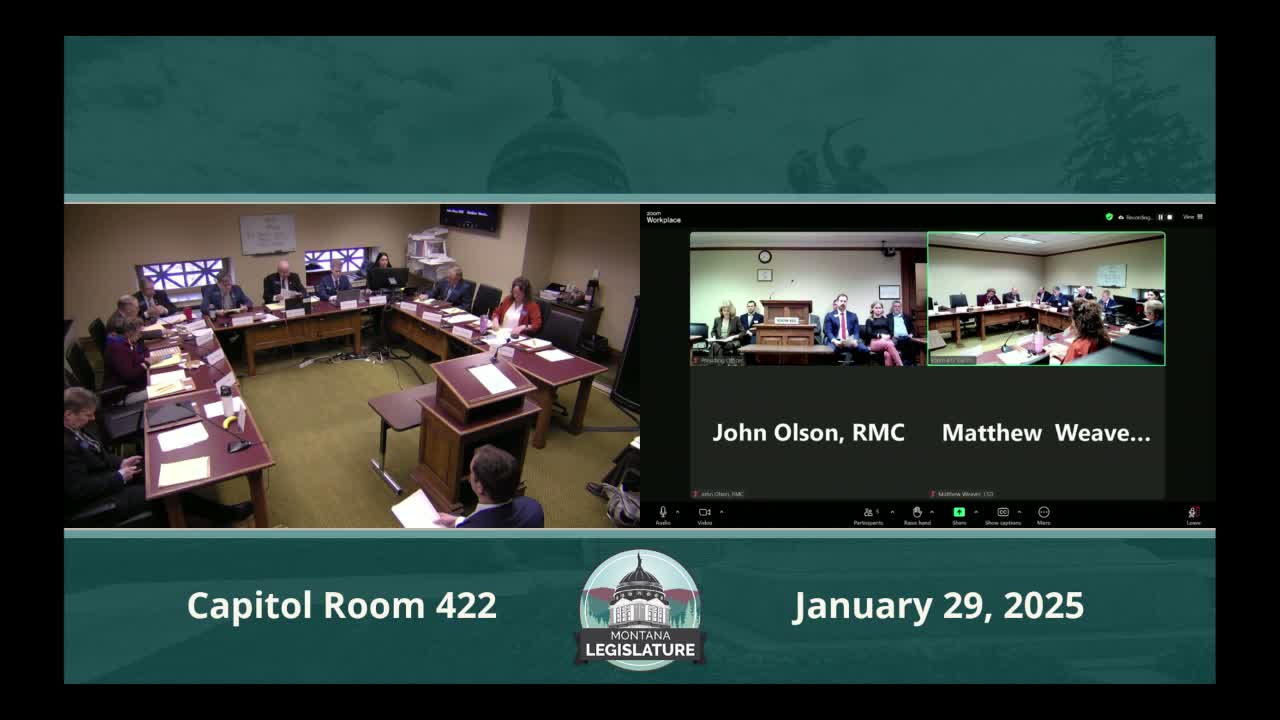
Senate Business and Labor on Tuesday heard hours of testimony on Senate Bill 27, a measure from the Economic Affairs Interim Committee that would limit new adult‑use cannabis locations in Montana for two years.
Sen. Ken Bogner, sponsor, told the committee the bill "requires new licenses to be related to an existing licensed premise and prohibits the department's issuance of new location licenses for dispensaries until 2027," describing the change as intended to "allow for the orderly growth of the recreational marijuana industry in this state." The draft text moves the effective date to June 30, 2027.
Supporters from the industry urged the committee to approve a temporary "freeze the footprint." Kate Holewa of the Montana Cannabis Industry Association said the policy is not an extension of a prior ownership moratorium but "only for 2 years" and that the provision gives regulators and local governments time to respond. "There are about a thousand licensed cannabis business sites in the state right now," Holewa said, adding the bill requires new entrants to buy into that existing footprint rather than creating new locations.
Pepper Peterson, CEO of the Montana Cannabis Guild, told senators counties are "gun shy" about zoning and that the bill would provide local governments a mechanism to plan and set local policies without being forced into litigation or ad‑hoc health emergency measures. Industry operator Brandon Madland added the state's market could see an influx as large as 500 new sites if the moratorium fully expires, a surge he said could destabilize prices and compliance.
Senators pressed witnesses on enforcement and fiscal assumptions. Kristen Barber, administrator of the Cannabis Control Division (CCD), said the department supported a "half step" that would let ownership change while keeping the number of locations steady; she testified the CCD included a request for seven additional FTE (inspectors and a resolution officer) in the executive budget to handle the regulatory workload if the market expanded. Finn McMichael of the Department of Revenue said the executive estimate of 500 new sites is a best‑available projection based on other states' experience and is necessarily an estimate.
Lawmakers also probed whether freezing the footprint would inflate the price of existing businesses and whether constrained entrants might move to illicit markets. Proponents argued the bill allows new operators to obtain licenses by partnering with or buying an existing license, and that Montana's testing and retail infrastructure make the black market less competitive and less convenient than the regulated market.
Several senators asked about population‑based licensing models; witnesses said those would be a policy choice for the Legislature and are not currently implemented by the CCD. The hearing closed after sponsor remarks reiterating the bill is designed to give counties and cities time to plan.
The committee did not take a final vote on SB27 during the hearing; the matter will return to the committee for executive action at a later date.
What’s next: SB27 was closed for testimony and awaits executive action. The committee has signaled interest in CCD staffing and asked budget staff to examine inspector capacity.
Sources: testimony and Q&A featuring Senator Ken Bogner; Kate Holewa, Montana Cannabis Industry Association; Pepper Peterson, Montana Cannabis Guild; Kristen Barber, Cannabis Control Division; Finn McMichael, Department of Revenue.